Live in Each Season

“Live in each season as it passes.” ~ Henry David Thoreau

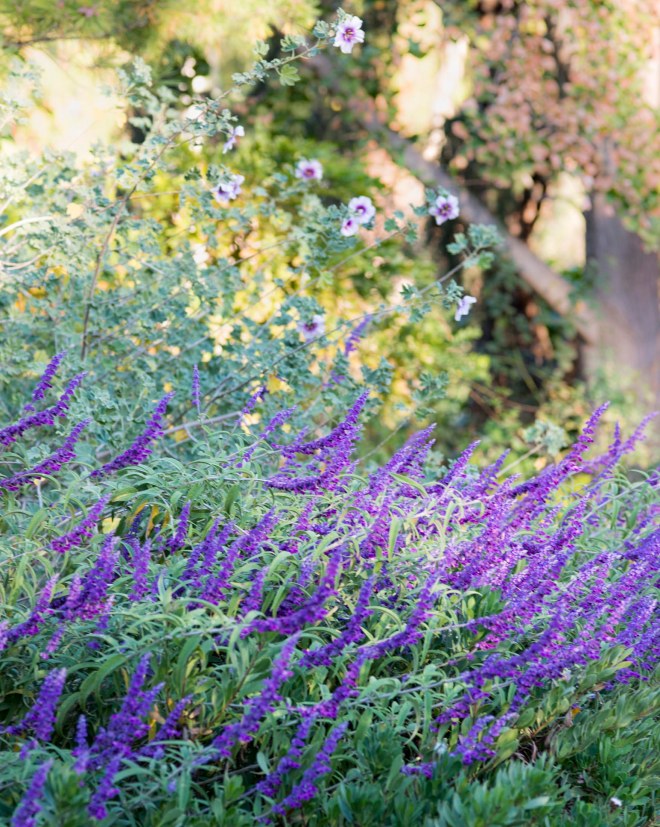
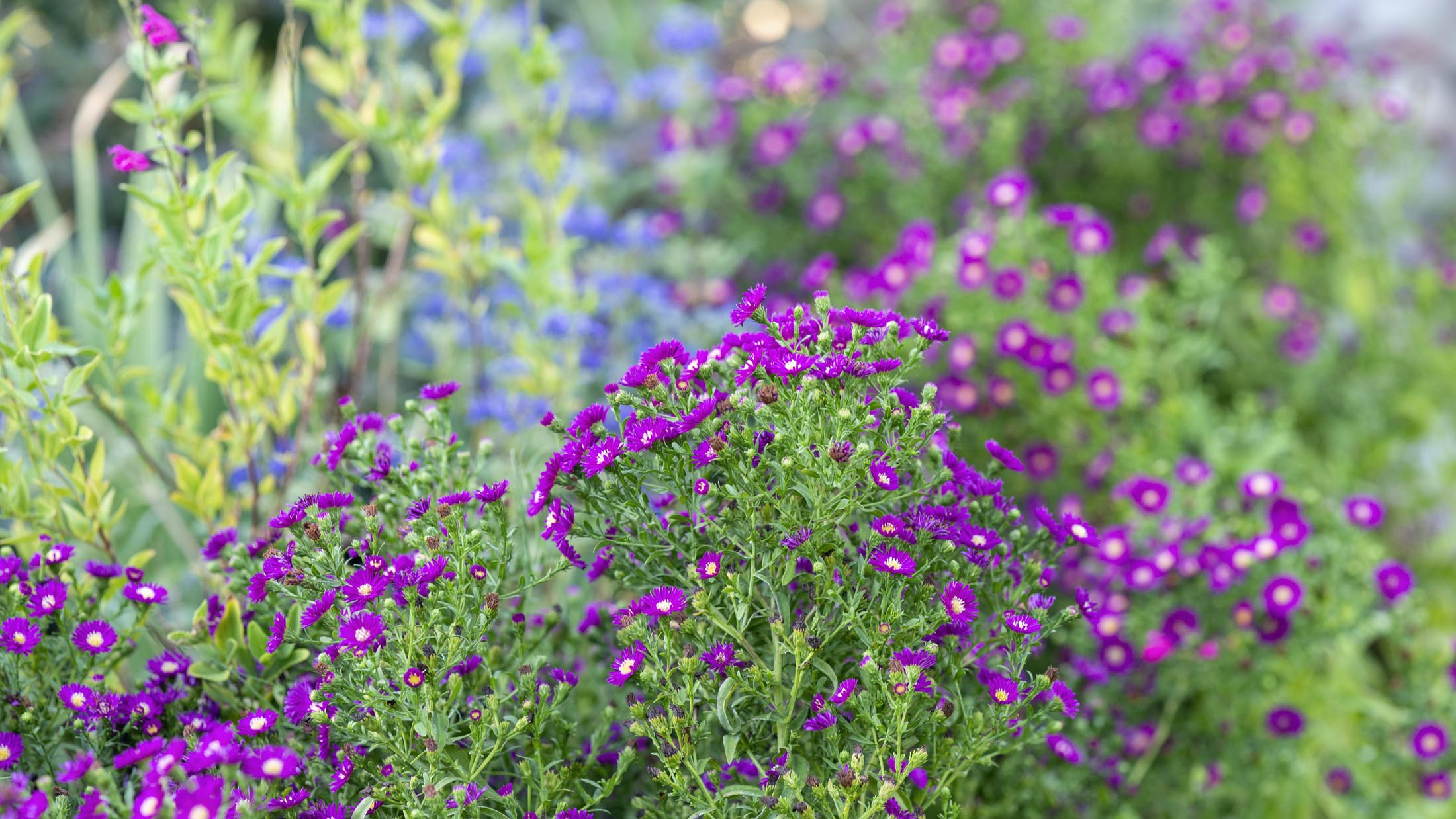
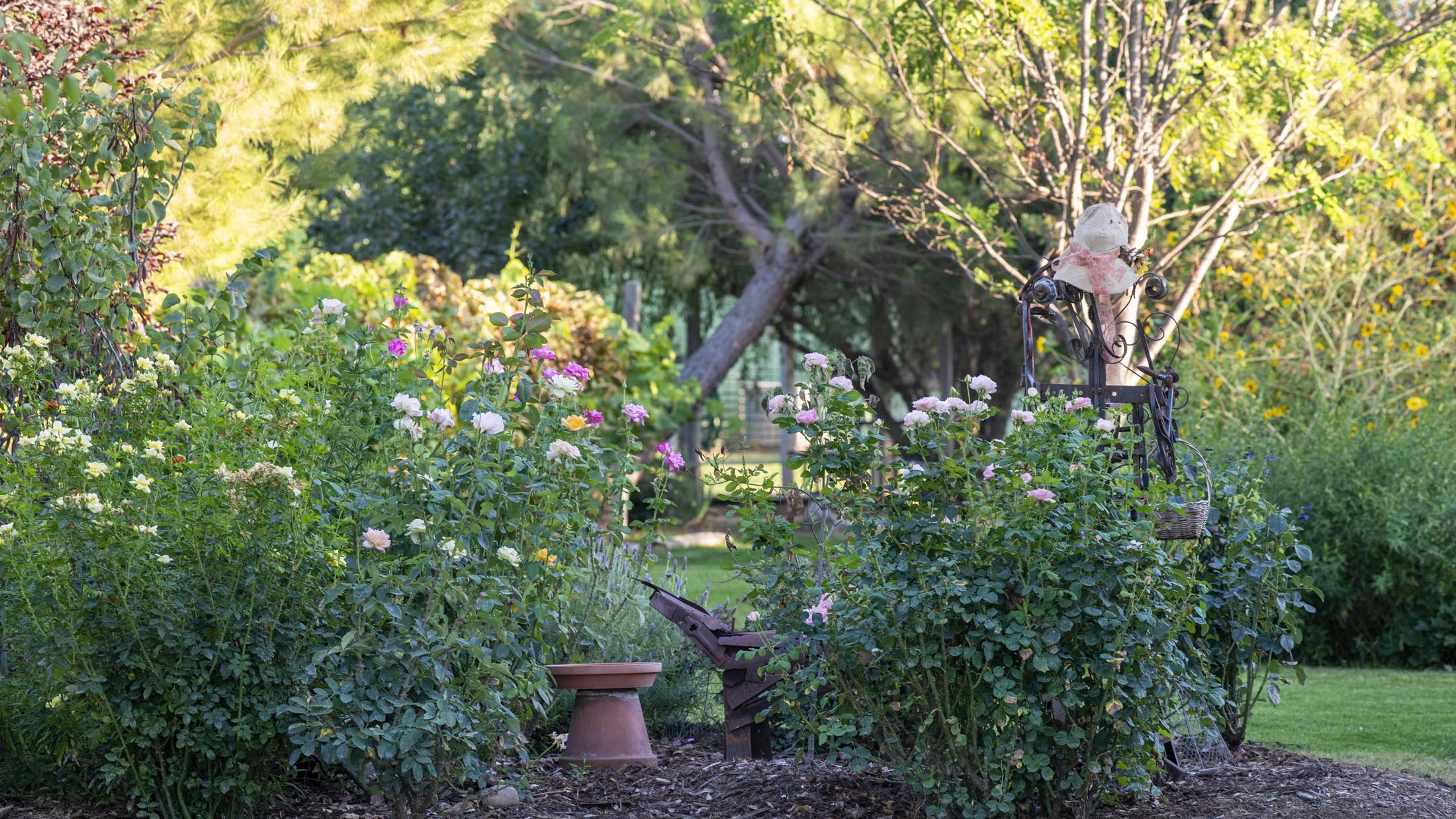
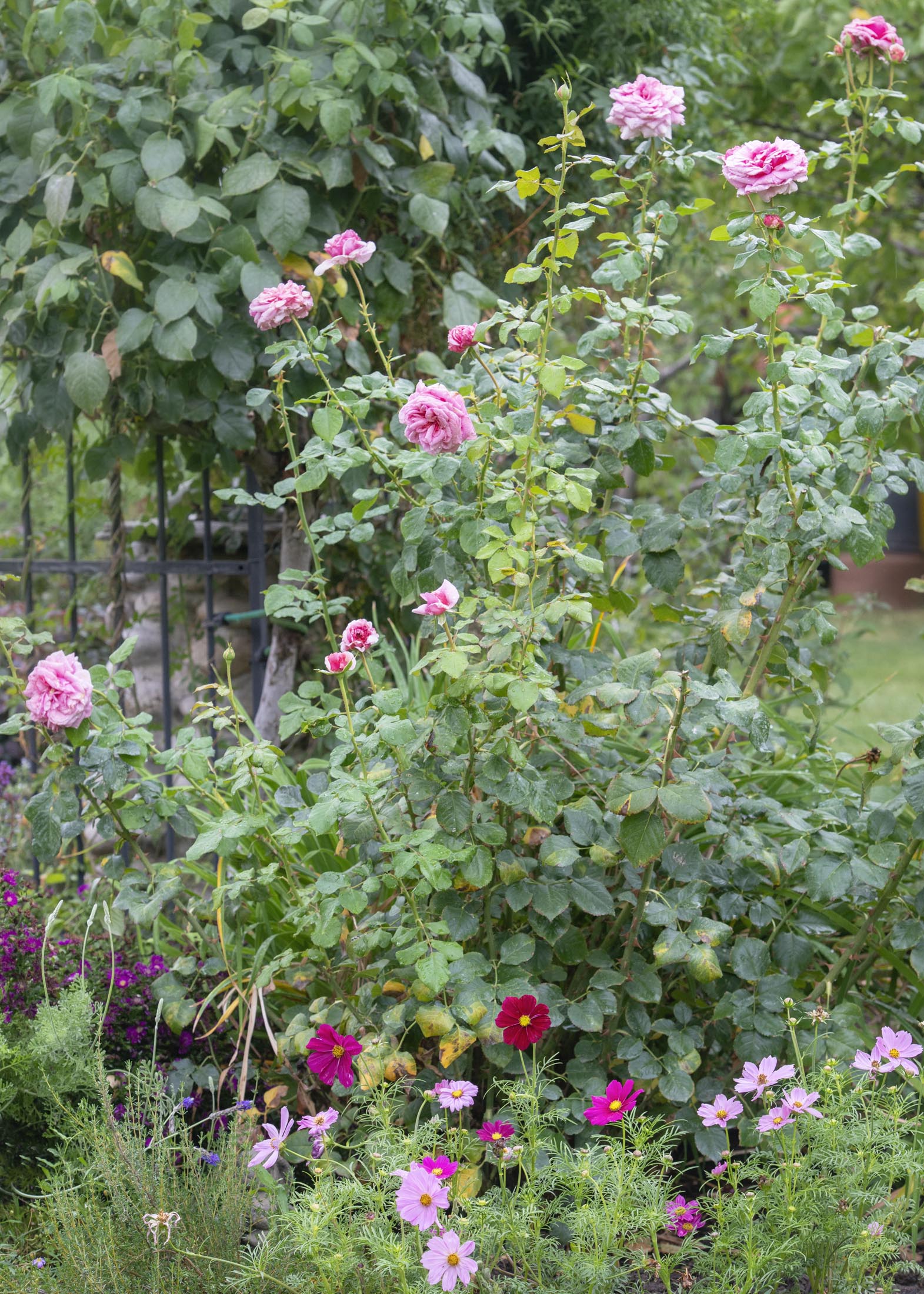
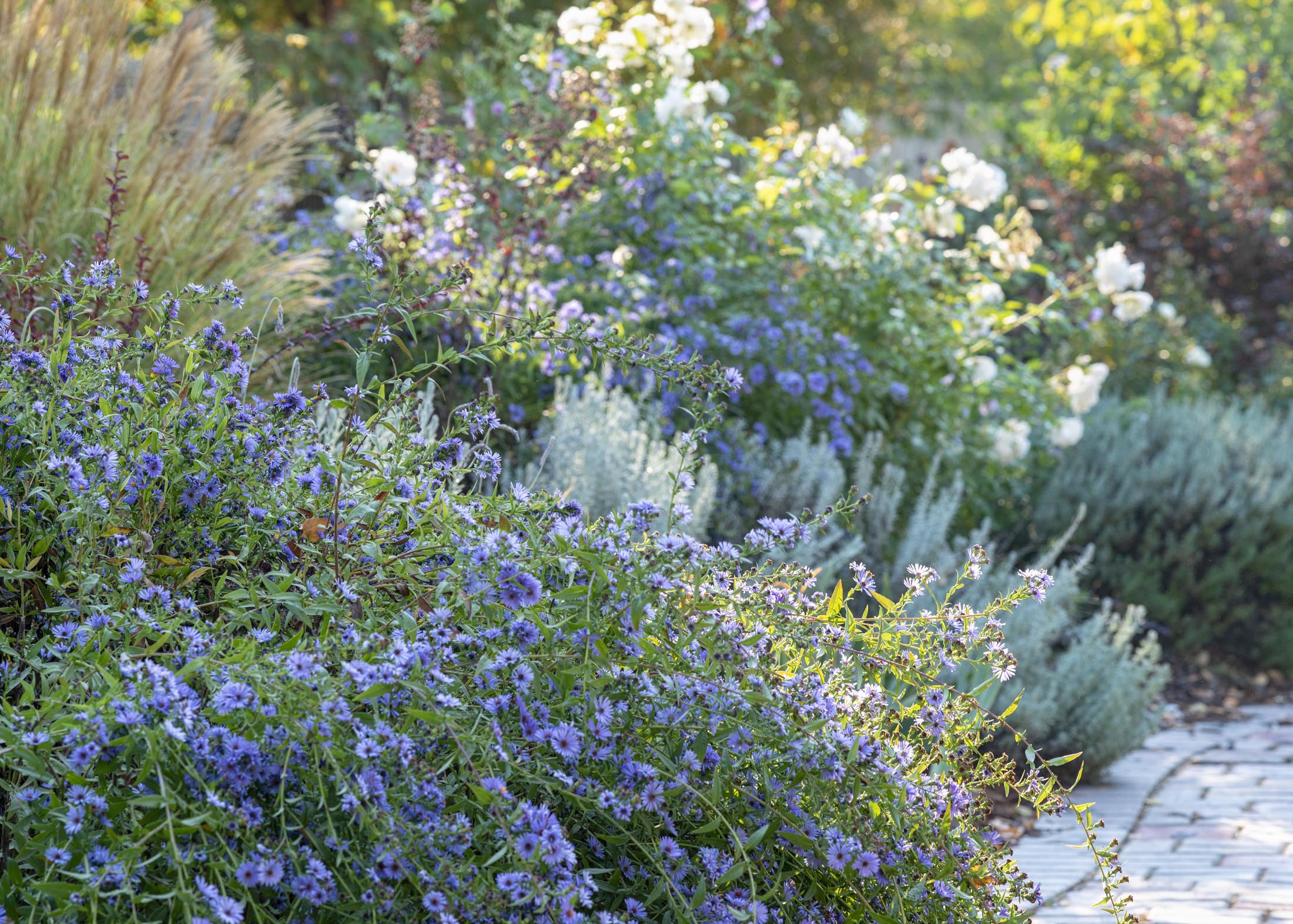
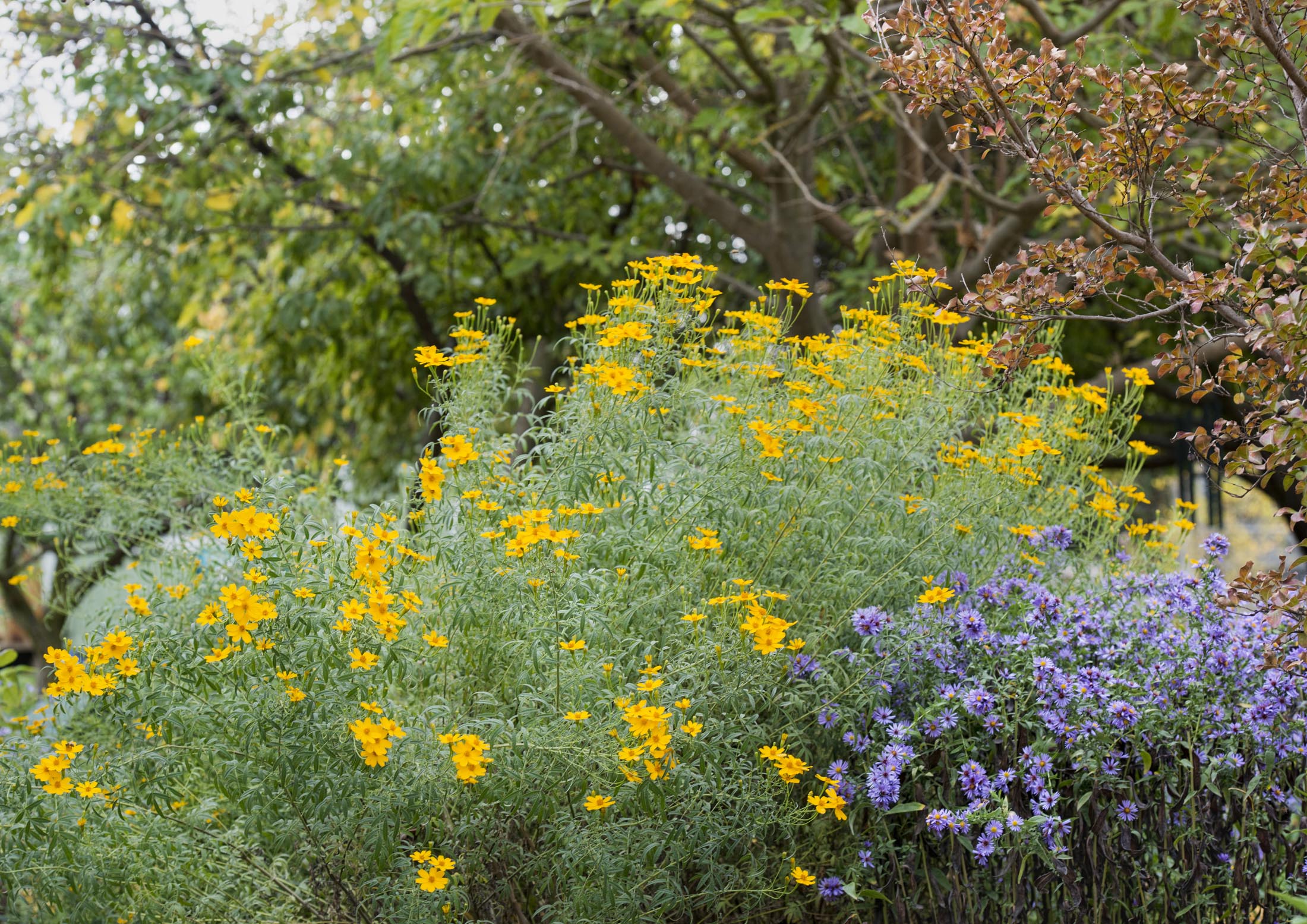
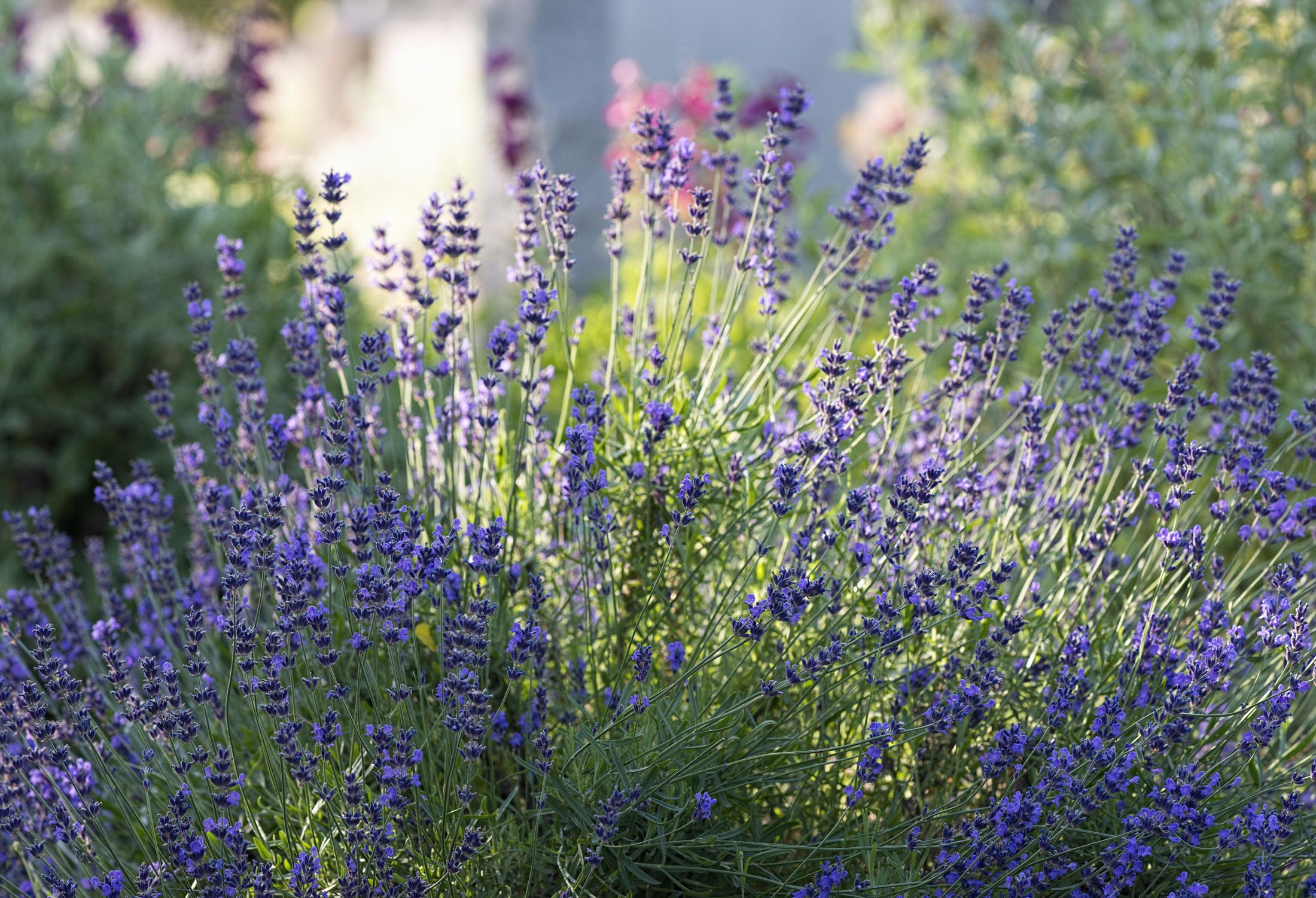
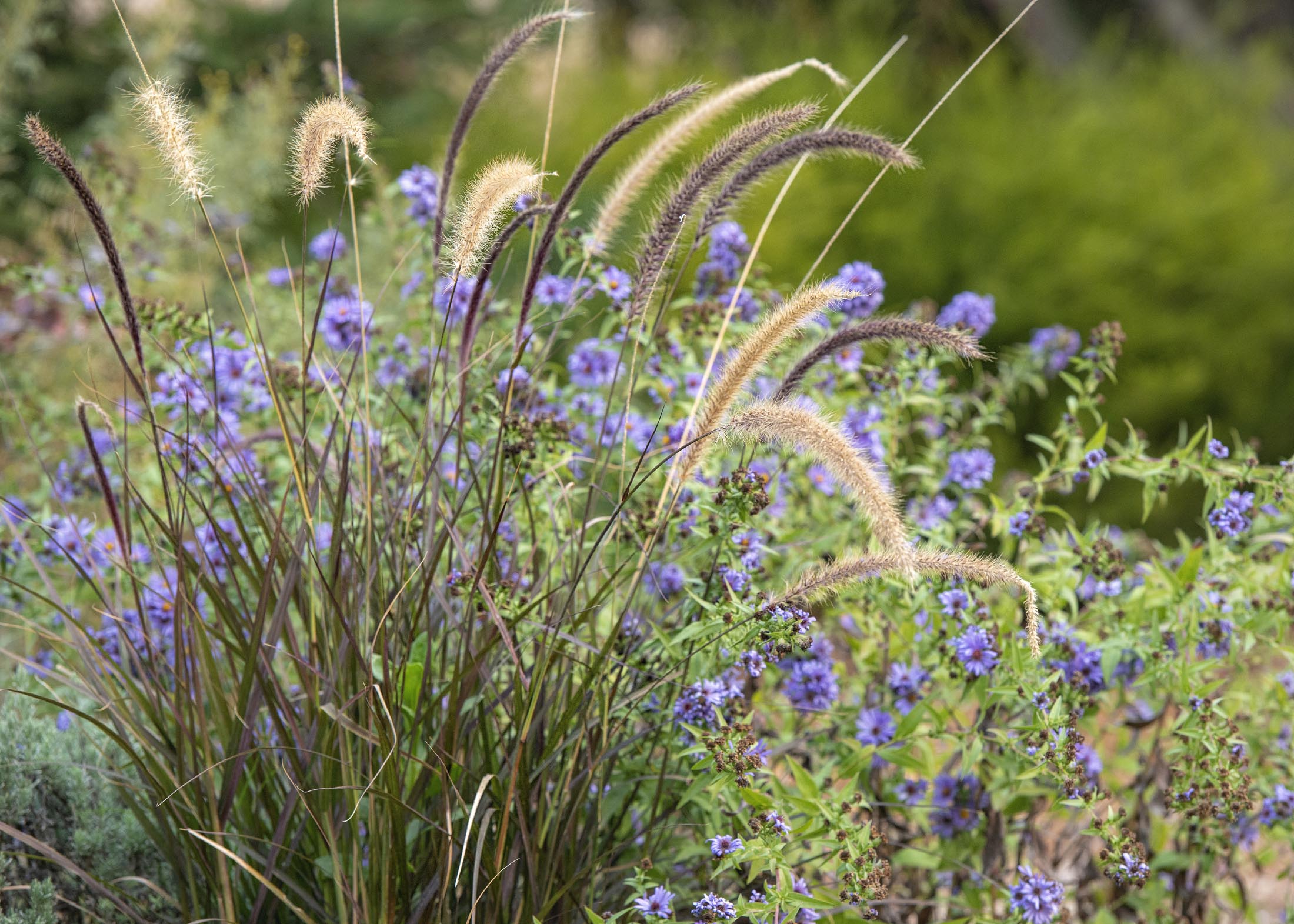
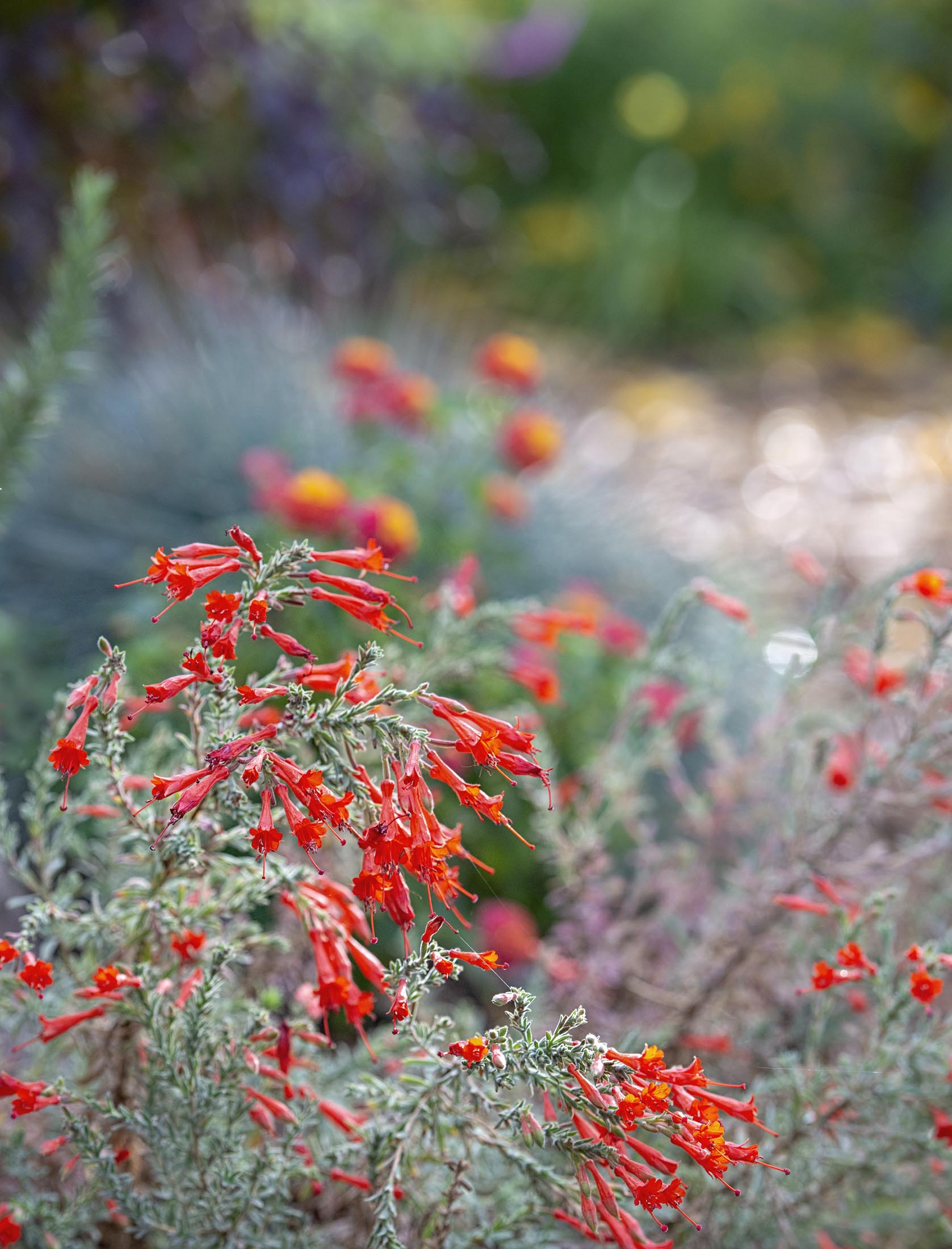
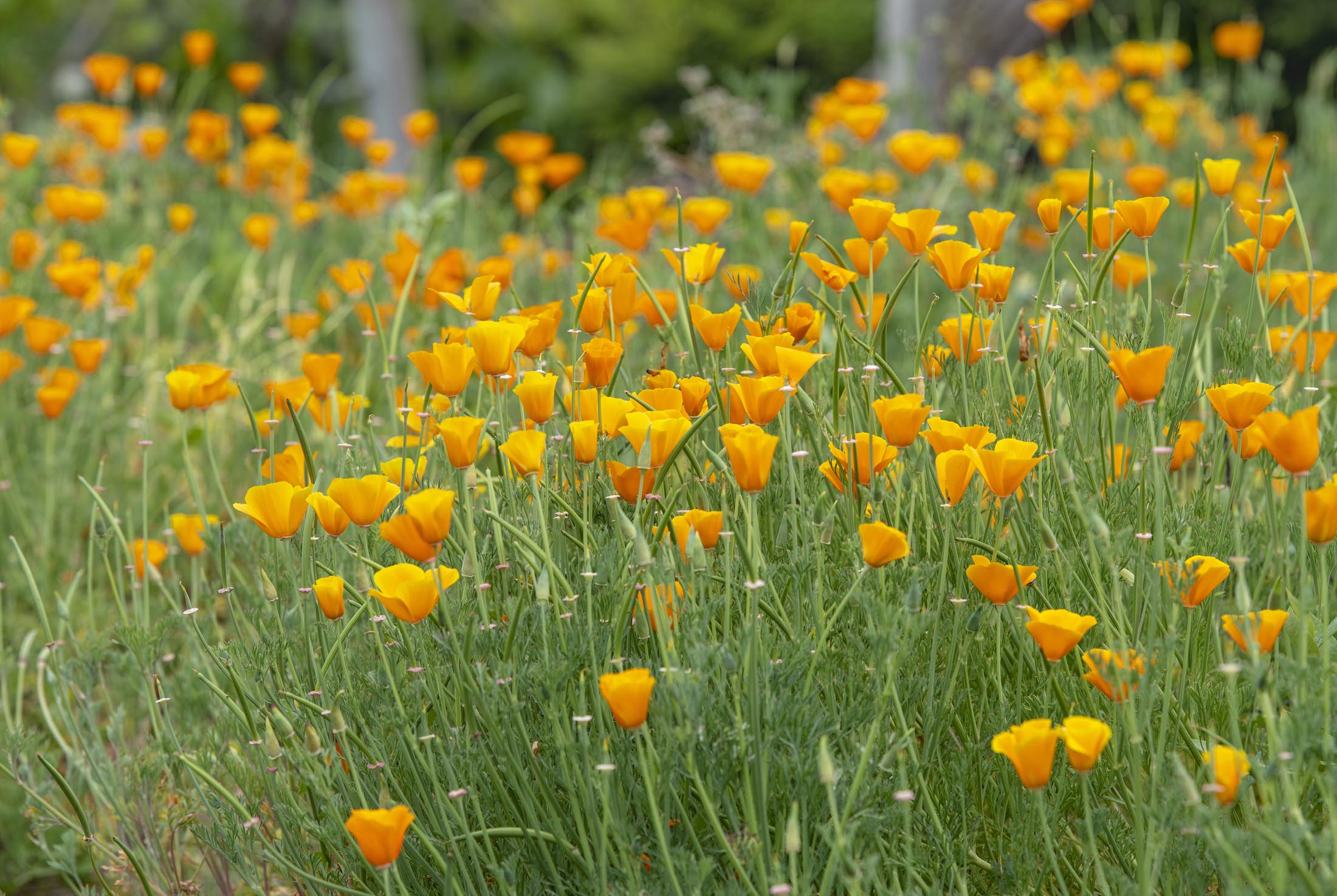
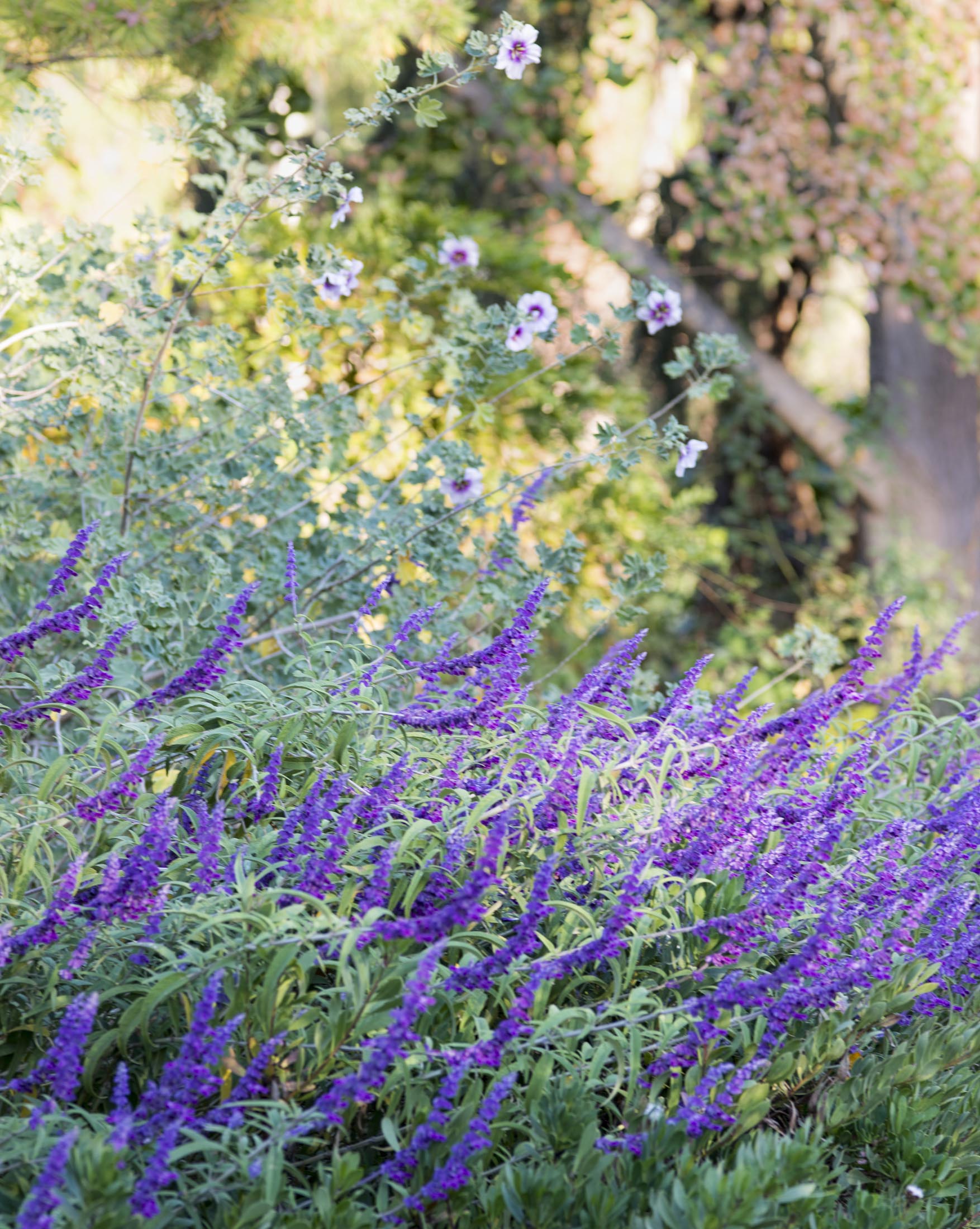
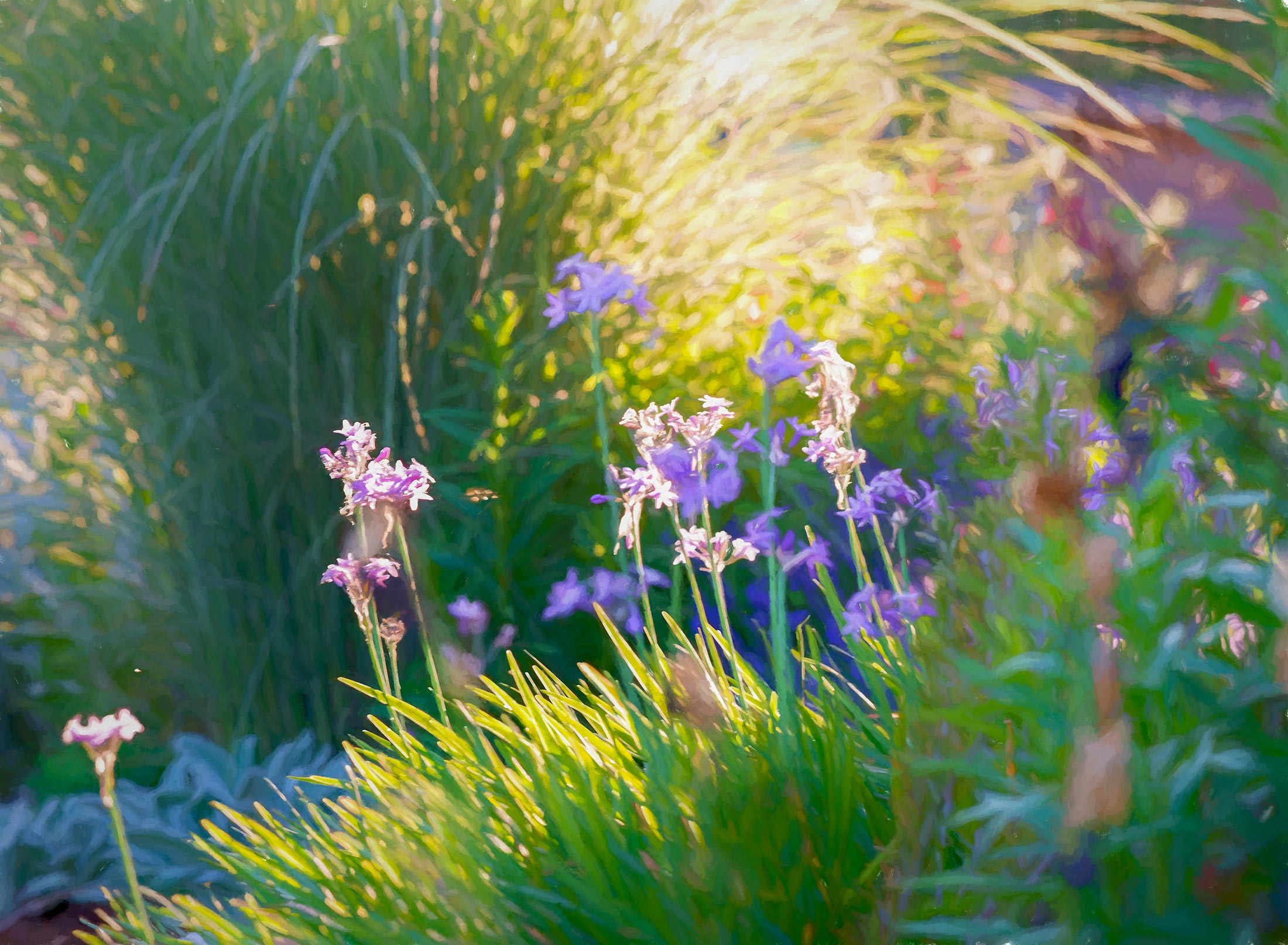
Having lived through the wet of winter, the erratic fits of spring, and the scorching heat of summer, it is time to rejoice in the mosaic of fall.

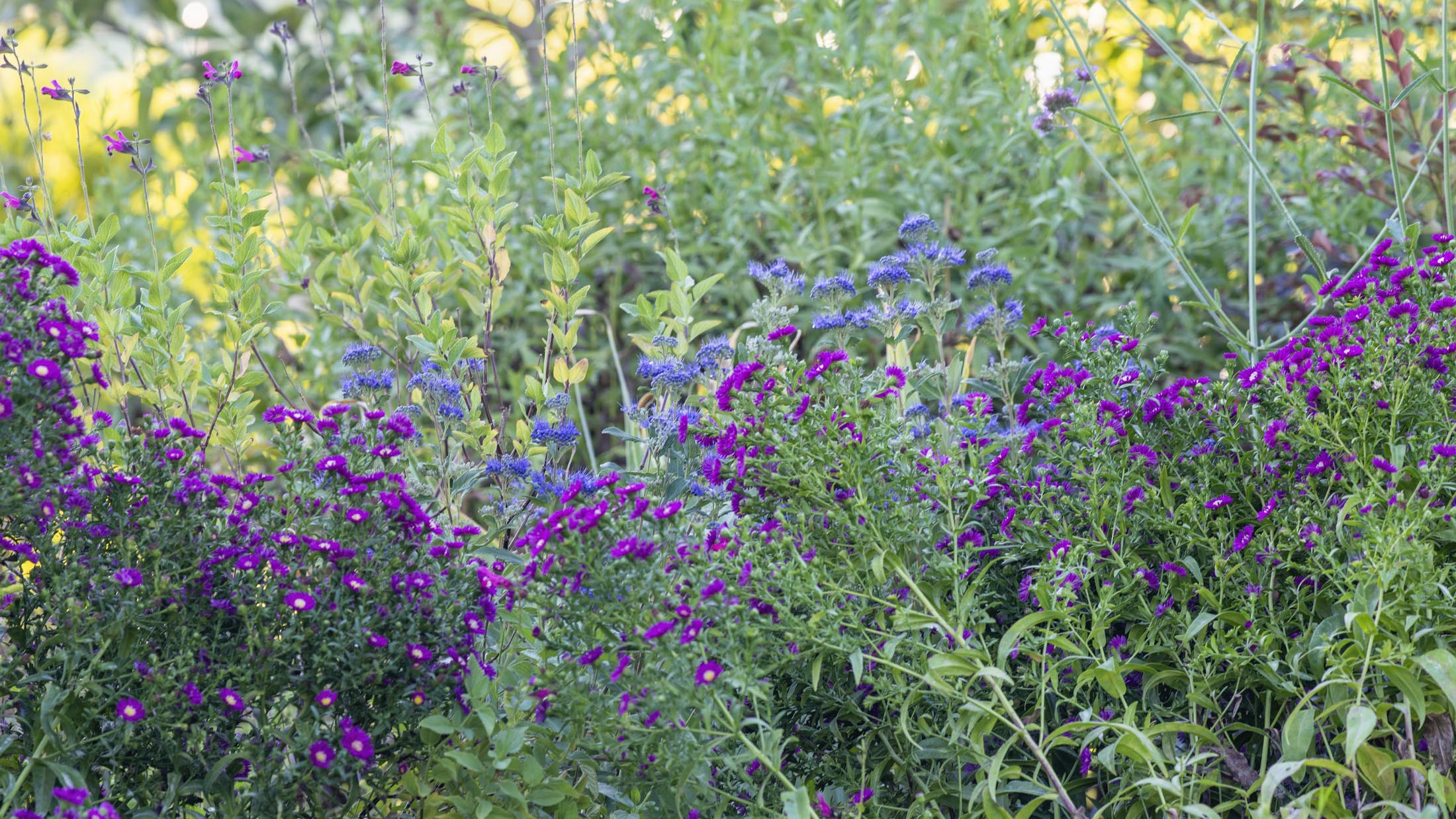
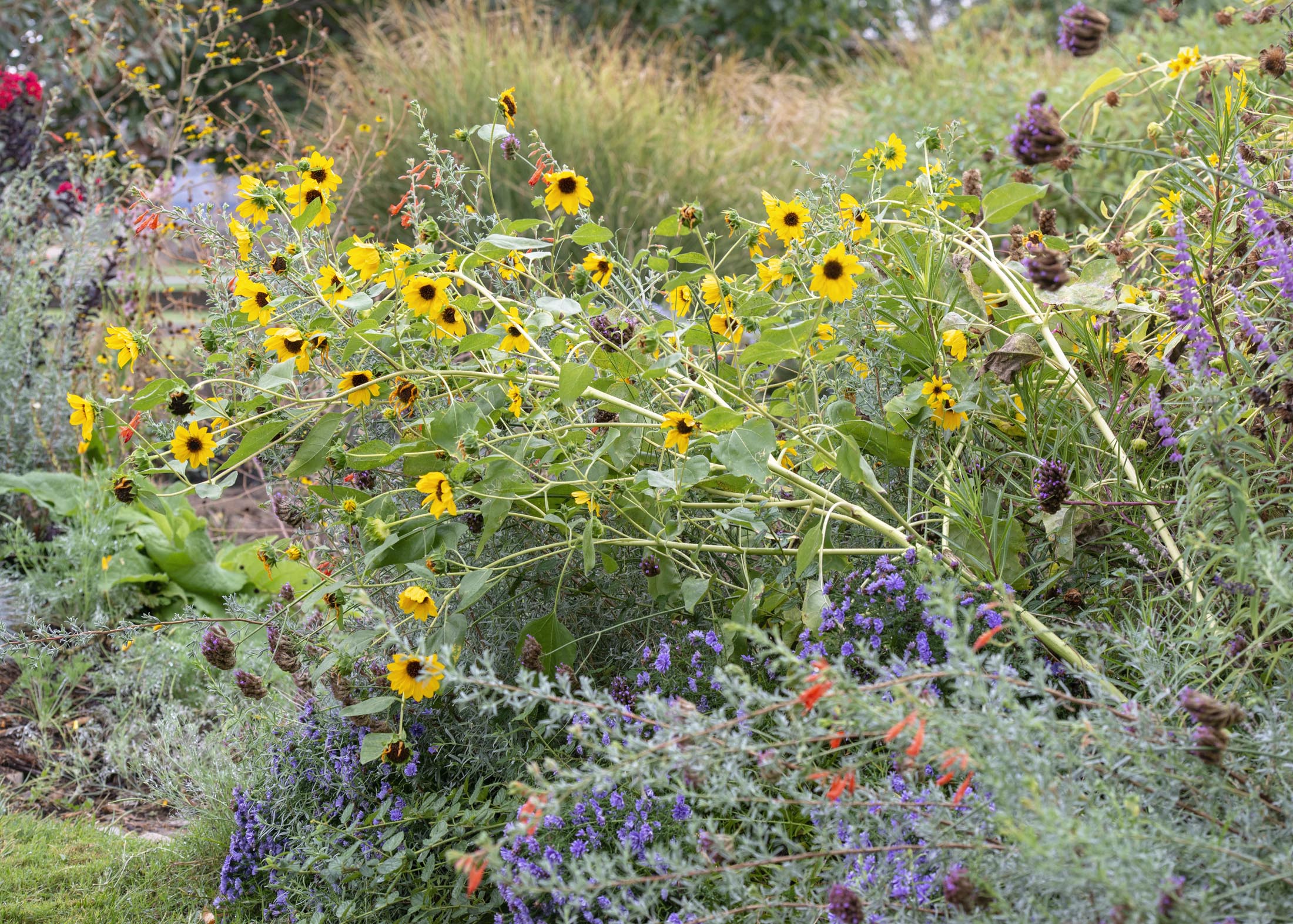
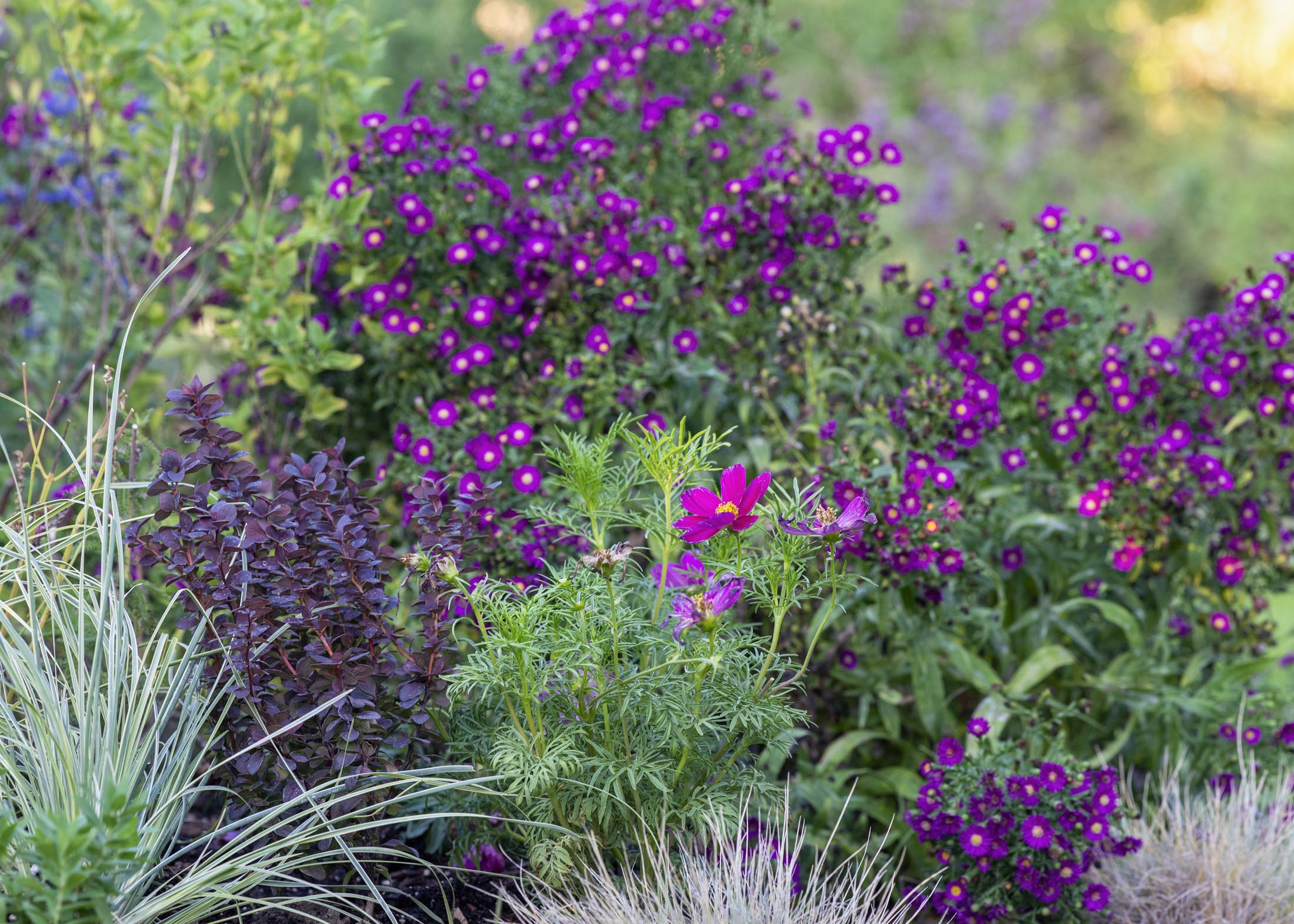
I love the chaos of the fall garden.

All the little starts and shoots have grown tall and wild.

Their well-defined contours are now a tangle of color and cascading form.

They lay all over each other like summer camp friends clinging on – knowing a goodbye is ahead.

Like the joy in seeing my little foster charges grow up and go home, the fall garden is the culmination of winter dreams, spring plantings and summer labors.

And then it starts again.
I walked through this weekend and made notes about what worked and what failed…
which to divide and which to let stand and go to seed.

Maria brought gifts from the plant sale that found new homes adding to next year’s bounty.

And planning is underway for a wedding in the garden next September.

Fall is full of chores – all in good time. First – a breath and a moment to sit, soak it up, and take it all in. Living in the season.

Absence

Often, the absence of something is felt as tangibly as its presence.

Anyone who has ever lost a loved one—two-legged or four—knows this. The silence when returning home or the space in a room previously occupied by their being feels loud and hollow. The empty void as weighty as their once physical presence—leaving regret for ever having taken our time with them for granted.

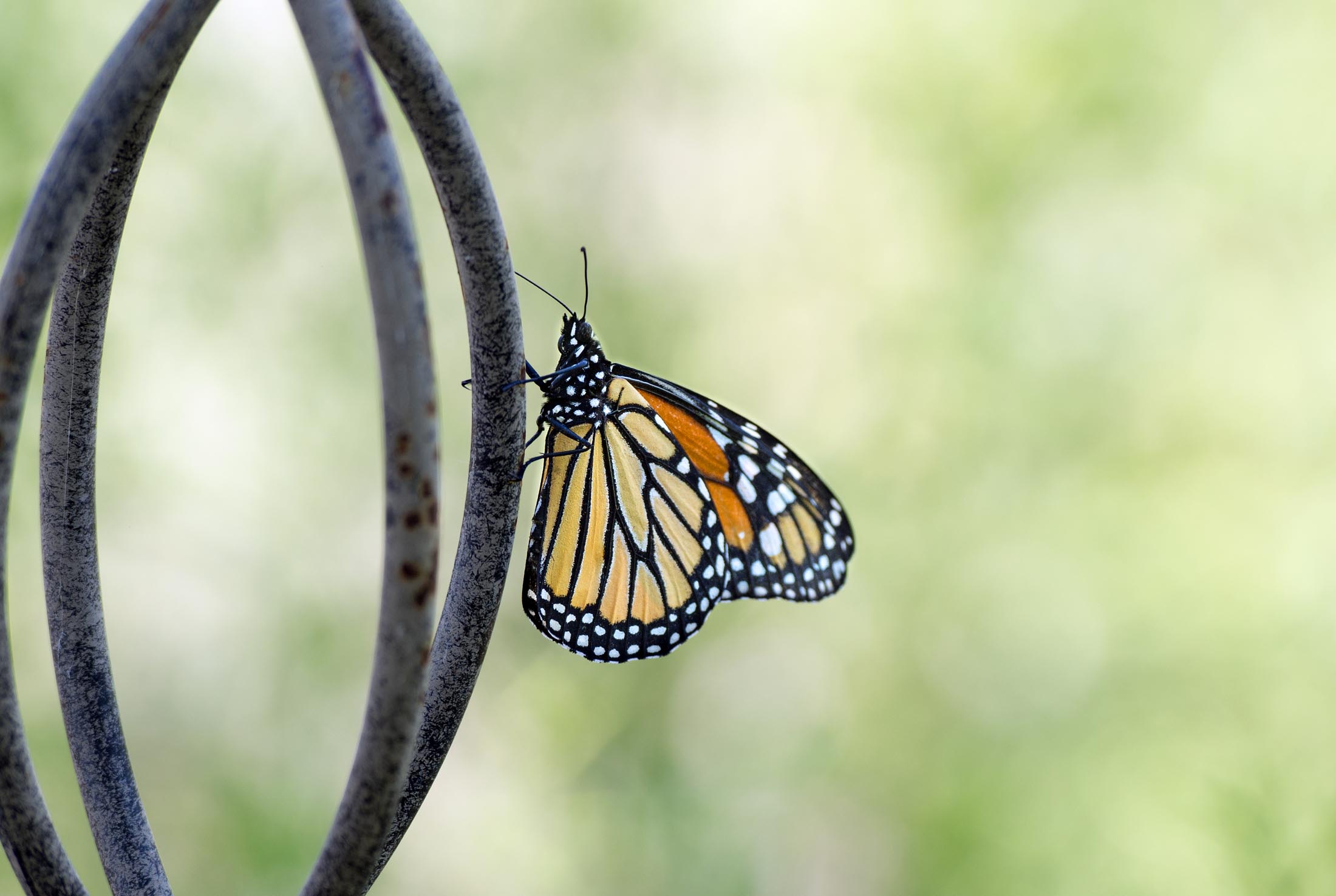
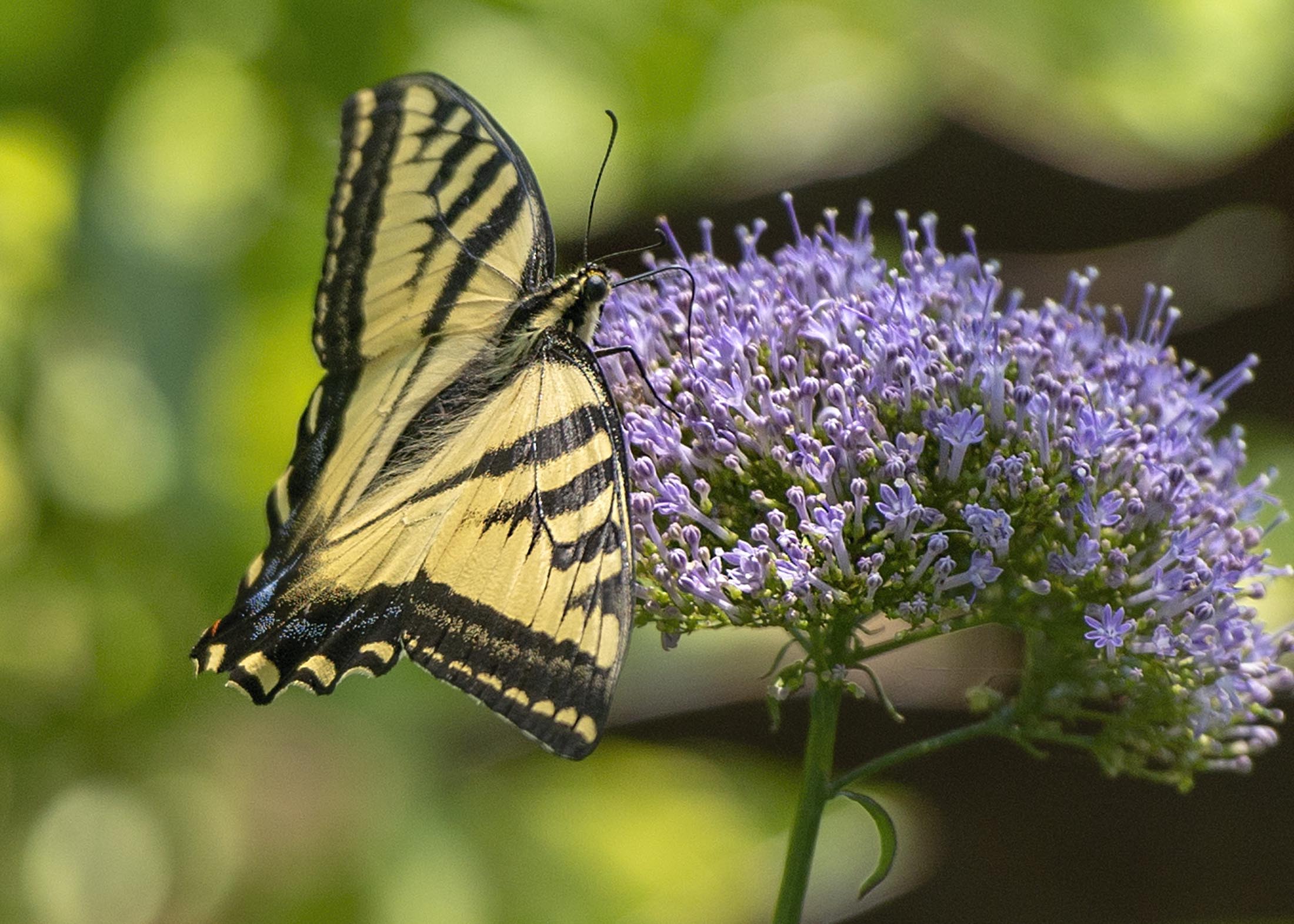
This spring, the garden was filled with swallowtails, painted ladies and cabbage butterflies.

Now, there are none.

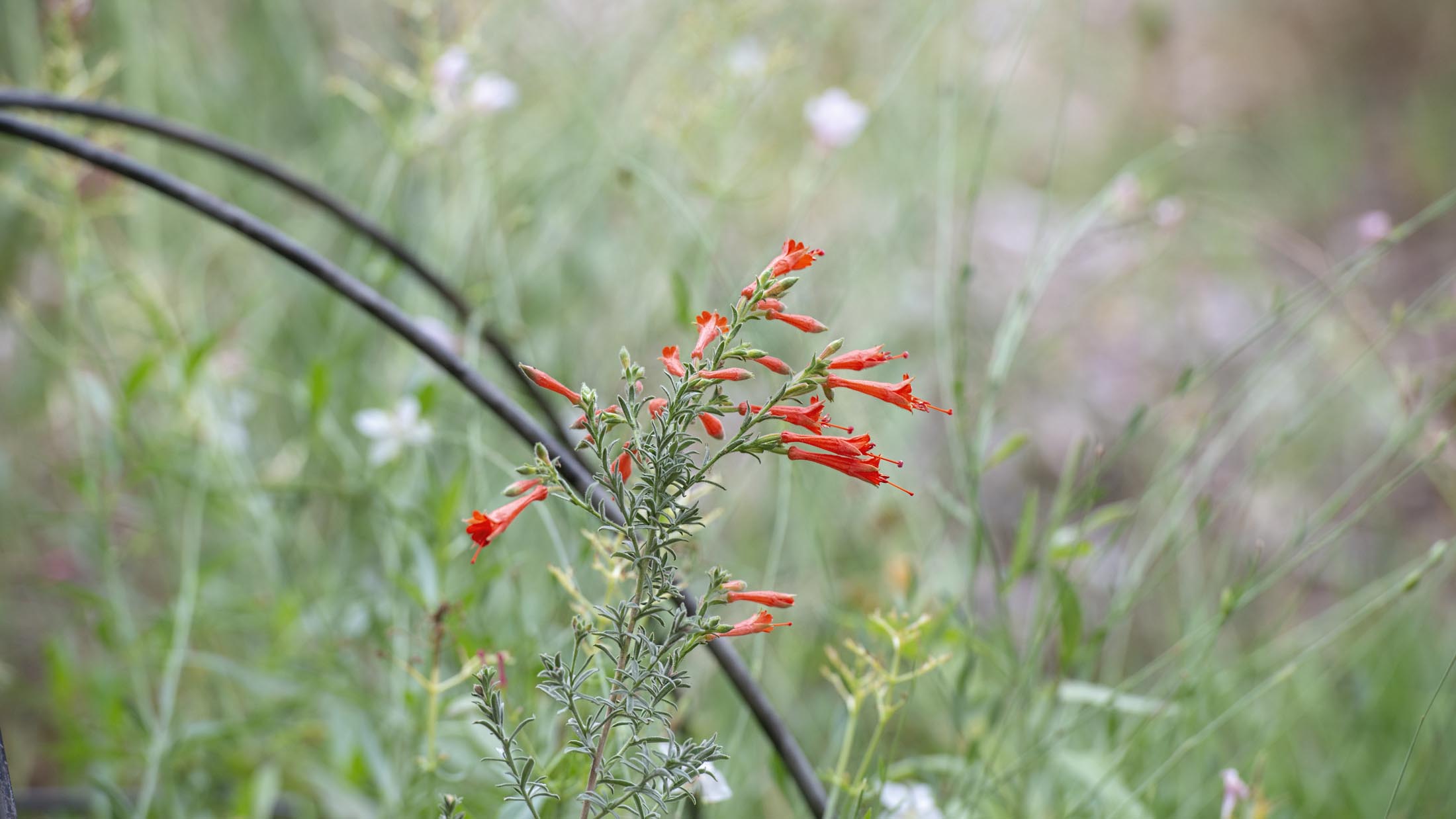
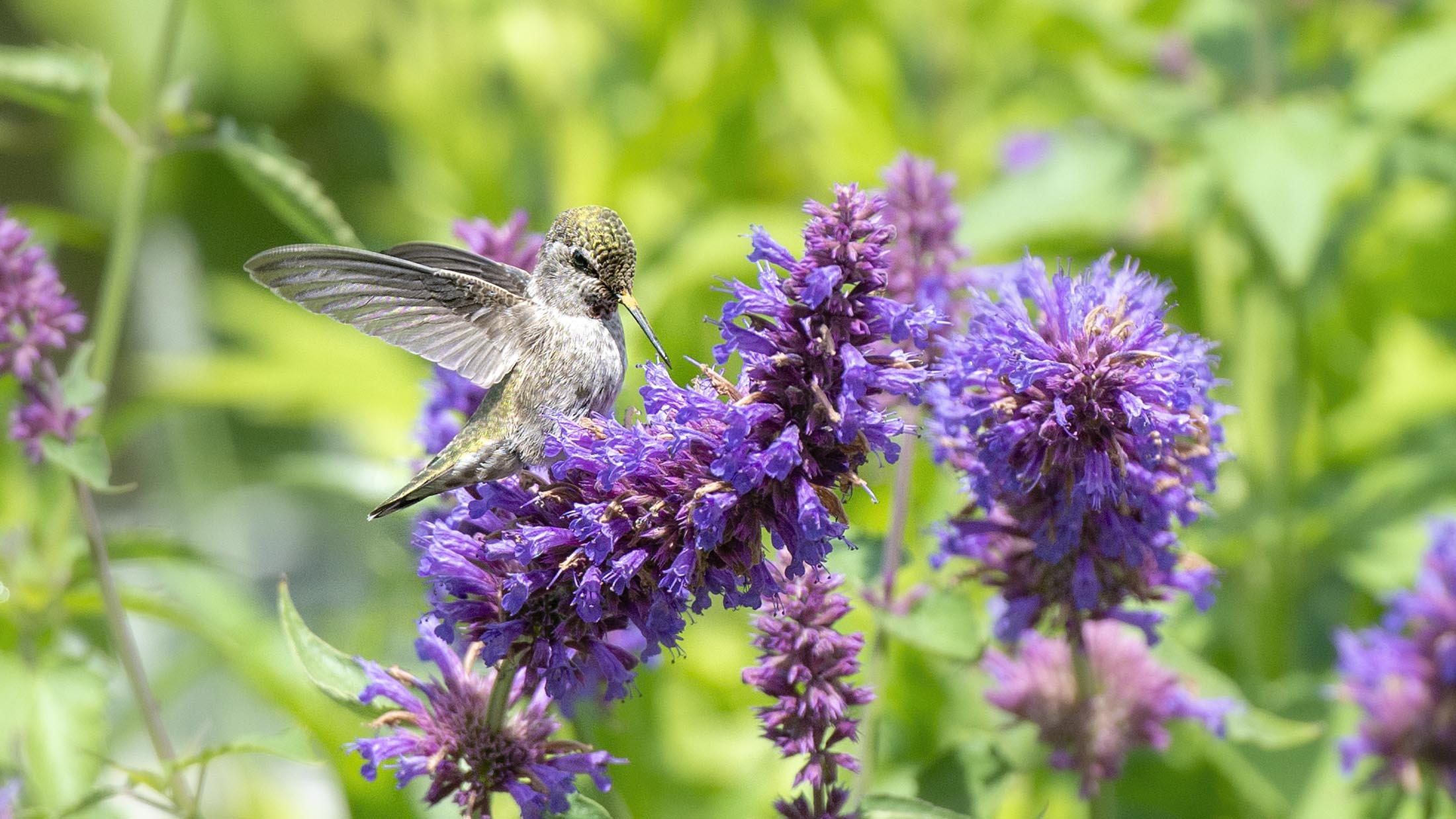
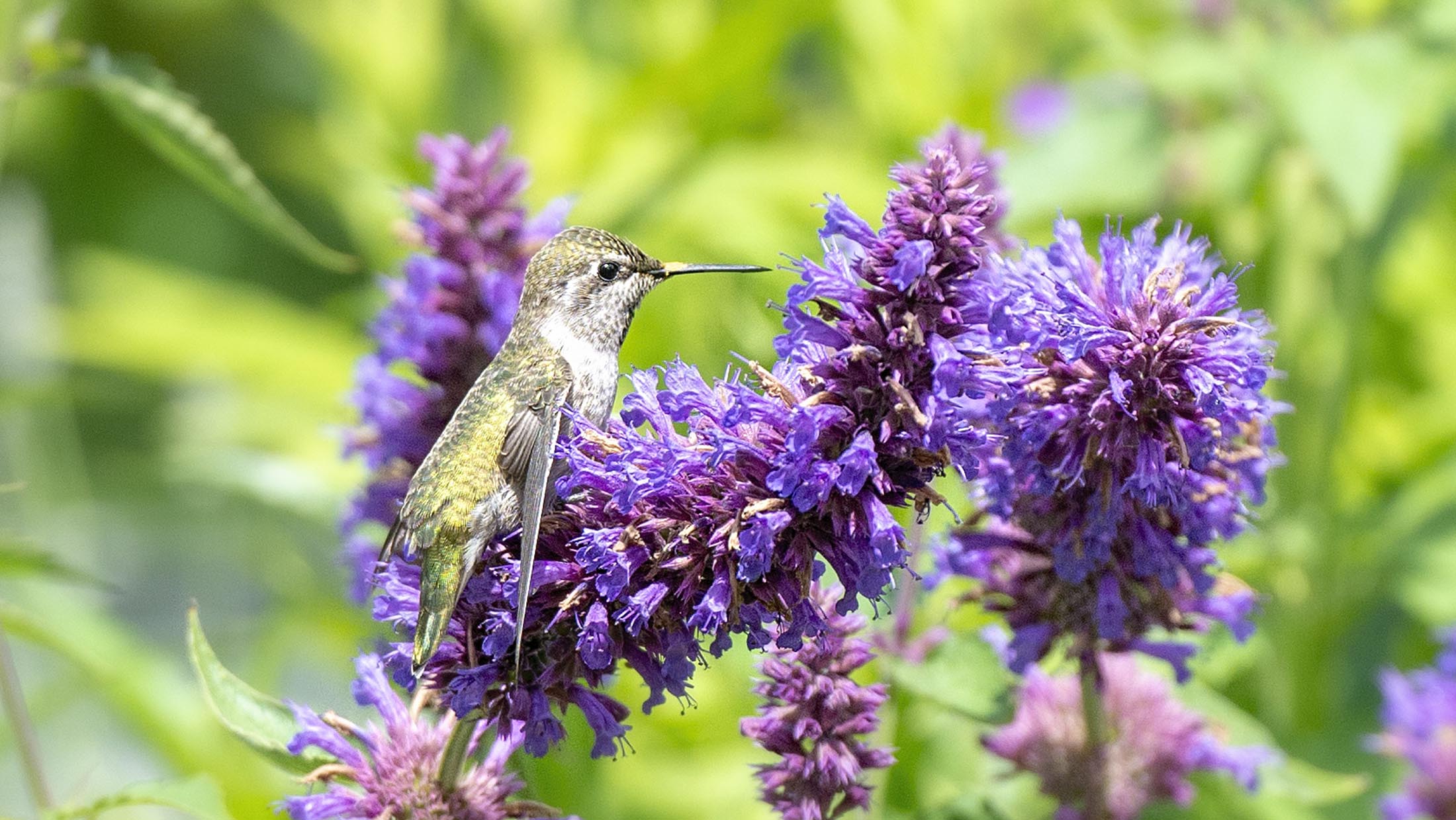
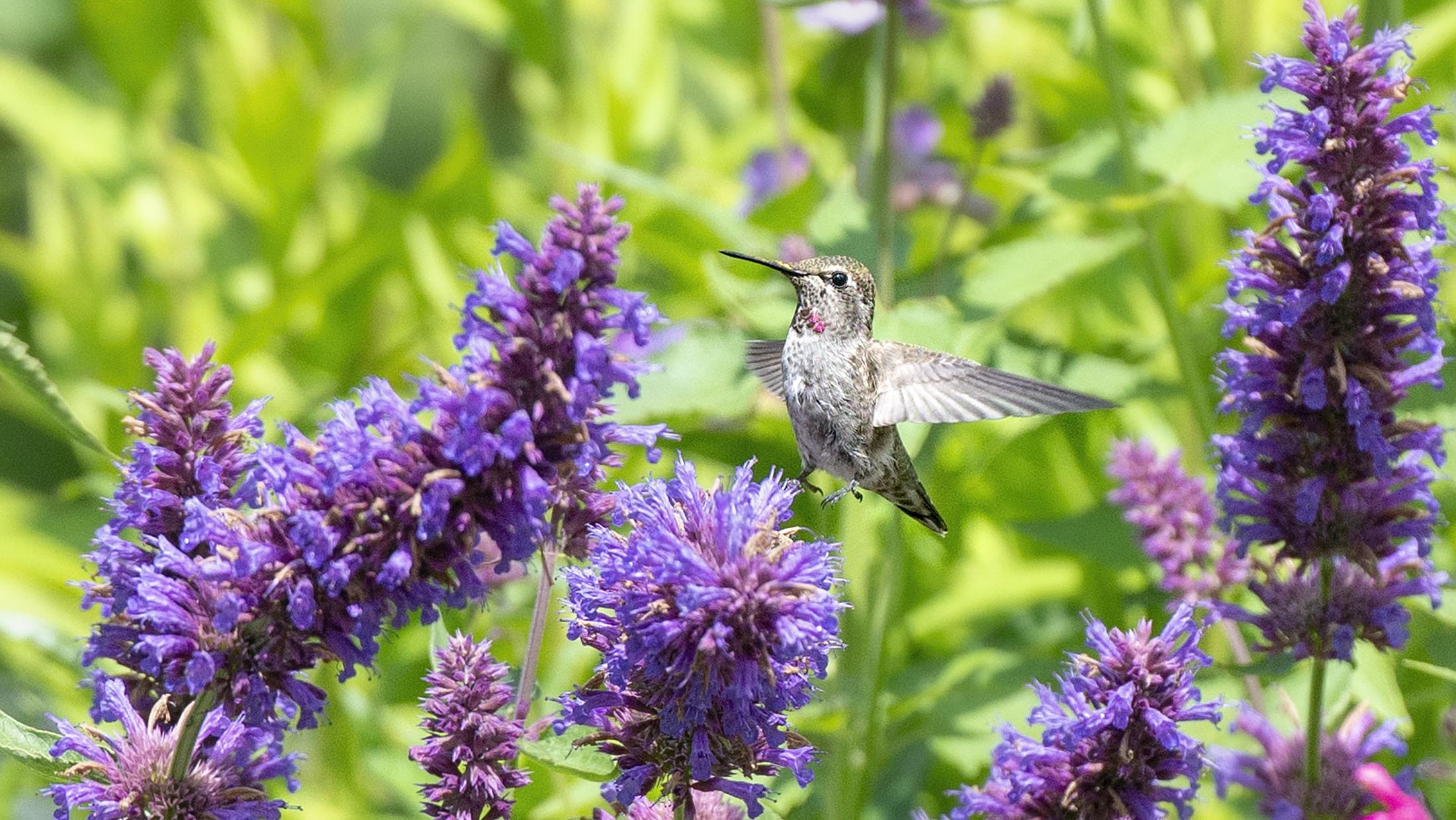
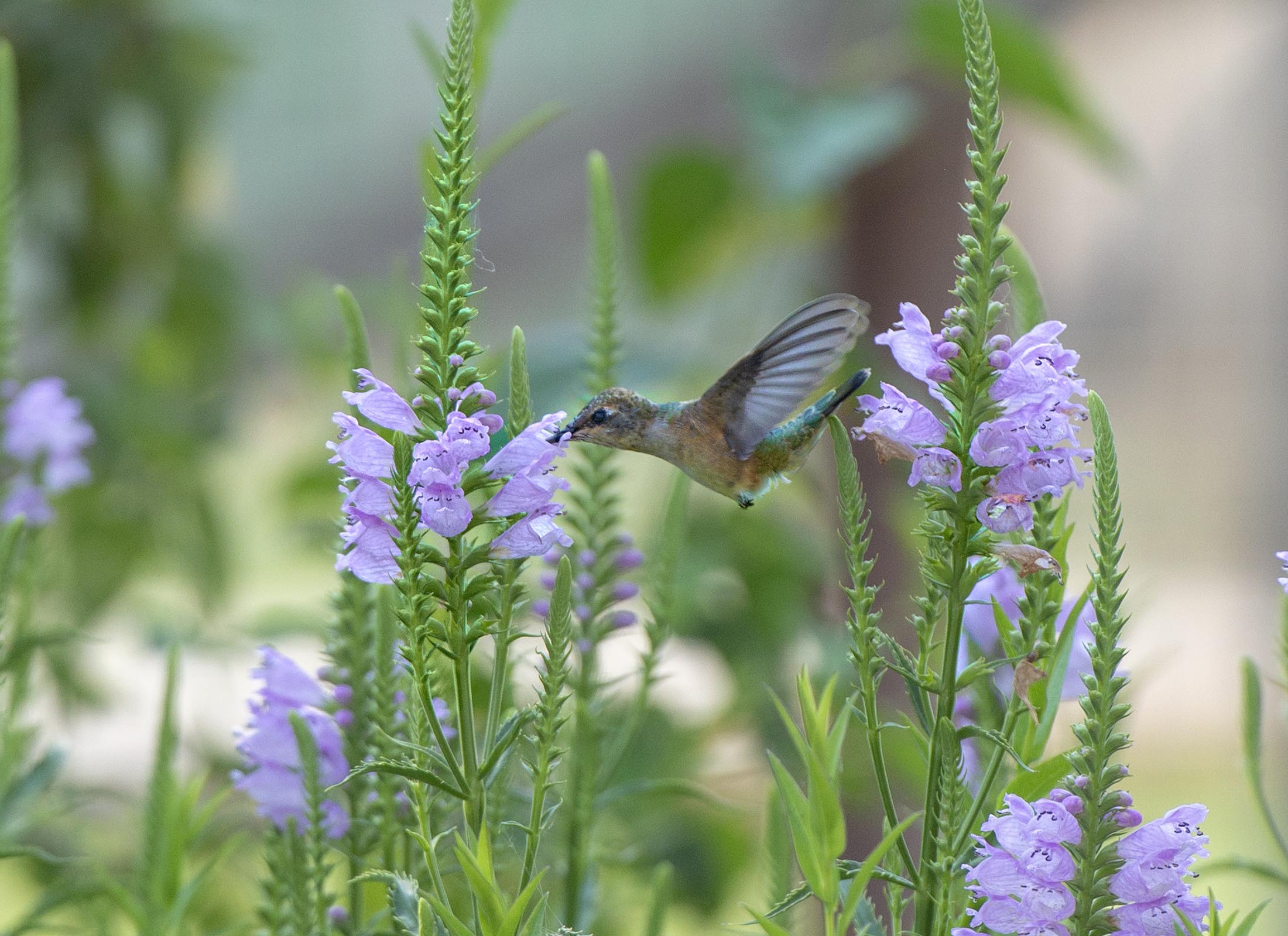
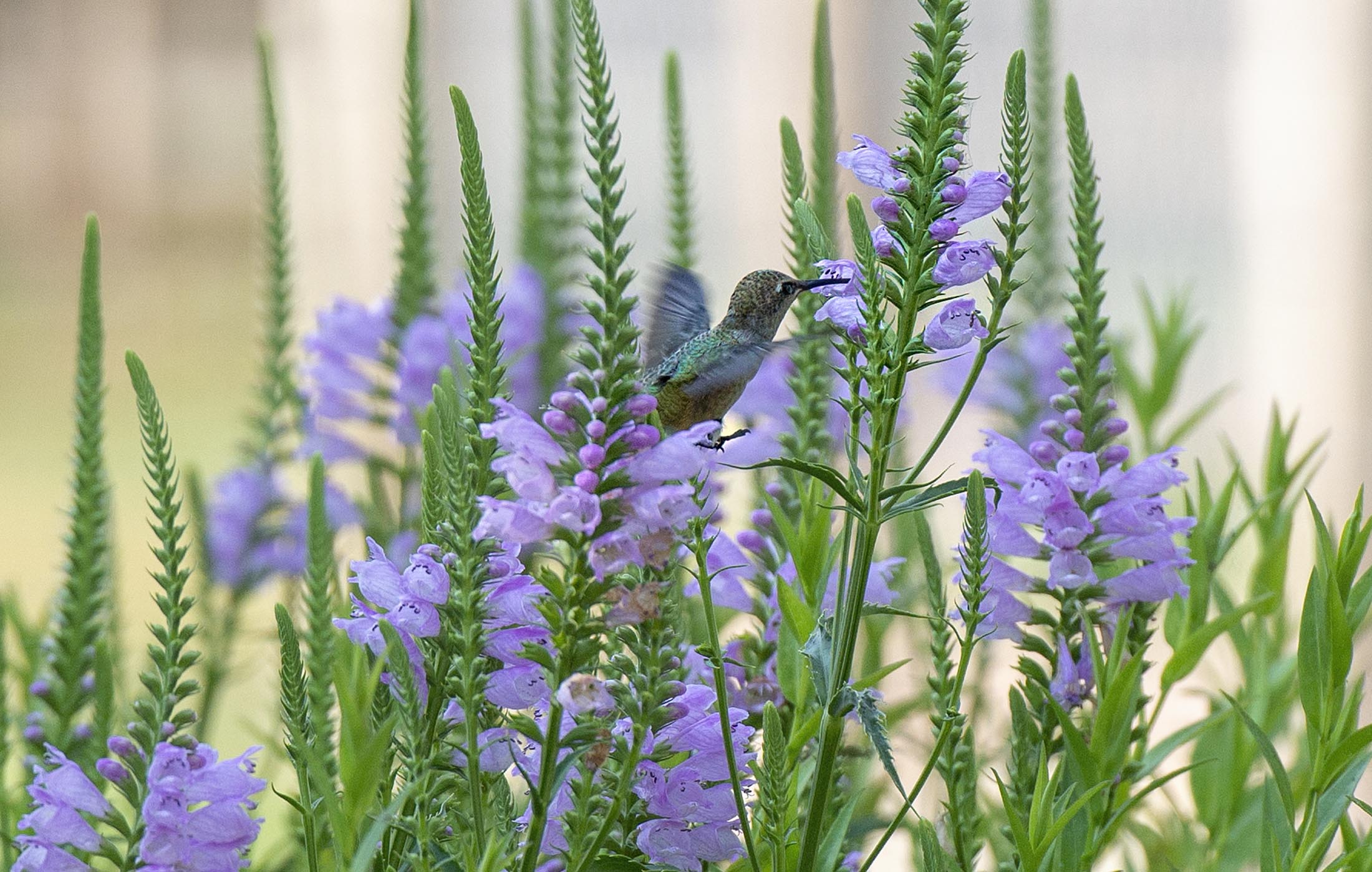
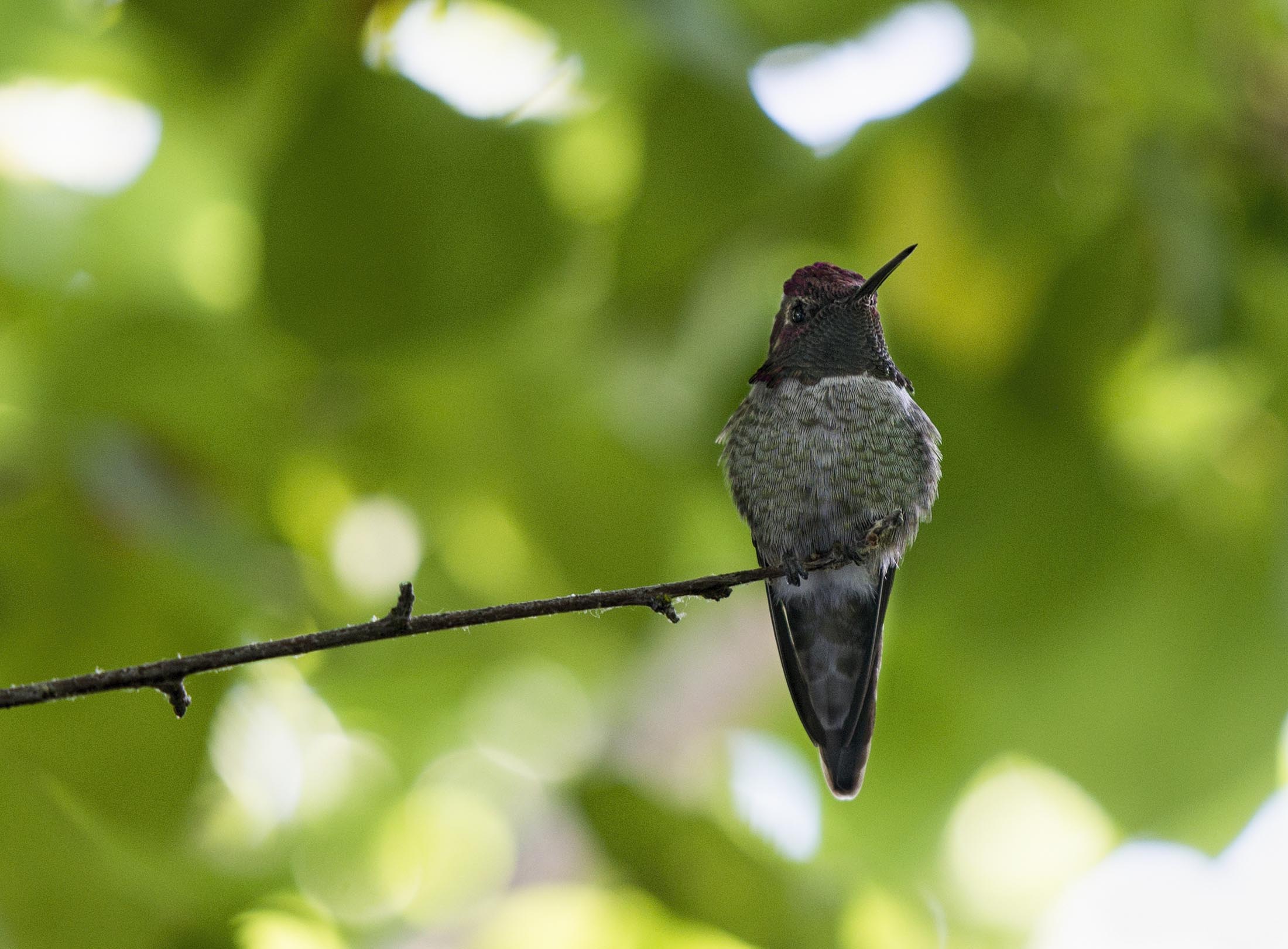
Two weeks ago, the hummingbirds were so busy drinking from the Agastache that this one ultimately decided to pull up a seat at the bar and rest while feeding despite the annoyance of my camera.

Since then, there have been none.

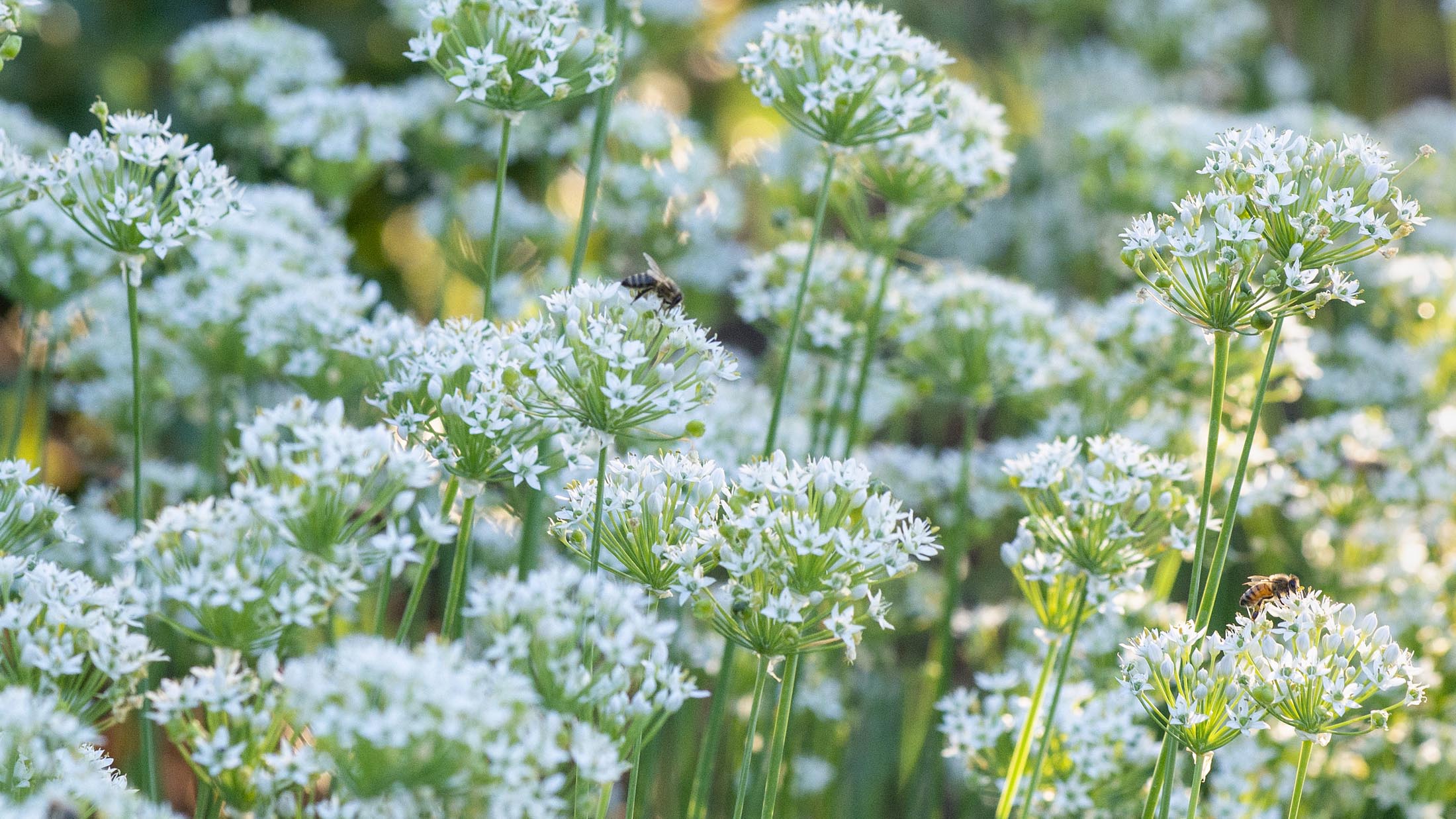
The garden is full of flowers that attract birds, bees, and butterflies.

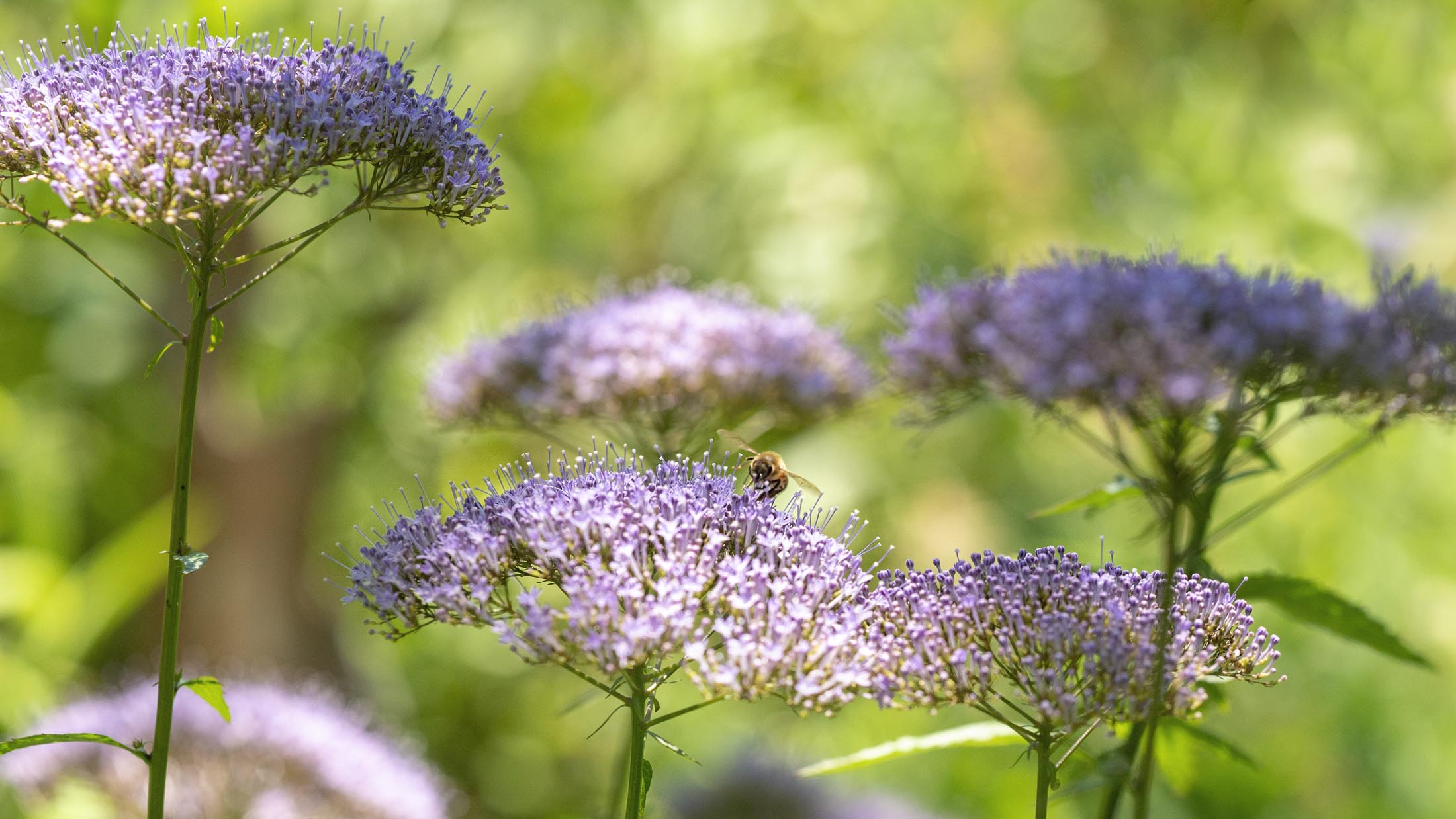
The bees are plentiful and enjoying their solitary feast,

but the hummingbirds and butterflies are noticeably absent.

It was an unusually long, wet and cool spring but in the late two weeks, it has been unusually hot—record-setting hot. Hummingbirds must feed all day to sustain themselves, but they avoid the heat and seek shaded shelter.

If the nights are too warm, they cannot recharge. The result can cause malnutrition and exhaustion.

I prefer to hope that they have found another, more abundant source of nectar and tiny insects to feed their growing young somewhere—but the suddenness of their disappearance is disturbing.

Butterflies depend on a succession of blooms from spring to summer.

When they come too early, their life cycle is disturbed—potentially irreparably.

Have we altered our planet so significantly that even the havens we have created are inhospitable?

“You think you can fix everything, change everything. But there will come a day when things cannot be fixed. And, you know what, it will be a day just like today”. ~ American Indian elder, quoted by Kent Nerburn.

The garden is still beautiful, but it is not the same without the flying friends who usually accompany it.

It is quiet. Ultimately, the garden depends on the pollination these winged wonders provide to ensure its longevity. And not just the garden – our food supply. Without the bees and birds and butterflies, nature is in jeopardy.

What legacy do we leave in our wake?

“We do not inherit the earth from our ancestors; we borrow it from our children.” ~American Indian proverb

Dear hummers and butterflies,

the flowers anxiously await your return…

as do I.

Taking the Hill

Originally, it was a mountain of tangled blackberries – home to snakes, thorns and the occasional bunny.

The brambles were replaced with raised blueberry beds – that fried in the summer heat and invited Bermuda grass, morning glory weeds and few blueberries.

Last fall, the bed frames were demolished to begin anew.

The vision was an extension of the adjacent California-themed garden.

The challenge: that bed sits near the top of the garden. When we get big winter rains, the water passes through and collects where the raised planters were until our clay soil will finally absorb it.

The solution: Mounds. Hills. Berms. Whatever you want to call them. They are raised high enough that the soil drains well.

Last fall, I brought in fresh soil and compost, covered them with cardboard, another layer of soil on top, and a final layer of mulch to let them “cook” over the winter, planting only those things that truly required fall planting. Maria and I created paths between the bed sections for weeding and planting access without compressing the soil.

And this spring, I filled the new beds to the brim with California natives and the Mediterranean standouts that I have long coveted.

The result exceeds my expectations already.

I know that I have installed more than the bed can handle long-term. But crowded beds ensure cooler roots in our hot, dry summers. And things can always be divided and moved in coming seasons.

The new beds are already bountiful and thriving in the conditions created for them.

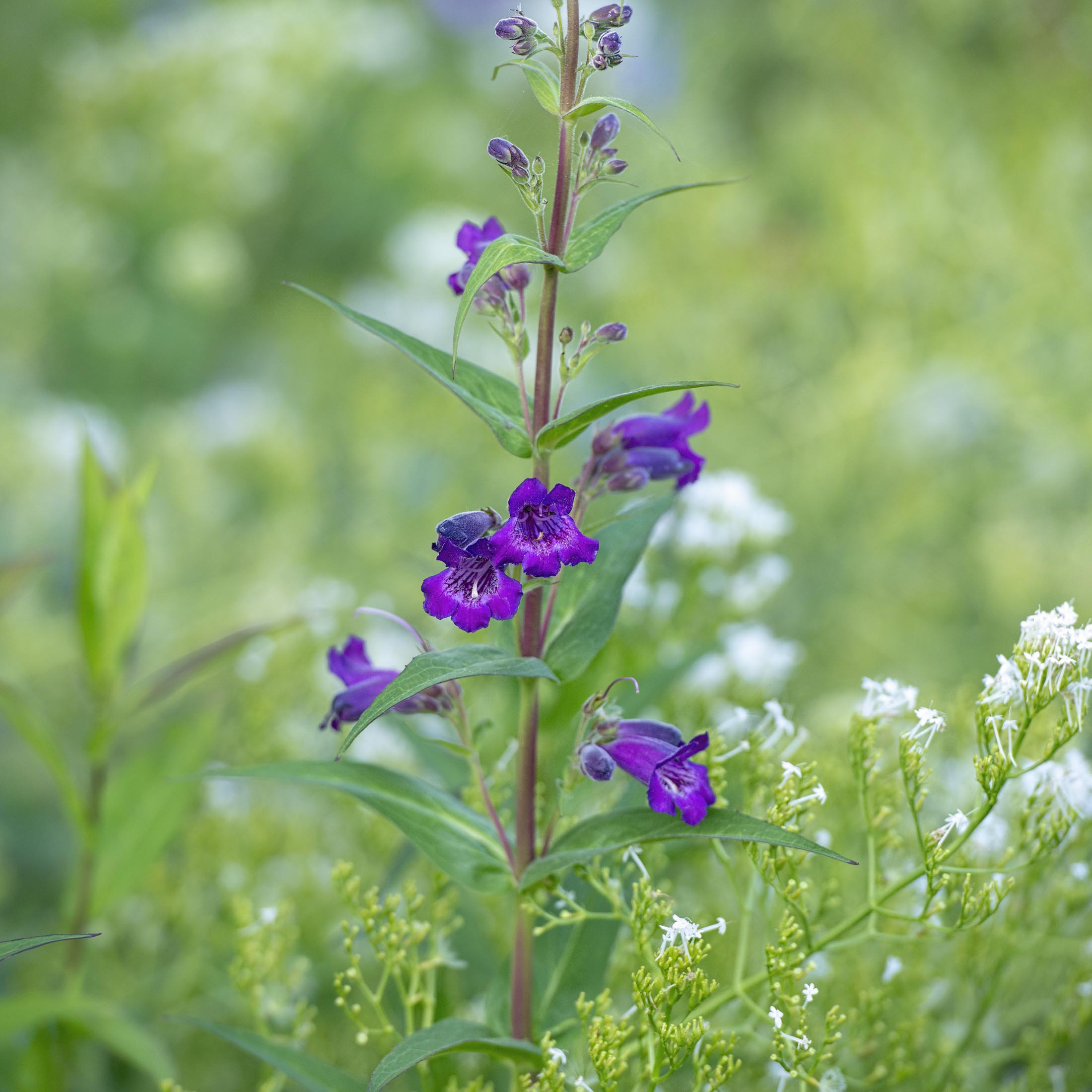
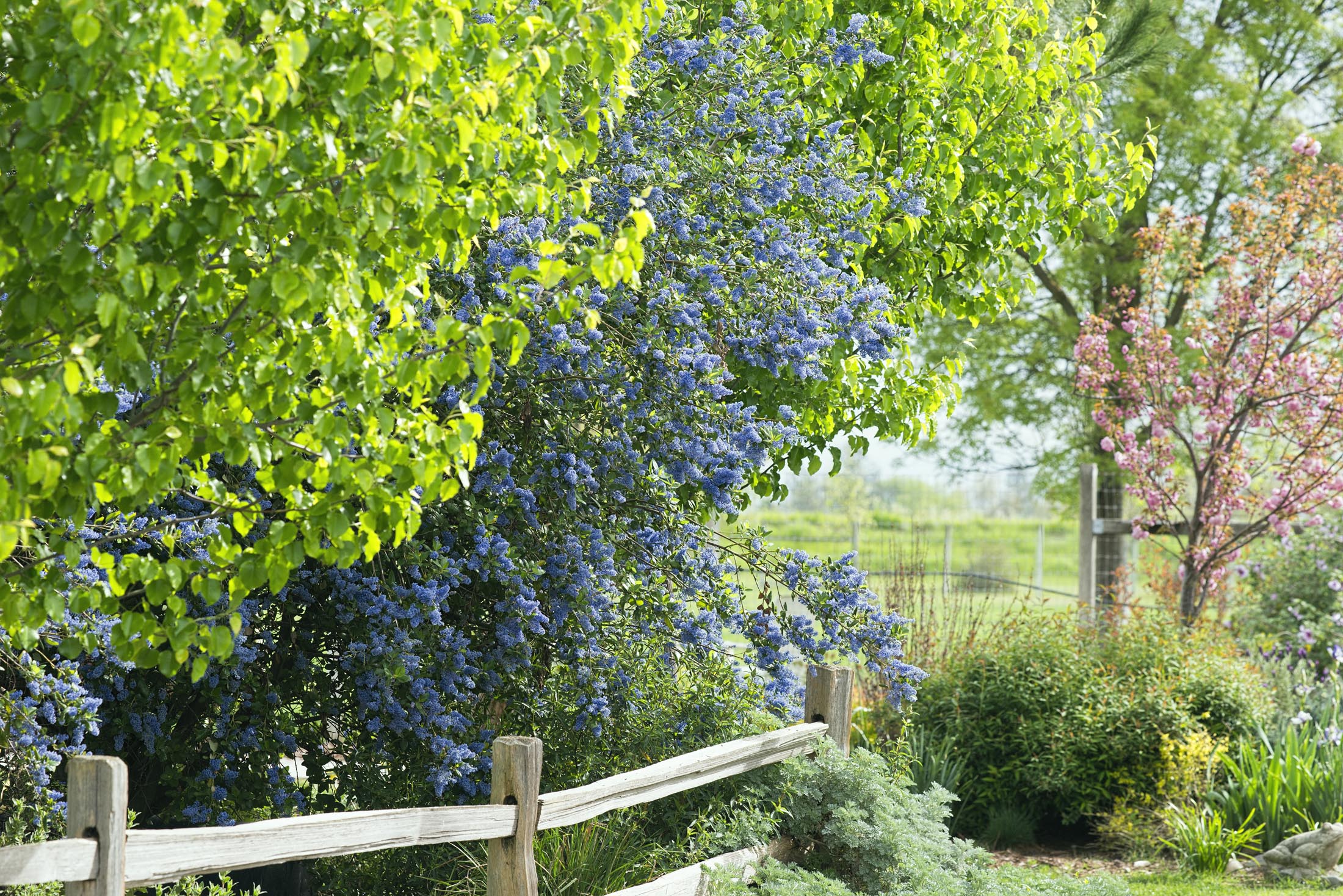
Native Ceanothus, Poppy, Erysimum capitatum (“Western Wallflower”), California Fuchsia, Penstemon eatonii “Firecracker Penstemon,” Delta Sunflower, and Salvia spathacea  “Hummingbird Sage.”

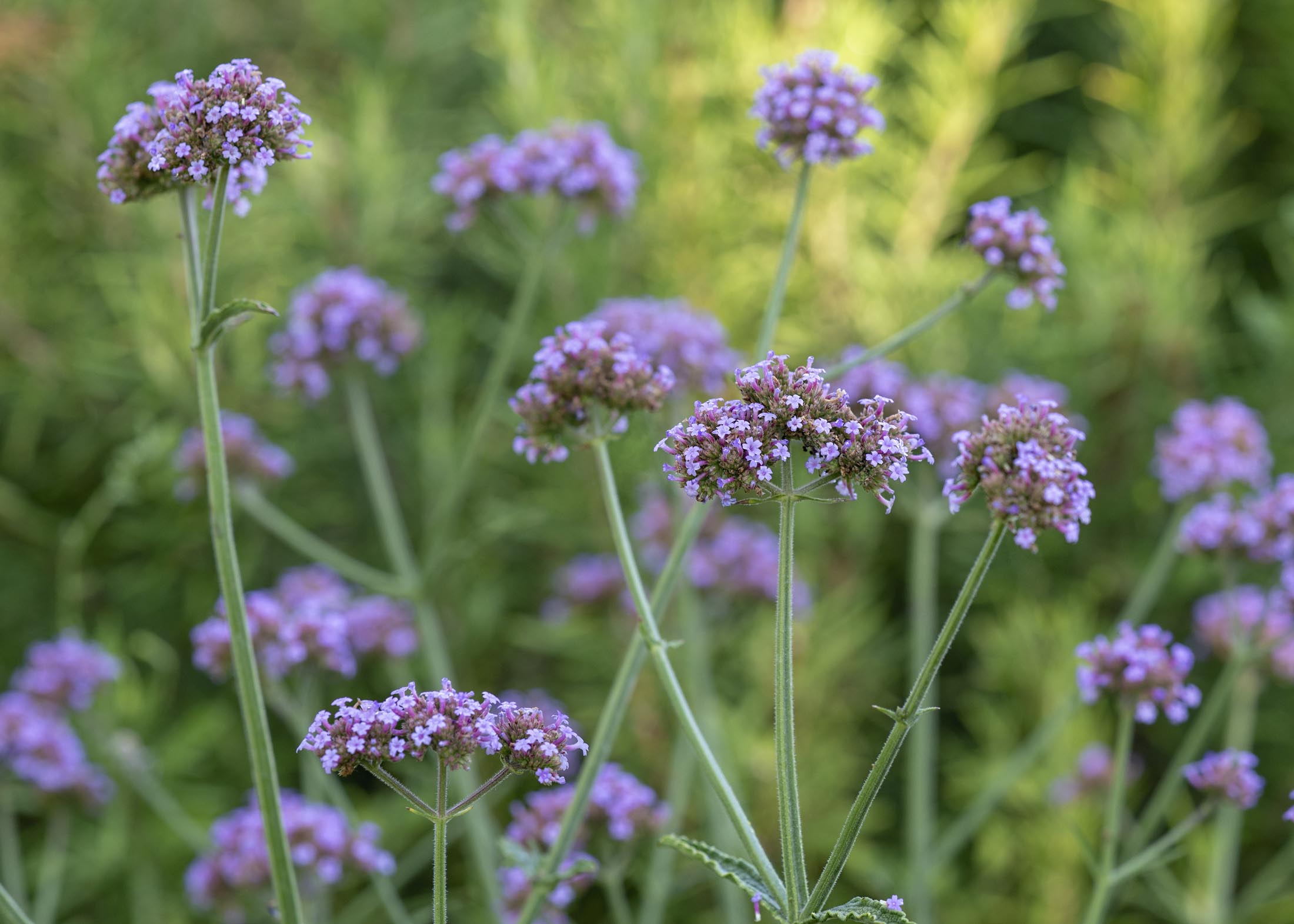
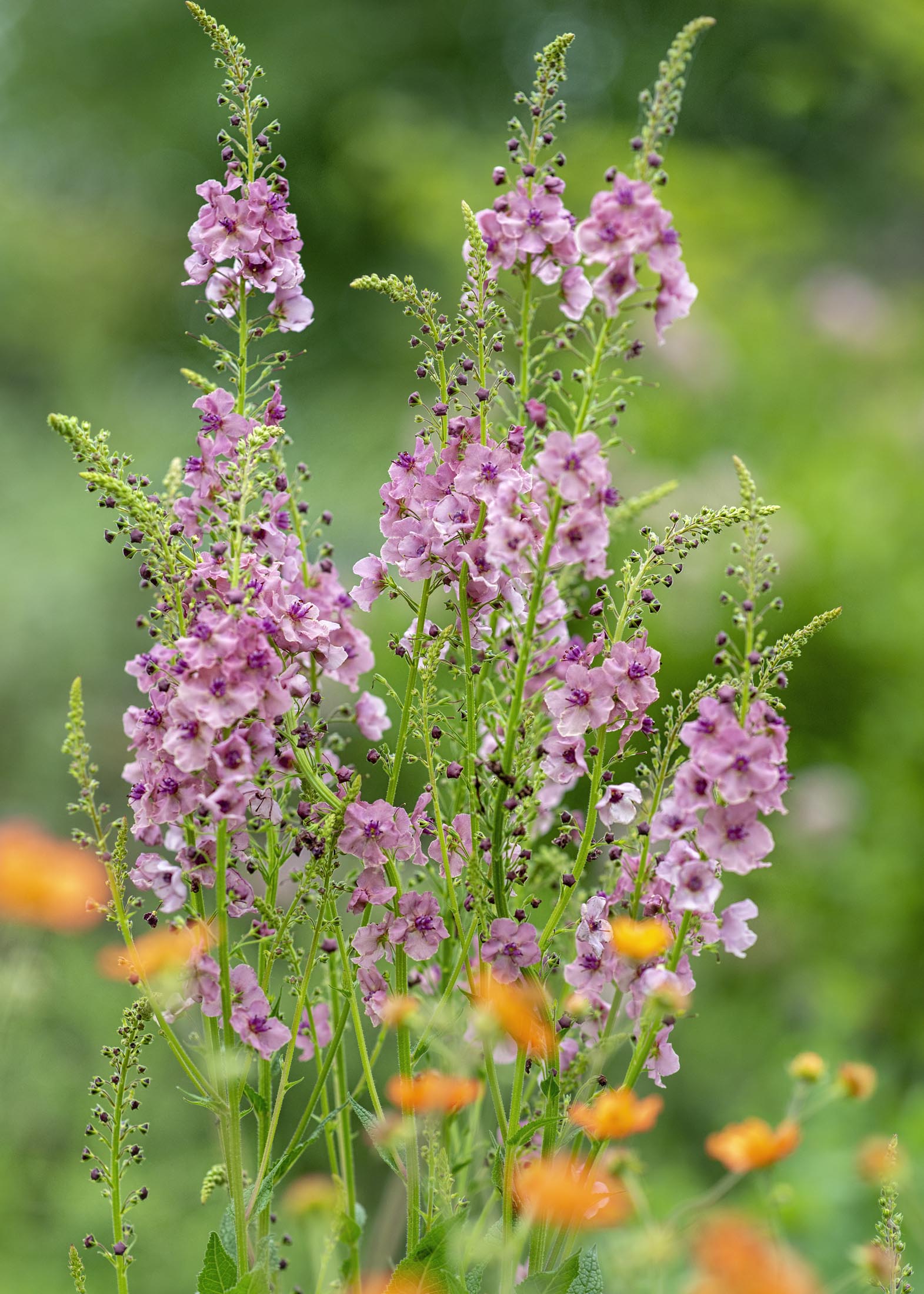
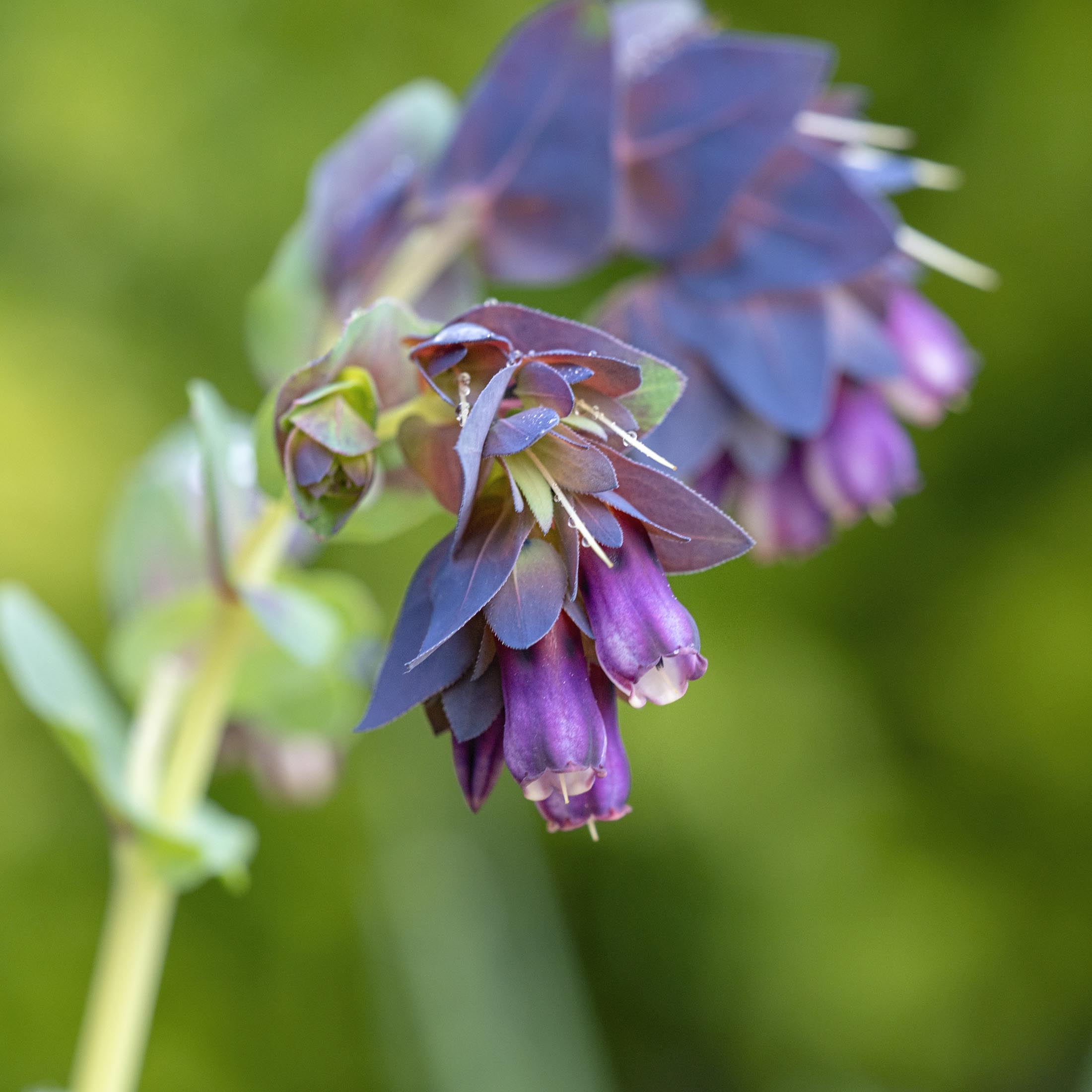
Mediterranean garden favorites: Crape Myrtle, Cerinthe major, Verbascum, Lion’s Tail, Blue Fescue, Verbena, Gaura…

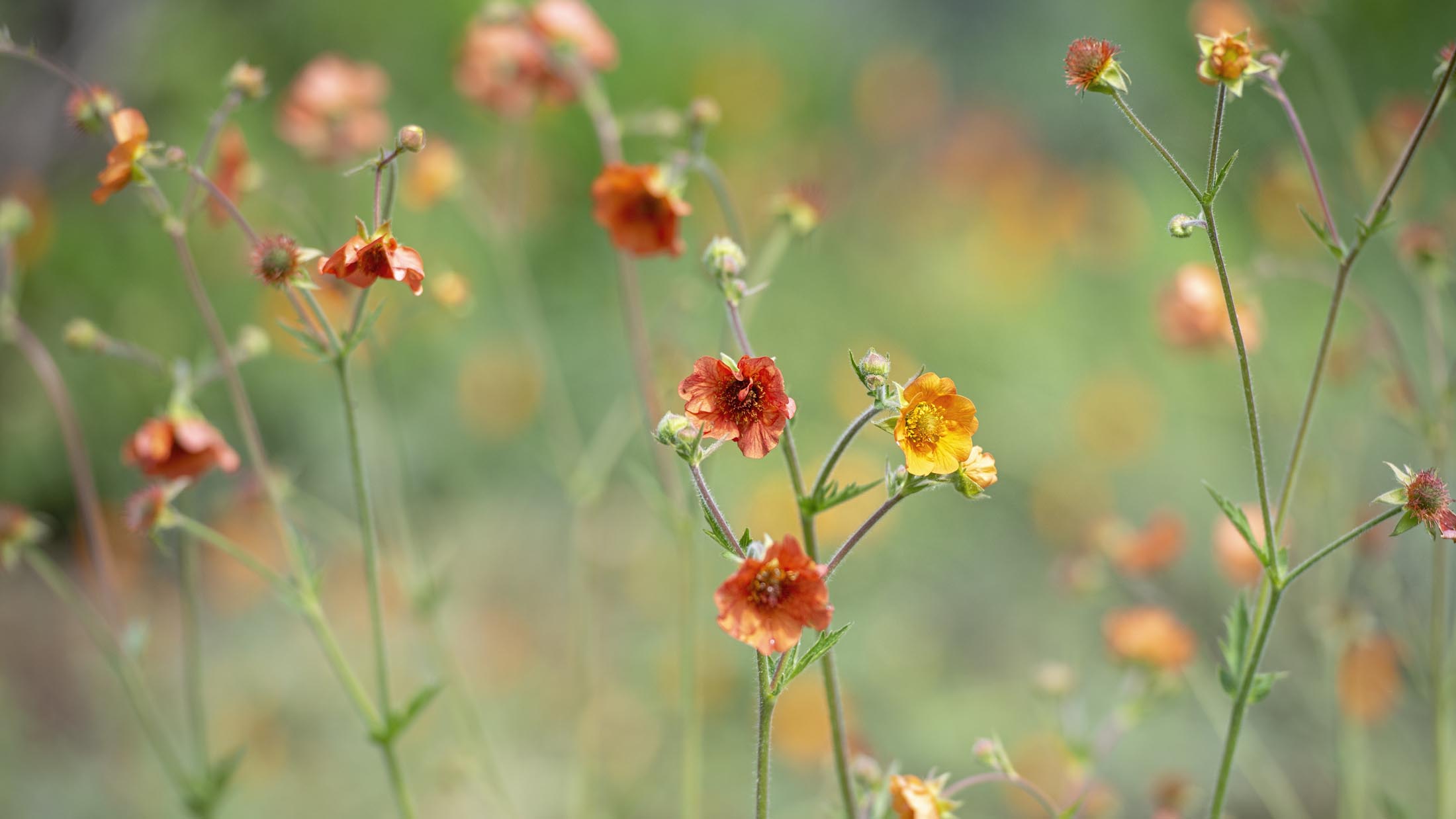
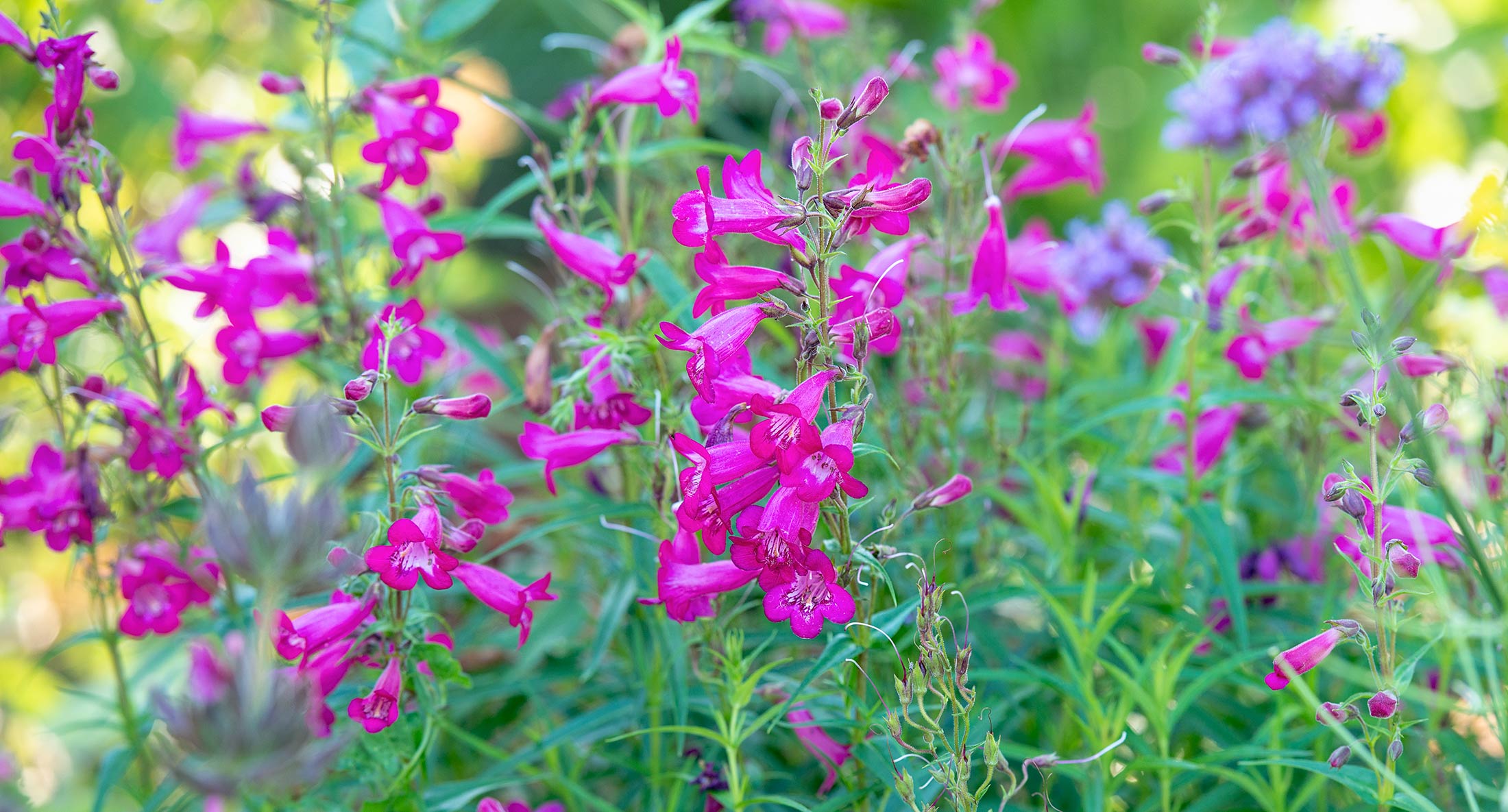
And a little happy Penstemon and Geum thrown in for good measure.

It’s not to say that the Bermuda grass and morning glory weeds have not attempted a comeback. But it is just so much more enjoyable to do battle with them when surrounded with this beauty.

Lesson: Never be afraid to start anew.

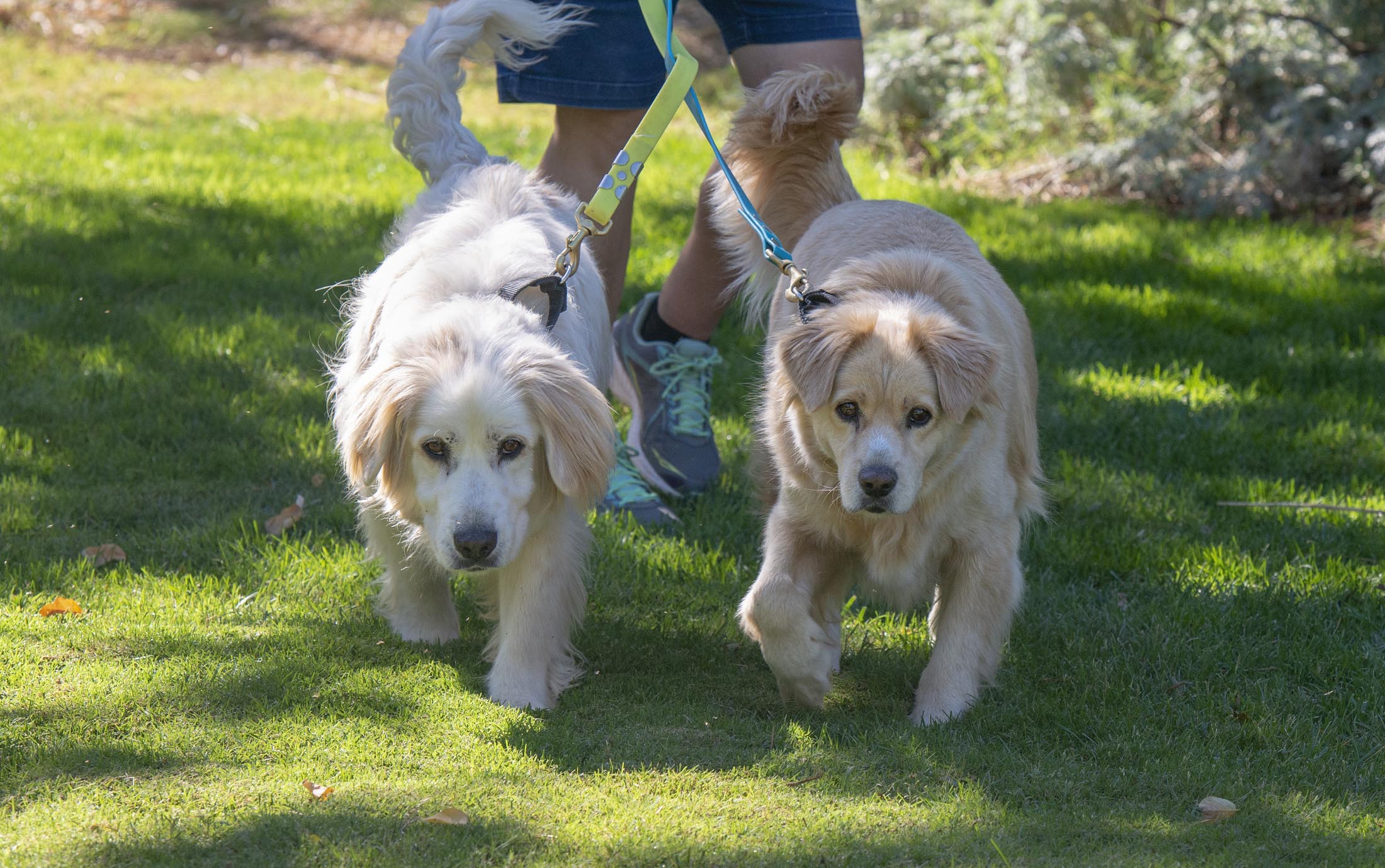
Like our friends Bodie, 14

and Summer, 15 –

both beginning new chapters in their glory years because kindhearted people believed that their best beauty was still within.

“There will come a time when you believe everything is finished. Yet that will be the beginning.” ~ Louis L’Amour


All Dogs Go To Heaven

If April showers bring May flowers, what do May deluges bring?

It is the third week of May, and I am sitting in my house in a wool sweater and fleece jacket because I will be damned if I will turn on the heat at this point in the year!

Like the rest of the country, we have been hit with really bizarre weather. I cannot complain, however, because ours is in the form of cooler temperatures and significant rainfall – something we gladly accept as we head into another hot, dry summer (I think!).

It caused the cancellation of our much-anticipated annual Reunion Picnic when adopters and their dogs are reunited with the volunteers who helped them on their journeys home.

It is amazing to see so many faces spanning well over a decade in time. Some are young and wild; some sugar-faced and happy to rest in the shade. This year, however, they would have been sitting in a downpour, so we will have to look for another date.

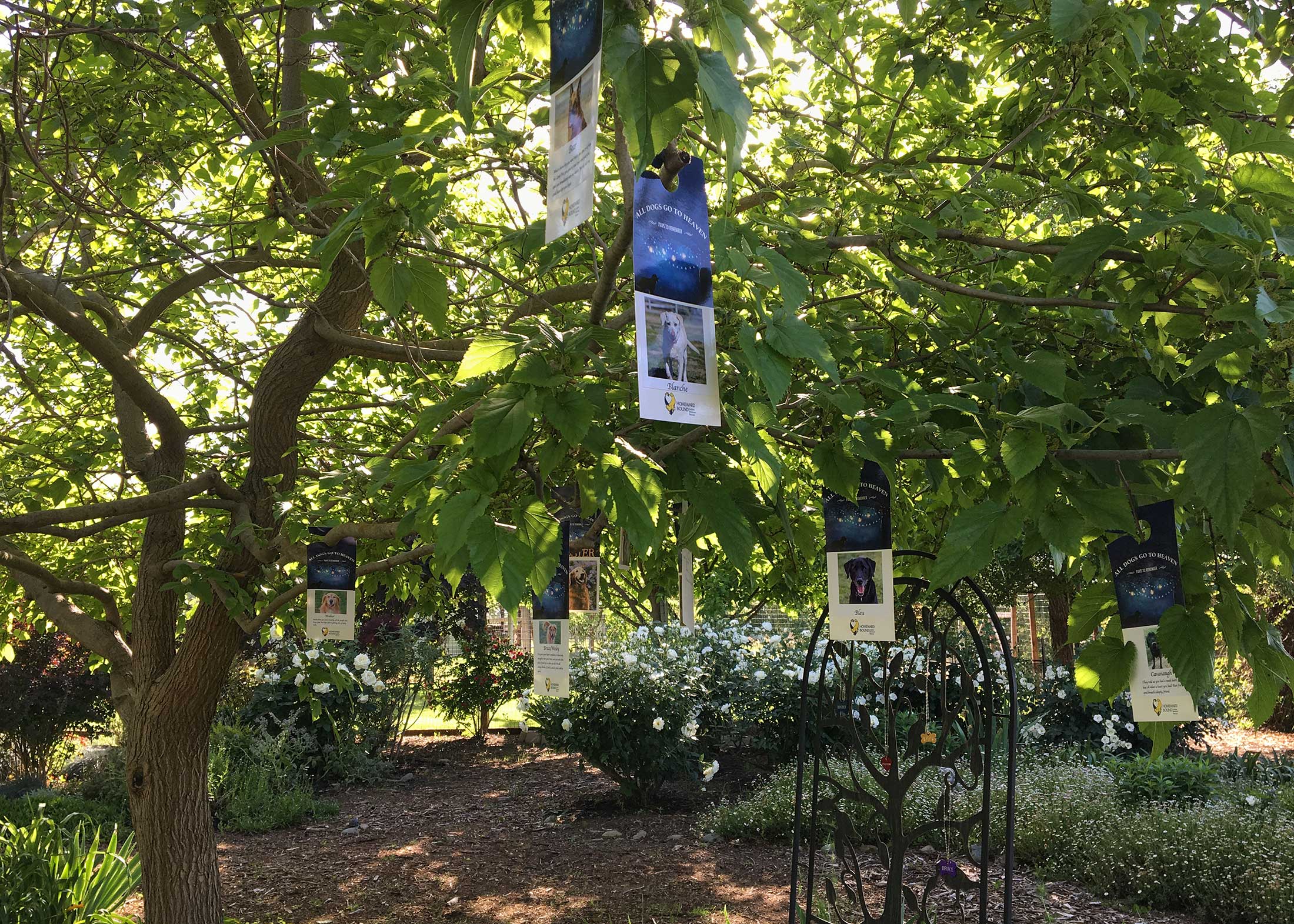
Thankfully, the weather was beautiful for our new event two weeks ago – a memorial service in the garden: All Dogs Go to Heaven.

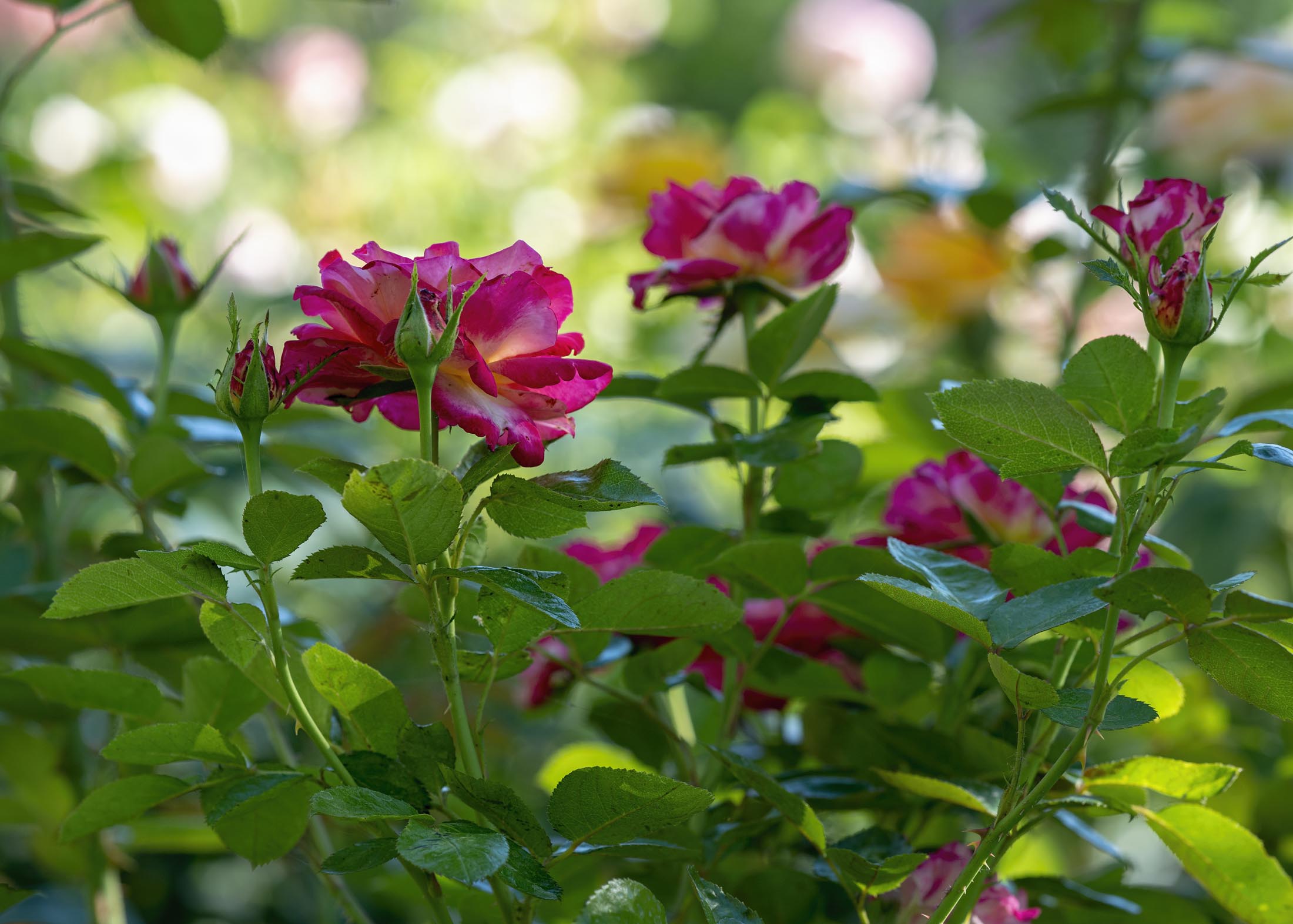
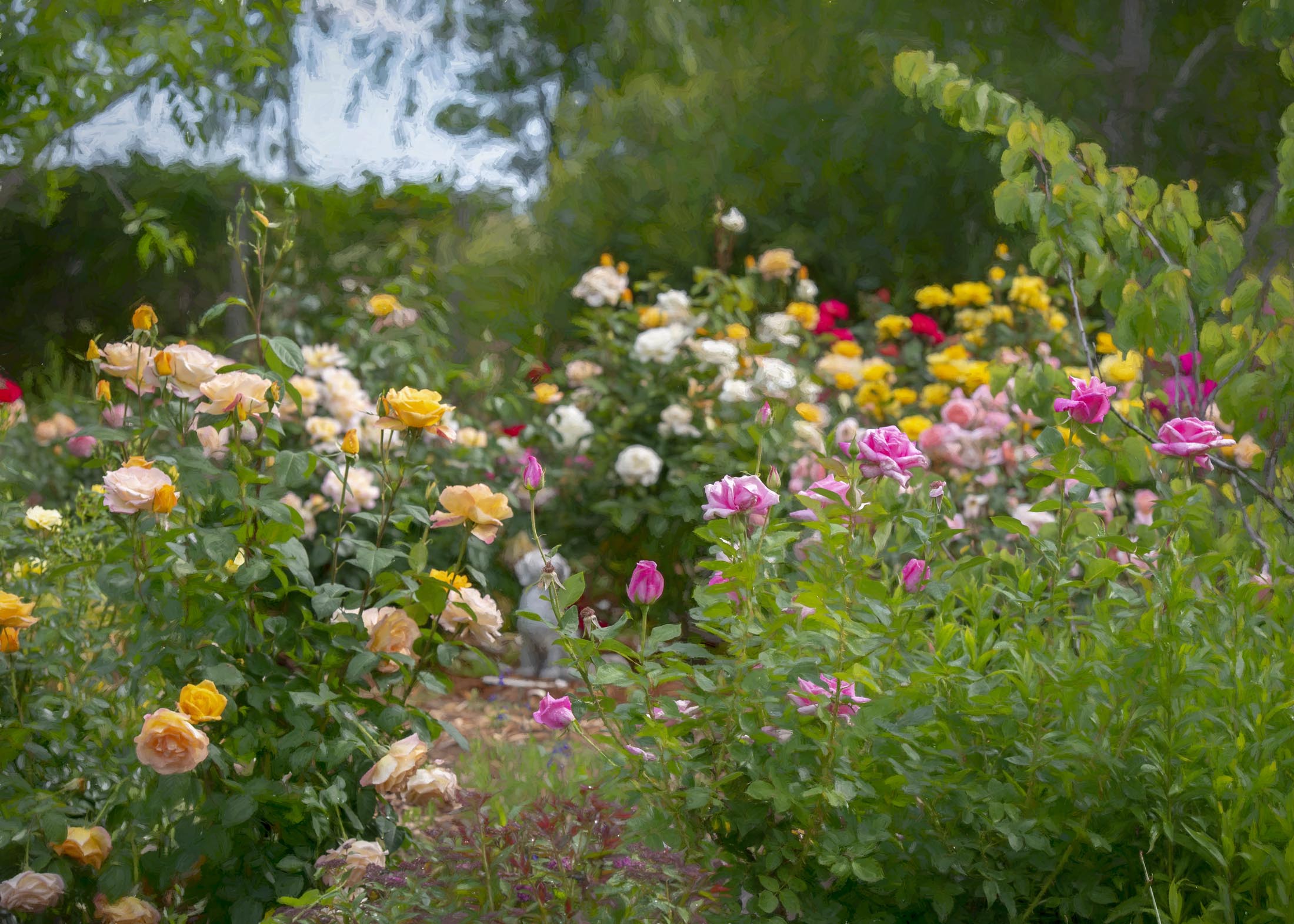
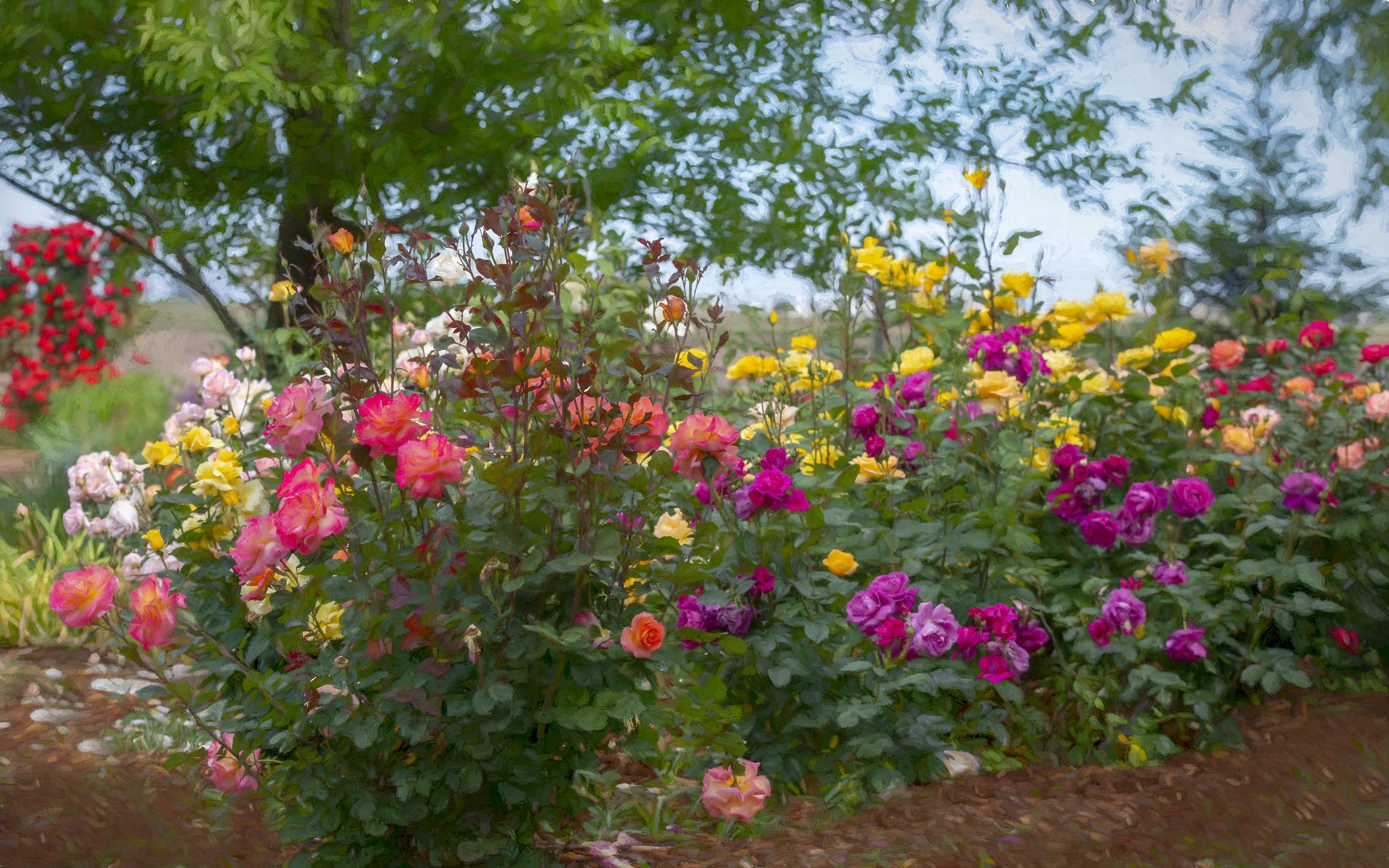
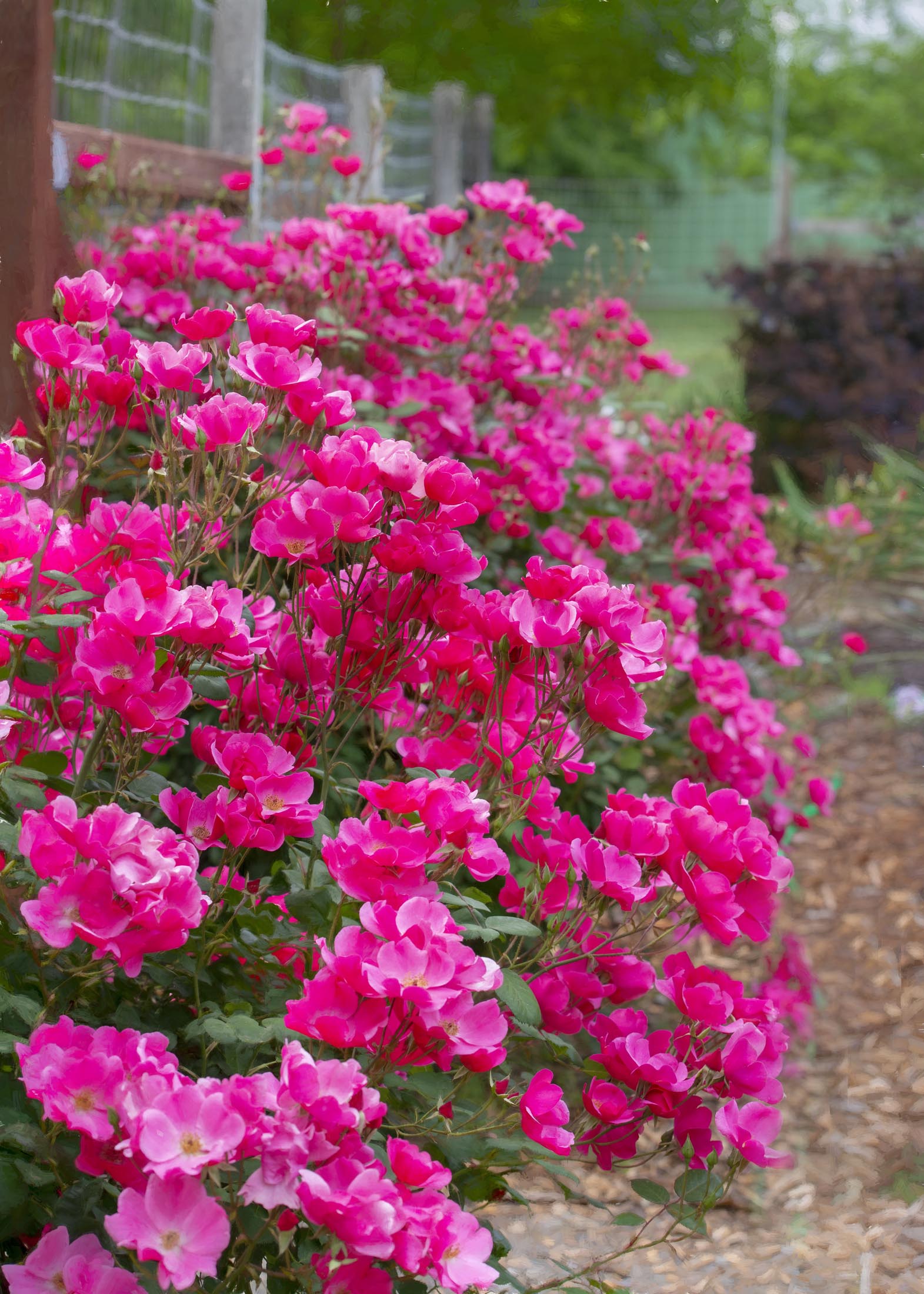
It was timed to match the garden’s first bloom. A heat wave the week before had me scrambling, but all survived and the garden looked magnificent—most especially the roses. There is nothing like the first bloom of the season.

People hung cards from the trees with photos and notes to the dogs they had loved and lost.

As the sun lowered in the sky, we lit candles, said a prayer, enjoyed great food and shared the company and stories of old friends and new brought together by a shared love of dogs.

I am not one for public displays of emotion, but I admit to welling up walking through the garden filled with photos of so many of our very special dogs—including our sanctuary dogs.

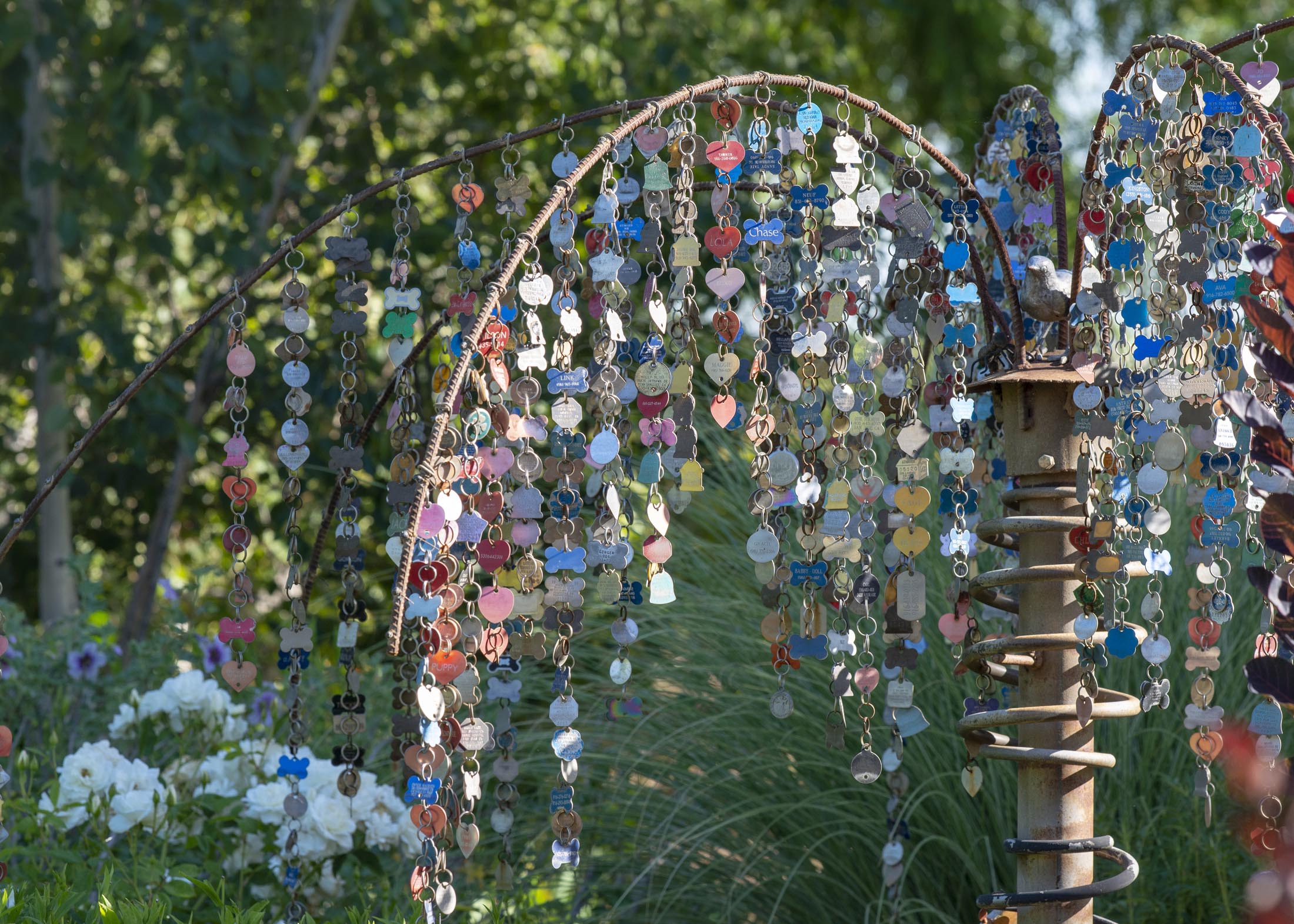
It was a physical manifestation of what I try to capture in this blog, thankfully documented by a professional photographer who donates his services, Mike Long. I stole a few to share with you. The full album is here.

As night fell, those that wished to placed their cards and photos in the fire pit. The ashes will be placed in the garden with a marker as a permanent reminder of the memories we shared together.

In anticipation of the rain this week, I did do some cutting back of the already over-burdened roses—particularly the Iceberg Roses in the White Garden that Ina has (once again) accused me of over-feeding and watering.

In my defense – the heat wave week was the first time I watered the garden all this wet spring – and they didn’t get any special feedings. They are, however, pruned by Ina – so guess who I blame for their exuberance!?!

I thought the rain might squash the newly planted Delta Sunflowers,

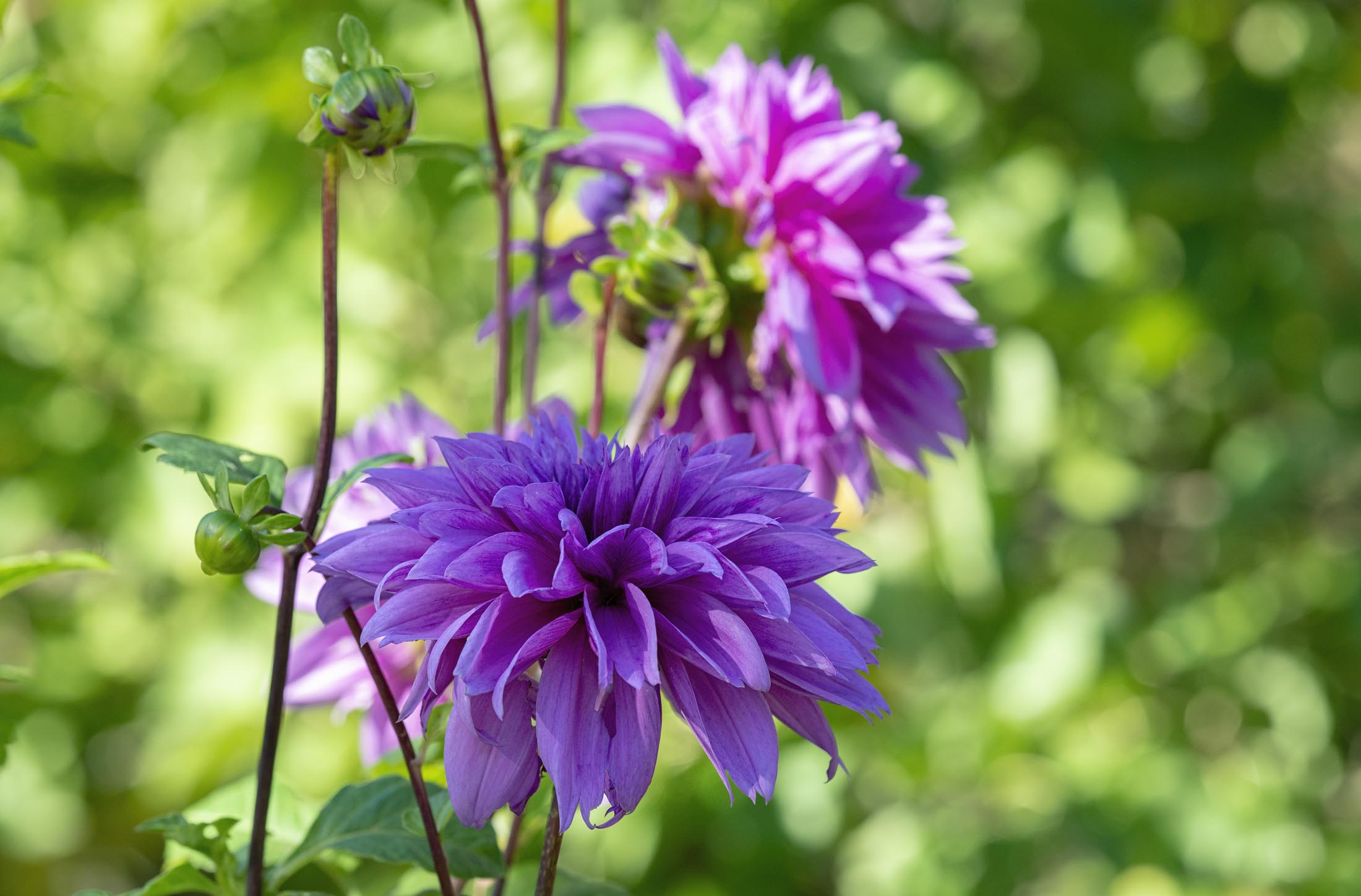
or drown the Dahlias that were just popping up.

Instead they seem to be thriving.

I’ll be curious to see how the California natives and drought-tolerants survive the pond created in the front beds.

How strange to worry about too much water for once! A small glimpse into our climate-changed future. Who knows? Maybe I will be able grow some of my east coast favorites soon.

A Garden Is Not a Place

“A garden is not a place: it is a passage, a passion.

We don’t know where we’re going;

to pass through is enough;

to pass through is to remain.” ~ Octavio Paz

I am never alone in the garden. When all have left and I have it to myself, I am still surrounded by the memories of all that remain.

All In A Day

All in a day…

A motley duo transformed and made as beautiful on the outside as they are within.

A one year old boy is surrendered, and then reclaimed because his people could not be without him with the understanding that a dog is a member or the family and a promise is a promise. Kids (human or canine) take time to grow up. Patience, perseverance and consistency are the keys. You get out what you put in.

Three Golden girls were spared a life of puppy-making and will, instead, enjoy a life of love and play.

A good Samaritan went out of his way (and wallet) to convince a neglectful and abusive owners to sell him the dog they left chained in the yard.

Before bringing him to us, he took the unbelievably trusting and forgiving Labby boy to the river and showed him that good people do care.

Three grateful Goldens saved from the streets (or worse) traveled more than 6,000 miles to begin a new life.

Three masquerading teeny tiny tots made their way to our Golden Retriever rescue (and my foster home)

because our favorite breed is rescued.

And one hundred and twenty roses were pruned and prepped for a new season thanks to the best-ever gardening crew (only a few are captured here).

Countless little miracles – all in a day.
Find your passion and jump in. Even the muddy water is fine.

Unity

When a group of gardeners first answered the call to help create the Homeward Bound Memorial Garden, the design included a dozen or so beds, each devoted to a specific species or type of plant.

There were planned beds for iris, viburnum, daylilies, white roses, ornamental grasses, succulents, perennials, and even a one devoted to container plants. It was a design born of the individual interests of the volunteer gardens who would be dedicating their time but lacked something essential: unity.

The garden got underway based on this design, but as some of the original volunteers fell away, those of us who remained started shaping a different vision.

Through trial and error, we learned what worked best in the clay soil and the Valley’s extremes of heat and cold without a great deal of babysitting as the garden does not have daily keepers.

Native plants began to play a larger role along with drought-tolerant plants suited for our Mediterranean-like climate.

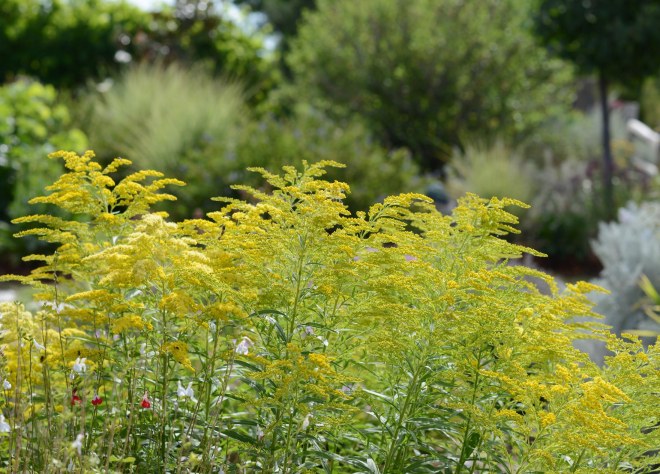
Gradually, divides of successful combinations were repeated throughout the garden giving the disjointed patchwork needed cohesiveness.

The repetition brought order to the chaos of the unconnected beds. Patterns of color, shapes and sizes bridged divides and created balance without the need for unnatural barriers or symmetry.

Now, species are echoed throughout with an overarching theme of greys, silvers, blues, purples, mauves, and white that perfectly support dashes of vibrant seasonal color.

There is also a better sense of scale with plants relating to others around them and the trees and statues that form the garden’s bones.

Foundational plants provide year-round color and texture: artemisia, lamb’s ear, ceanothus, barberry, agastache, lavatera, iris, lavender, Santa Barbara daisy, sage, yarrow, fescue, penstemon, rosemary, and grasses.

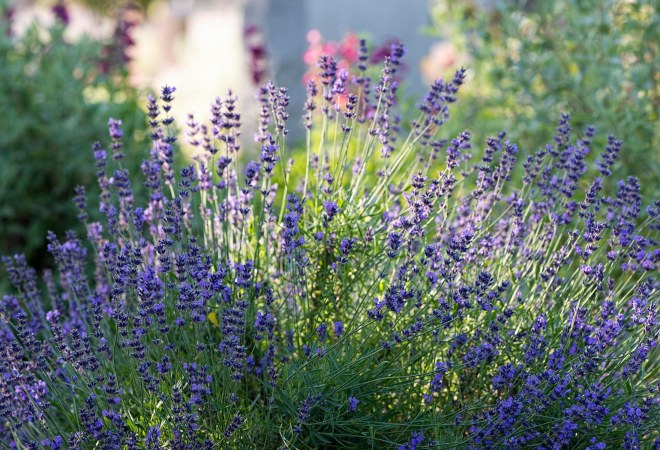
Spring bulbs, summer splashes of dahlias, California fuschia, coreopsis, annual and woolly sunflower, and glorious fall displays of aster and Mexican marigold ensure that the garden is interesting all year long.
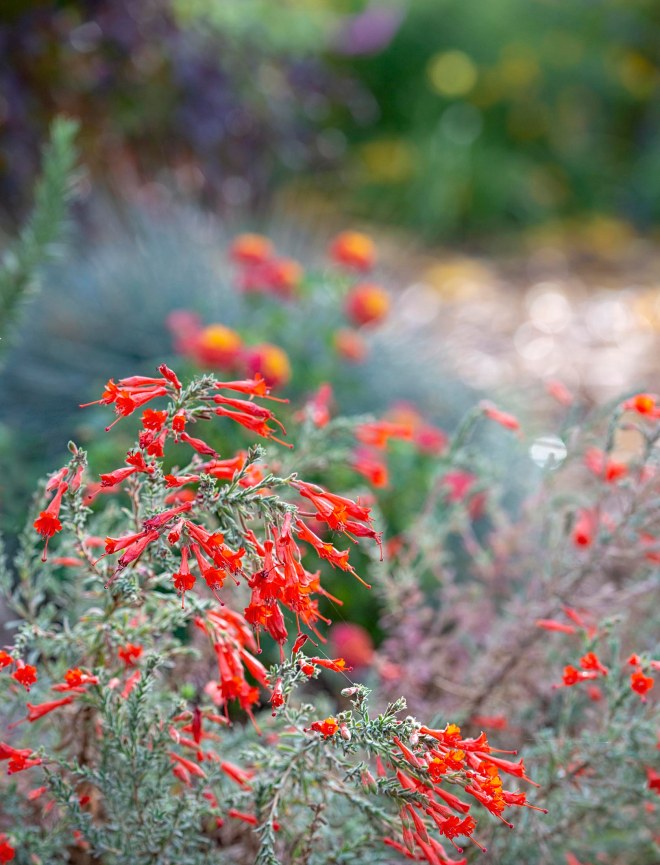
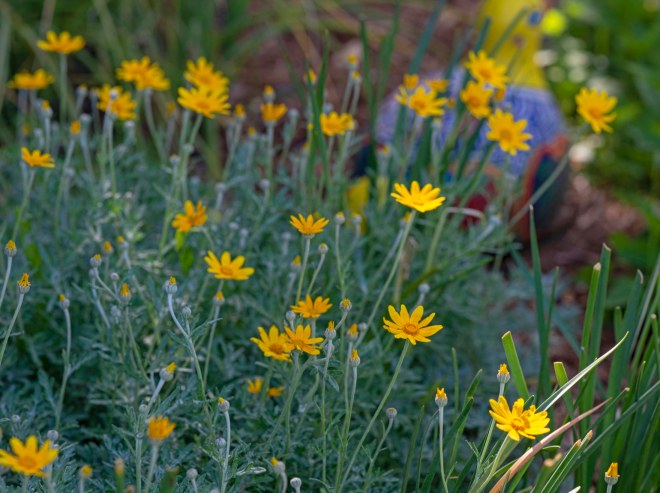
The result of is a greater sense of harmony: every color in the rainbow is represented at some point in the season, yet the beds flow and fit together, and the whole is strengthened.

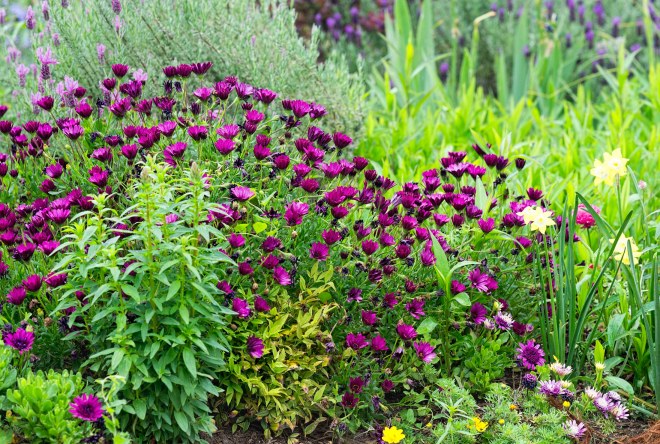
What a world this would be if we applied the same principles outside the garden.

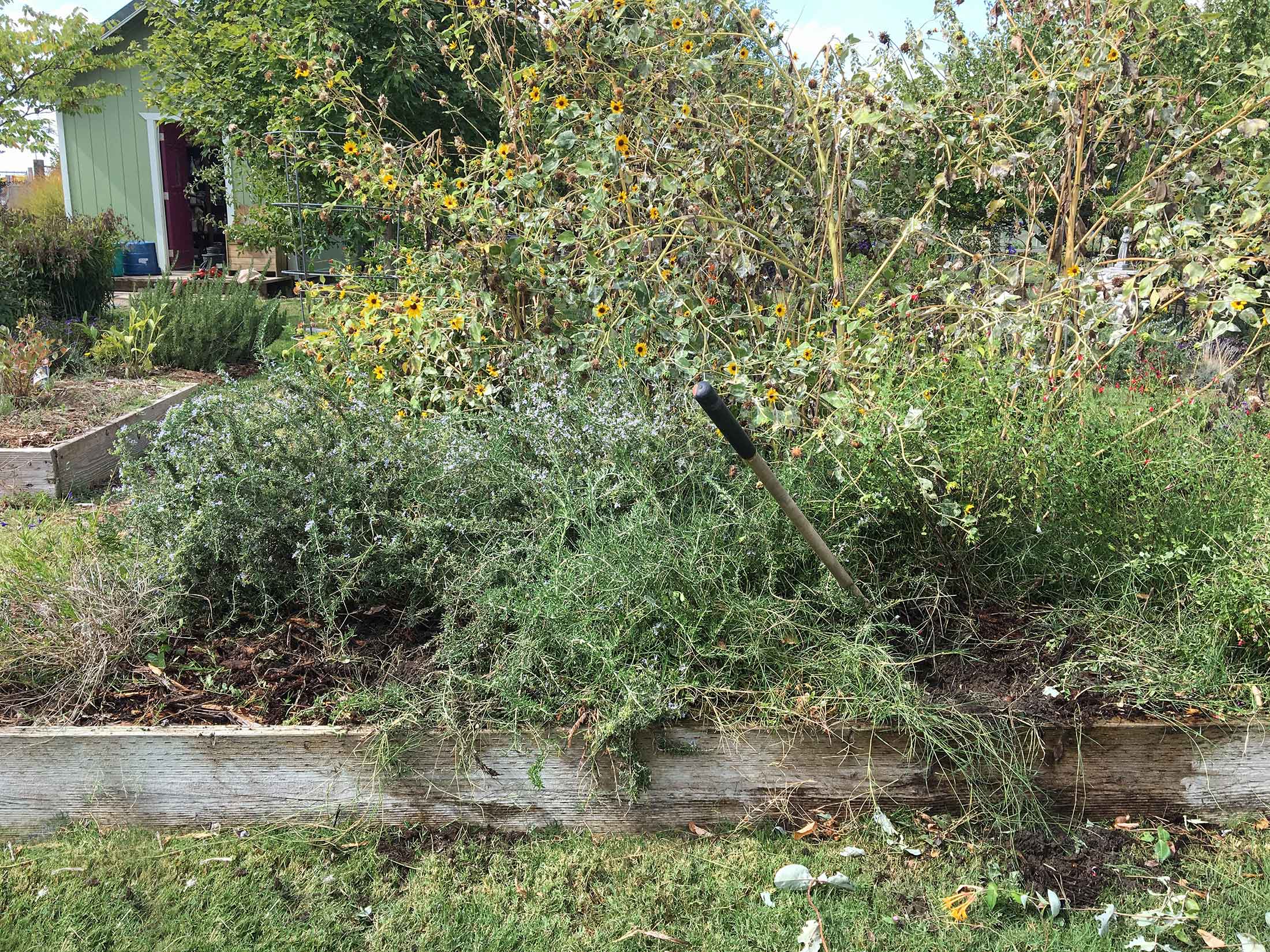
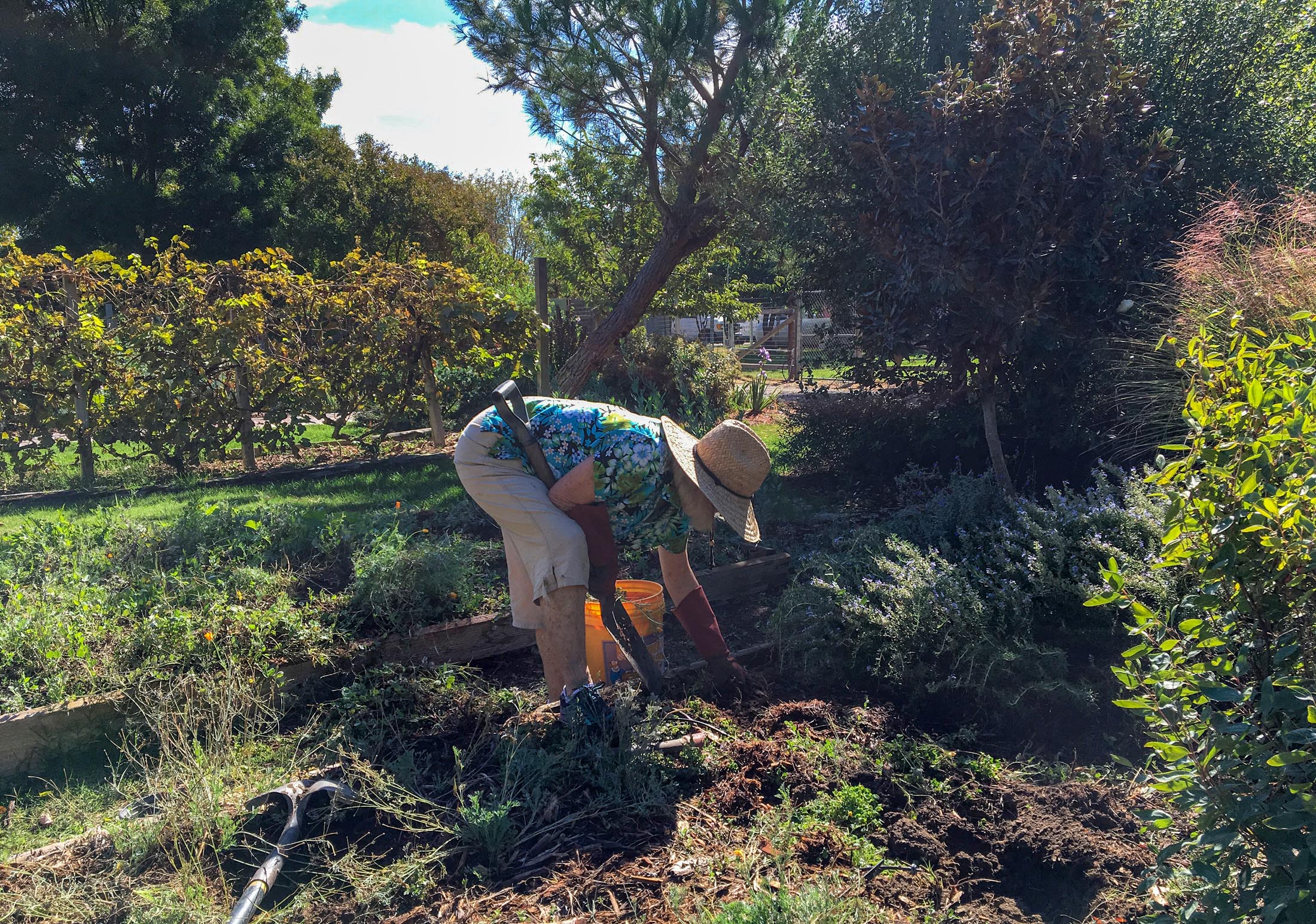
Fall Garden Project Number One

No, really, there are no remains in the Memorial Garden…although you might suspect otherwise if you saw this.

While we were away, fall signaled its arrival.


Just hints so far, but the creatures know.


And with cooler days come a mountain of projects. First on the list: a complete demolition and re-do of the raised bed area of the garden.

Once, these housed a mountain of overgrown and deadly blackberry brambles. They spread their spikes throughout the garden, so they were banished to the perimeter a few years ago where they (and the bunnies) thrive safely out of the dogs’ paths.

Blueberries, California Poppies and a bed of Rosemary took their place, but the spot was too dry and hot for the blueberries, the boards were rotting, and the Bermuda grass was winning the war on all fronts. I have learned to let nature have her way…to a point which does not include Bermuda grass!. So, the raised beds have been razed and the blueberries donated – and in their place will be gentle mounds hosting native and drought-tolerant selections more appropriate to the site while echoing other sections of the garden.
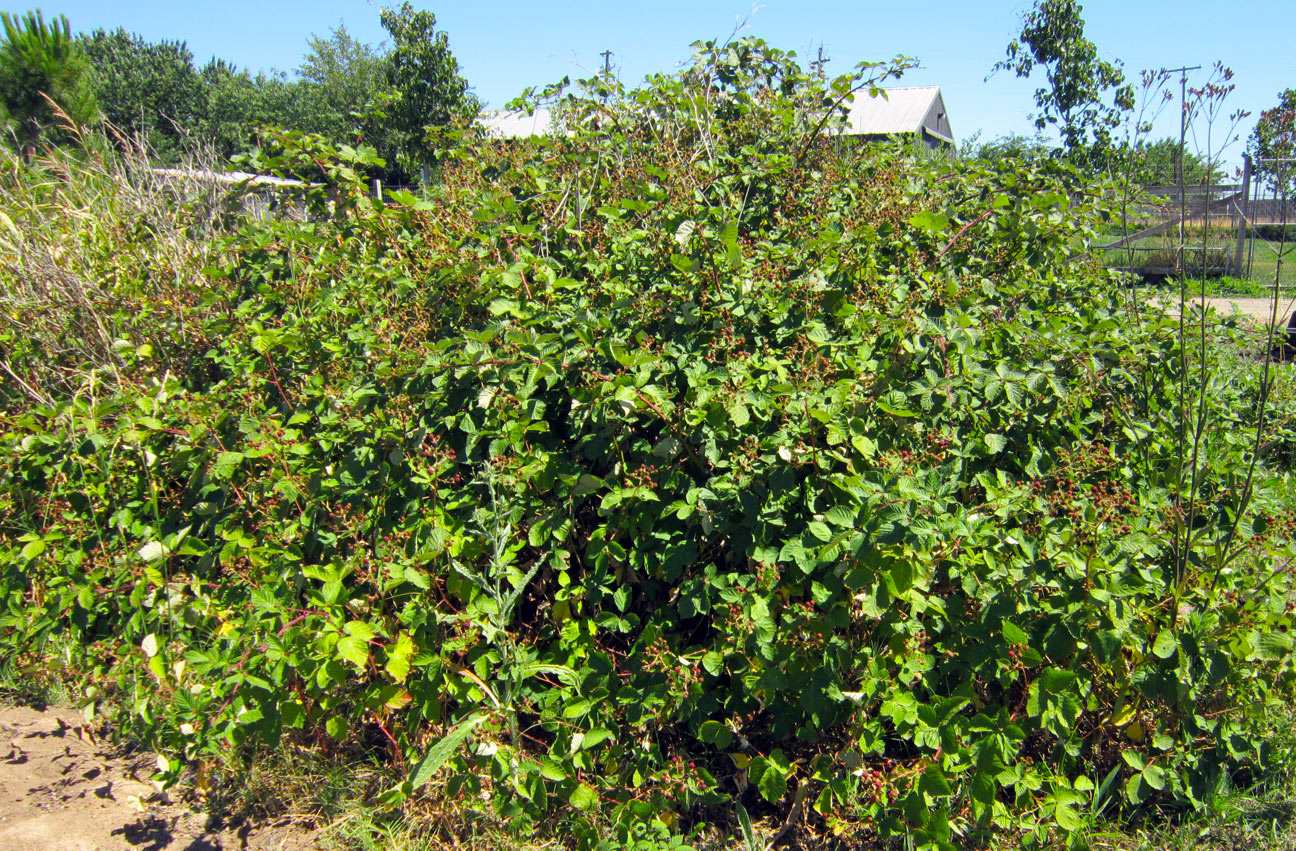
The first order of business, however, are trenches.

When it rains, everything on the property flows from the dog yards and kennel to the garden. It helps to keep the dogs drier (our first priority) but creates lakes in the garden. We lost one tree this year to the swamp that collects in the center; we want to prevent that going forward. So, in the design are trenches and mounds – to act as catch basins for some of the deluge while keeping drought-tolerant plants high and dry.
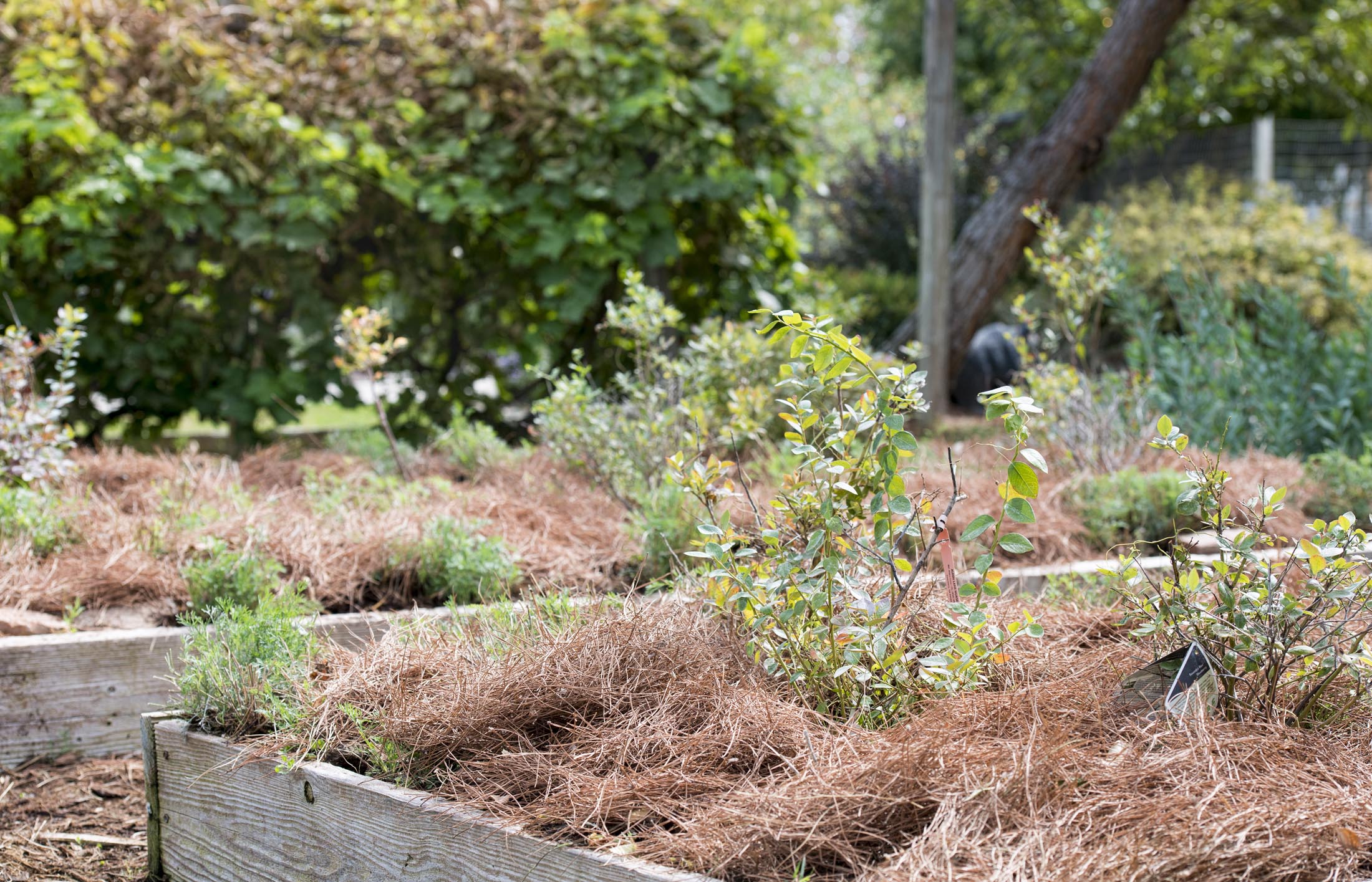
Maria helped me with phase one: the blueberry and box frame removal while unearthing and capping the existing irrigation.

Nash came to the rescue to cut down and remove the heavy redwood boards.

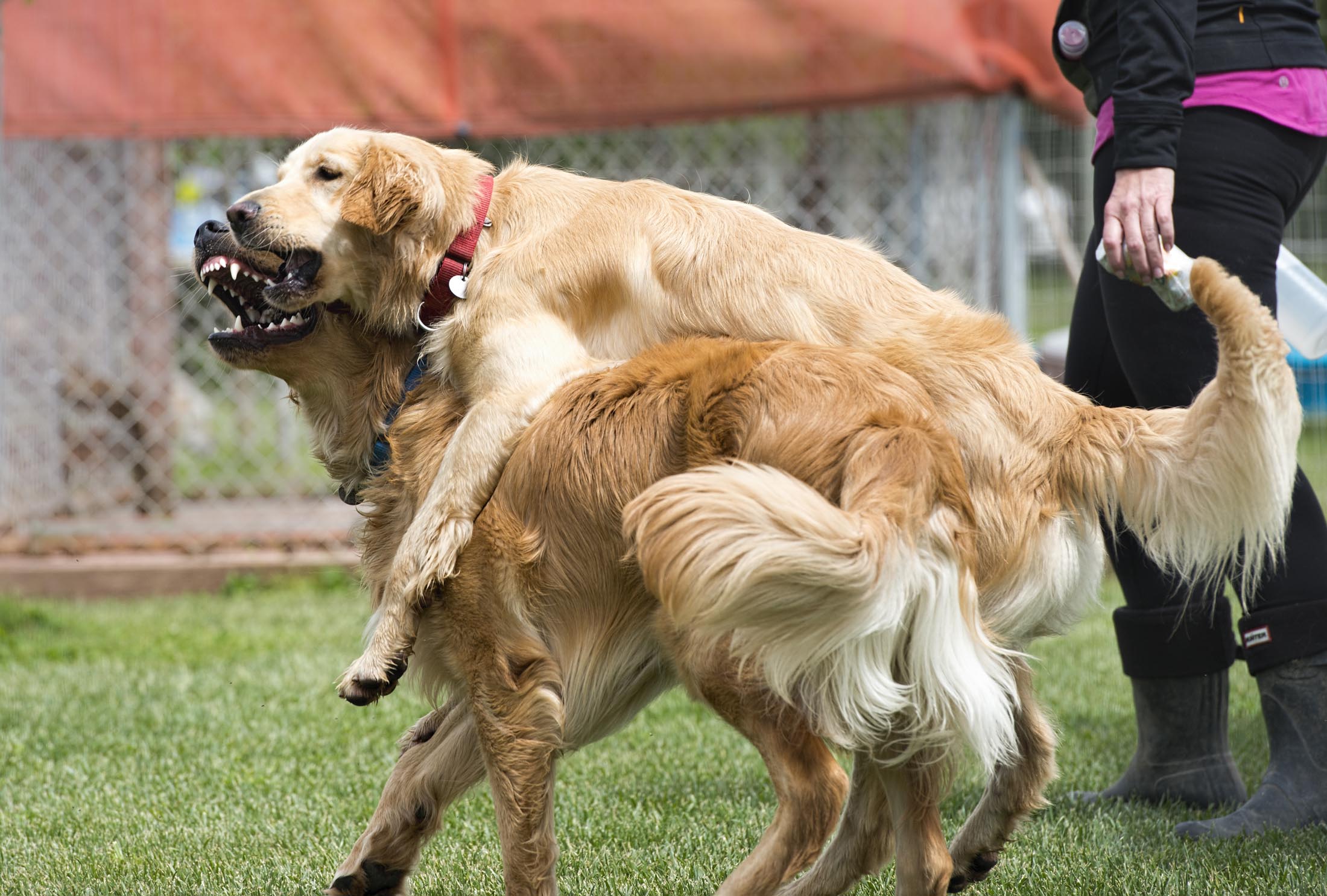
And while the dogs did not quite grasp the principle of sled dogs to help in moving wheelbarrows of gravel,

Kermit the cat was happy to provide supervision and amusement.


A few plants will go in this fall to get established, but mostly, we’ll fill the bed with fresh compost and leaf mulch and let it “cook” over the winter to be ready for spring planting. I have learned the hard way: preparation and patience pays rewards in the end.


What’s on your fall garden list?

One Family Here

Our garden is a haven for hummingbirds.
An all-day diner offering a smorgasbord of favorite foods…
Agastache

Cuphea

Sunflowers

Obedient Plant

and more.

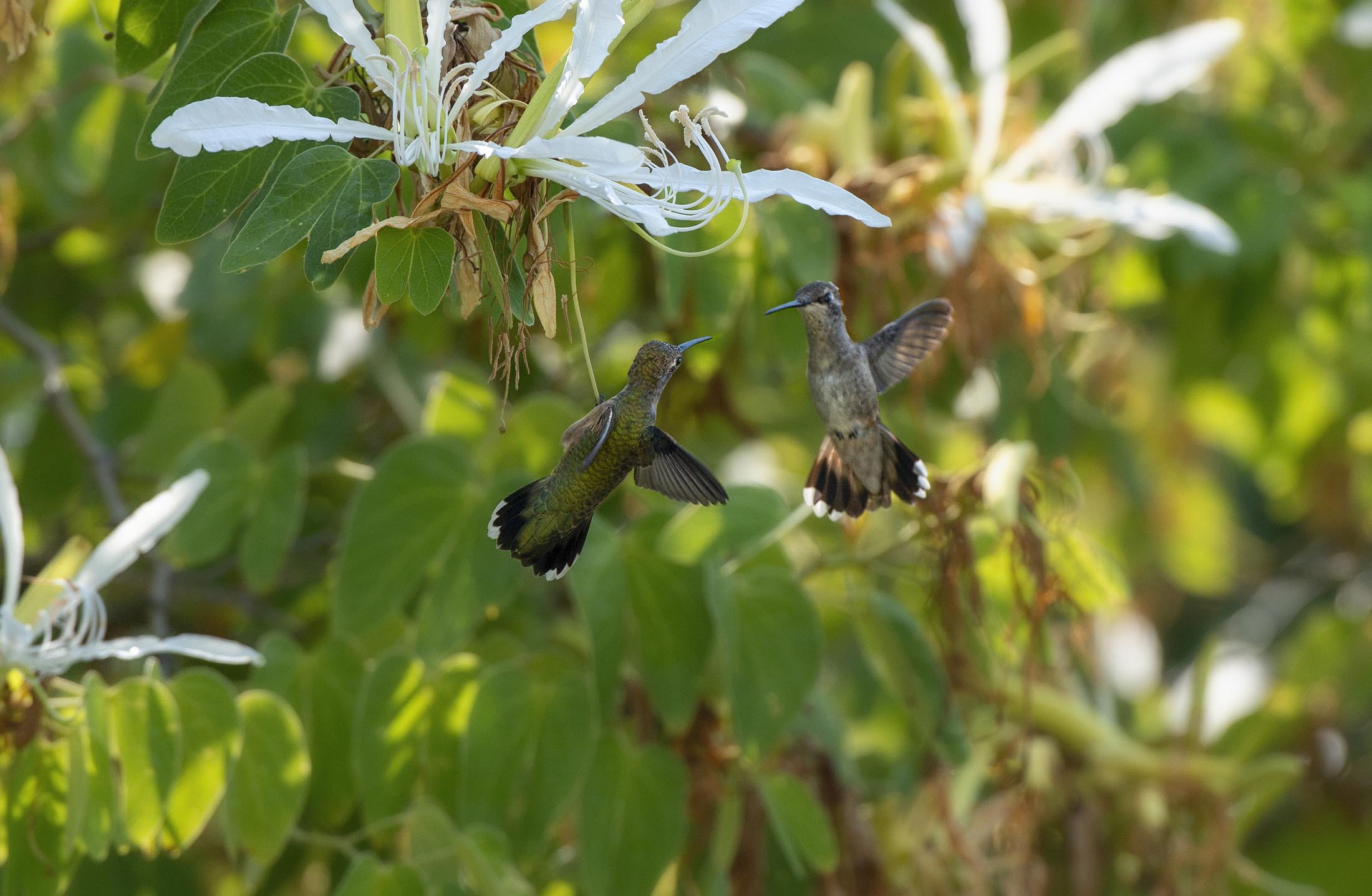
There is no need to squabble –

mosquitos, gnats, flies, and aphids abound when a protein craving strikes.
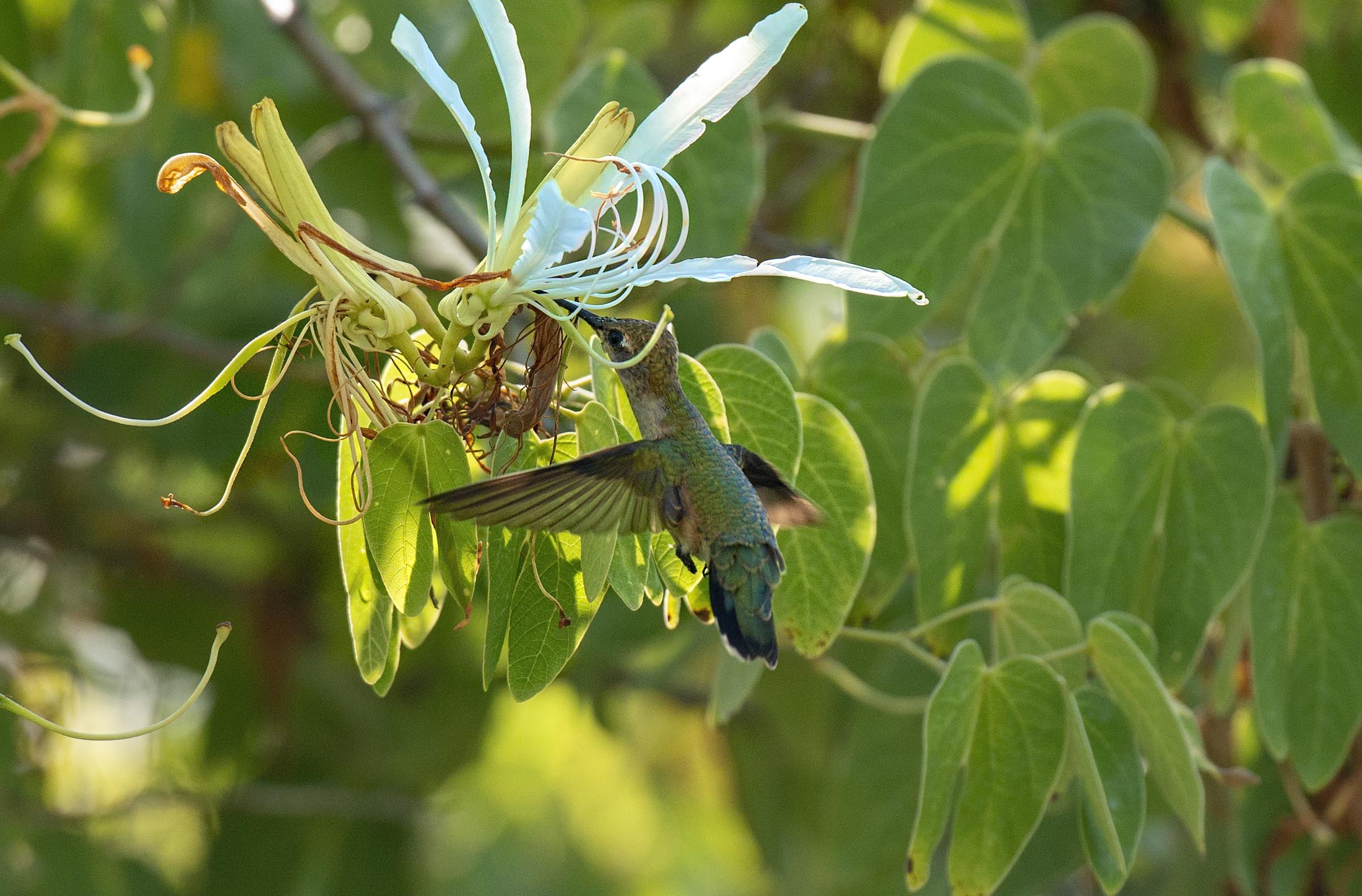
Trees provide cover and shade and safe nesting sites.

Convenient way stations provide an opportunity to eat while sitting! Now that’s energy saving.

It doesn’t take all that much to help creatures thrive.
A place to heal,

to grow,

and thrive –

in safety,

security,

and love.

“God made all the creatures and gave them our love and our fear,
To give sign, we and they are His children, one family here.”
~ Robert Browning

Yellow: The Color of Summer

Nothing says summer like the color yellow. The spring garden is full of pink, lilac, blue and white. In the autumn, I want depth: oranges, reds, deep purples, golds. But yellow is for summer.

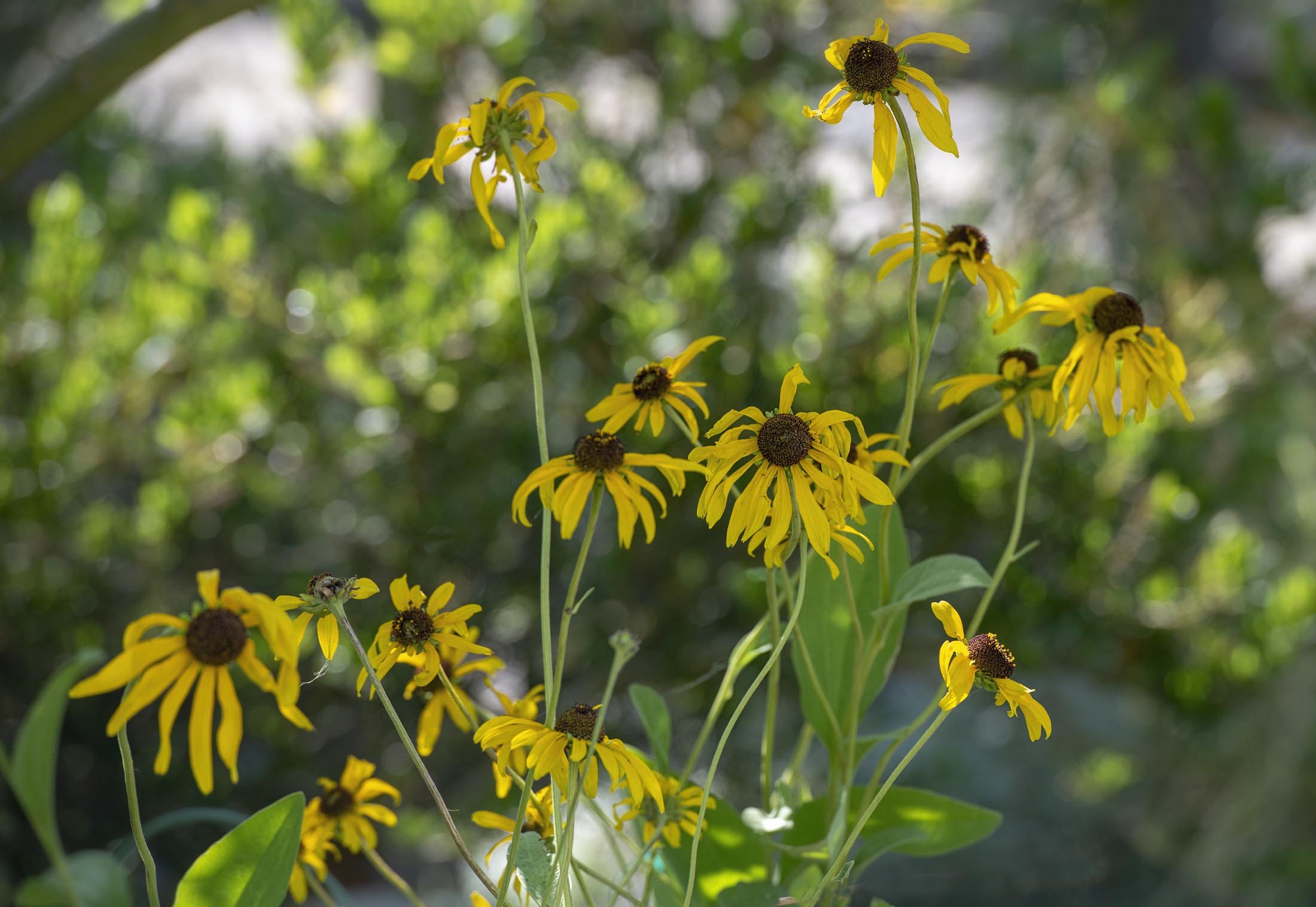
This shaggy rudbeckia grandiflora thrives and returns each year where others fail. It is beautiful in a chaotic, messy way – as if it couldn’t be bothered to fully dress itself or comb its hair in the morning.

“Deep summer is when laziness finds respectability.” ~ Sam Keen

I gave up on the drama of planting huge sunflowers. The jack in the beanstalk varieties required constant watering and staking for big floppy heads that wilted and dried almost as soon as they bloomed. So much work – and they seemed out of place.

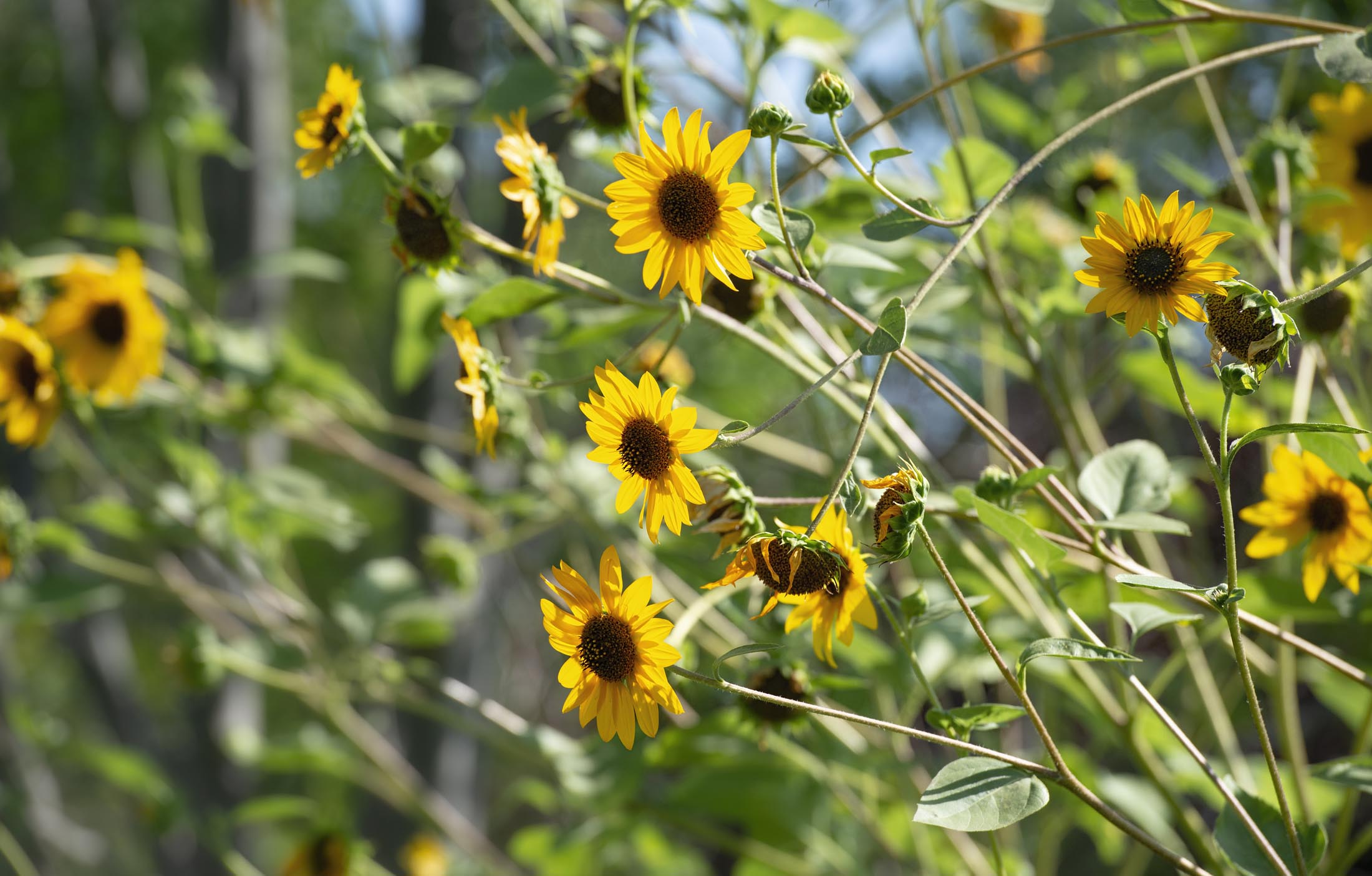
The Helianthus annuus – or Delta Sunflower – is so carefree that you will find it growing along the freeways in our region. It loves heat, makes do with little water, is not fussy about soil, and it is poetic in its profusion of dancing stems.

It feels right at home in our garden. I’m sure the birds miss the giant seeds – but they have devastated the grapes again – so they can make do!

Helenium looks like little Mexican sombreros to me.

So happy and sunny – it should be a painting!

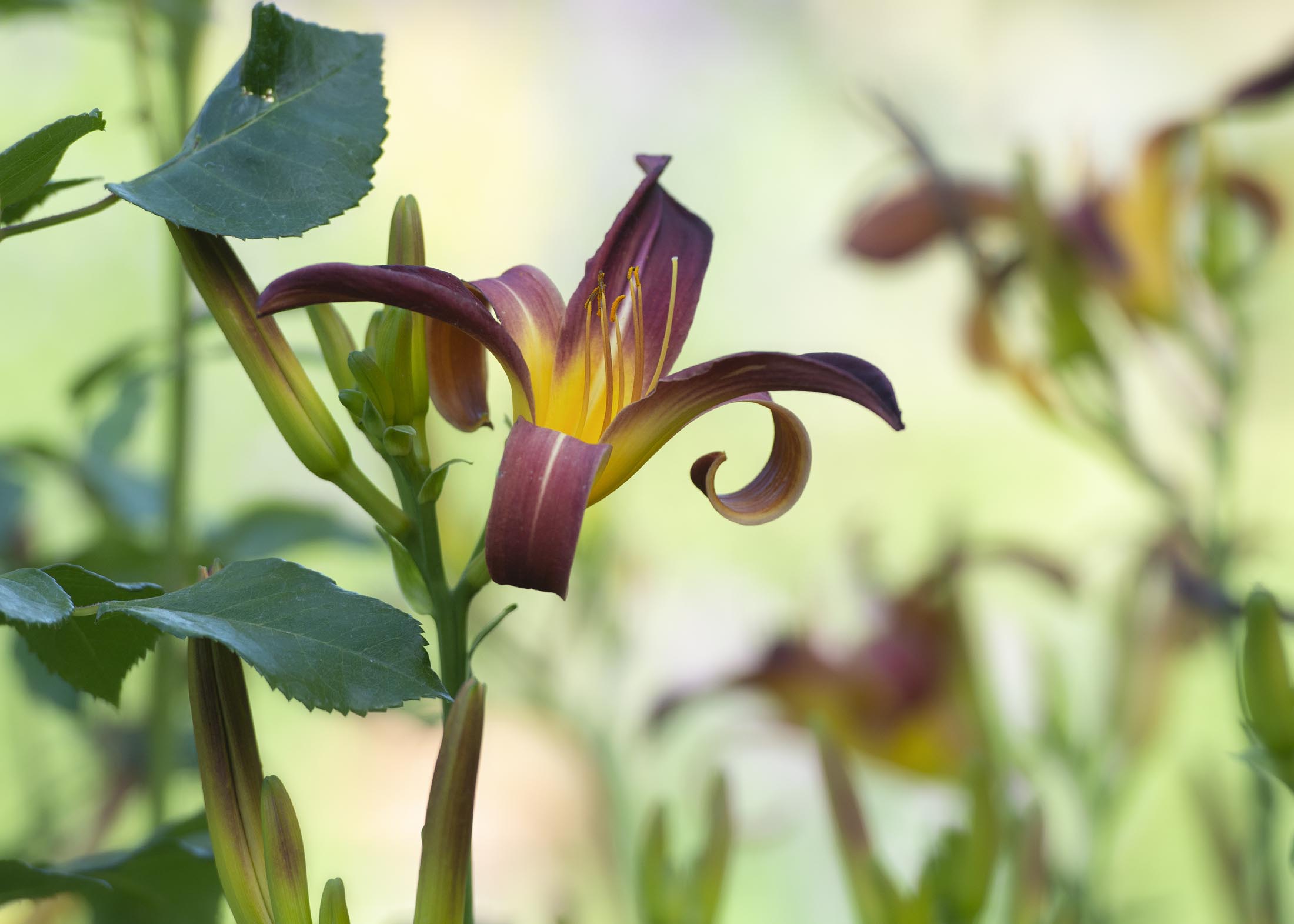
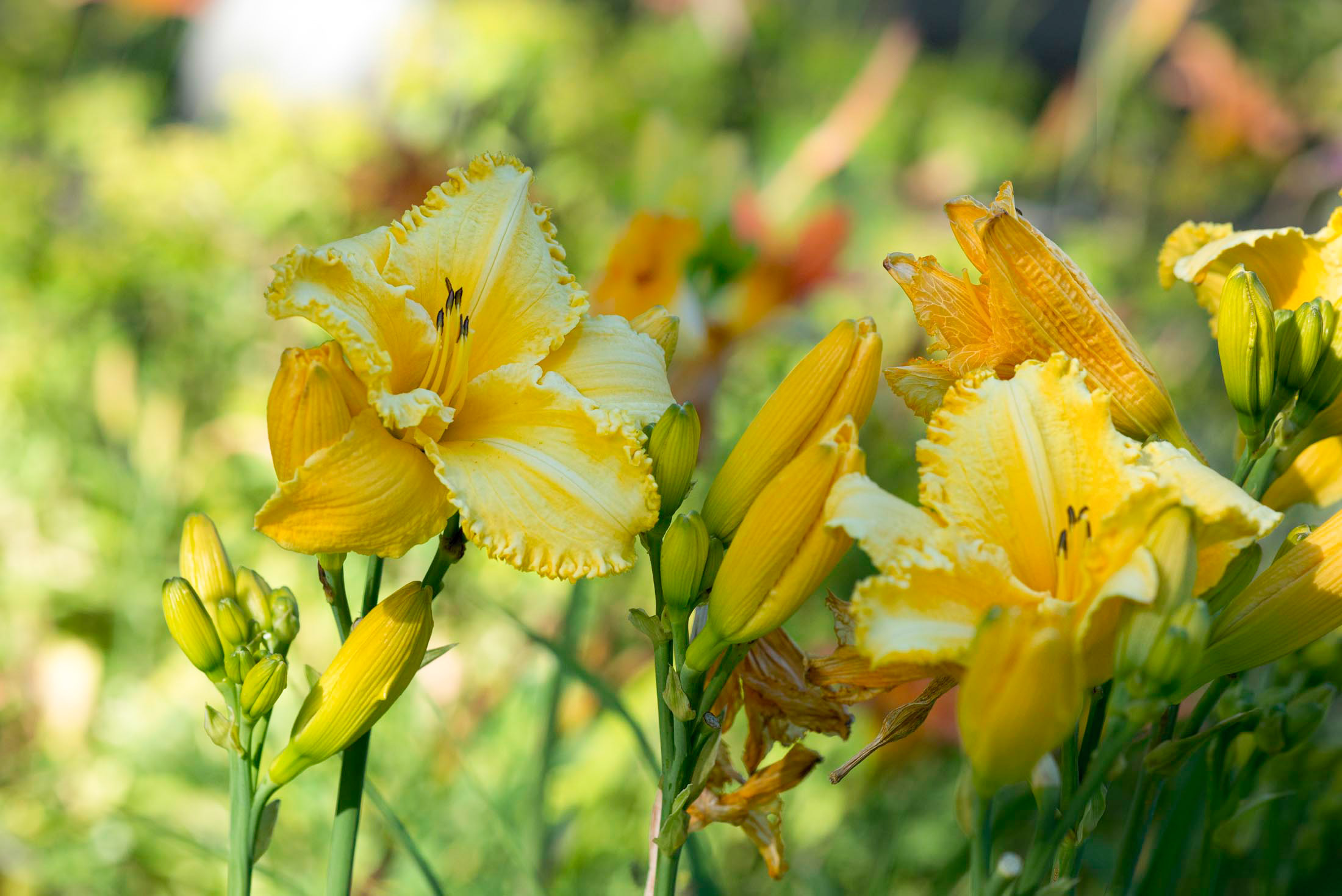
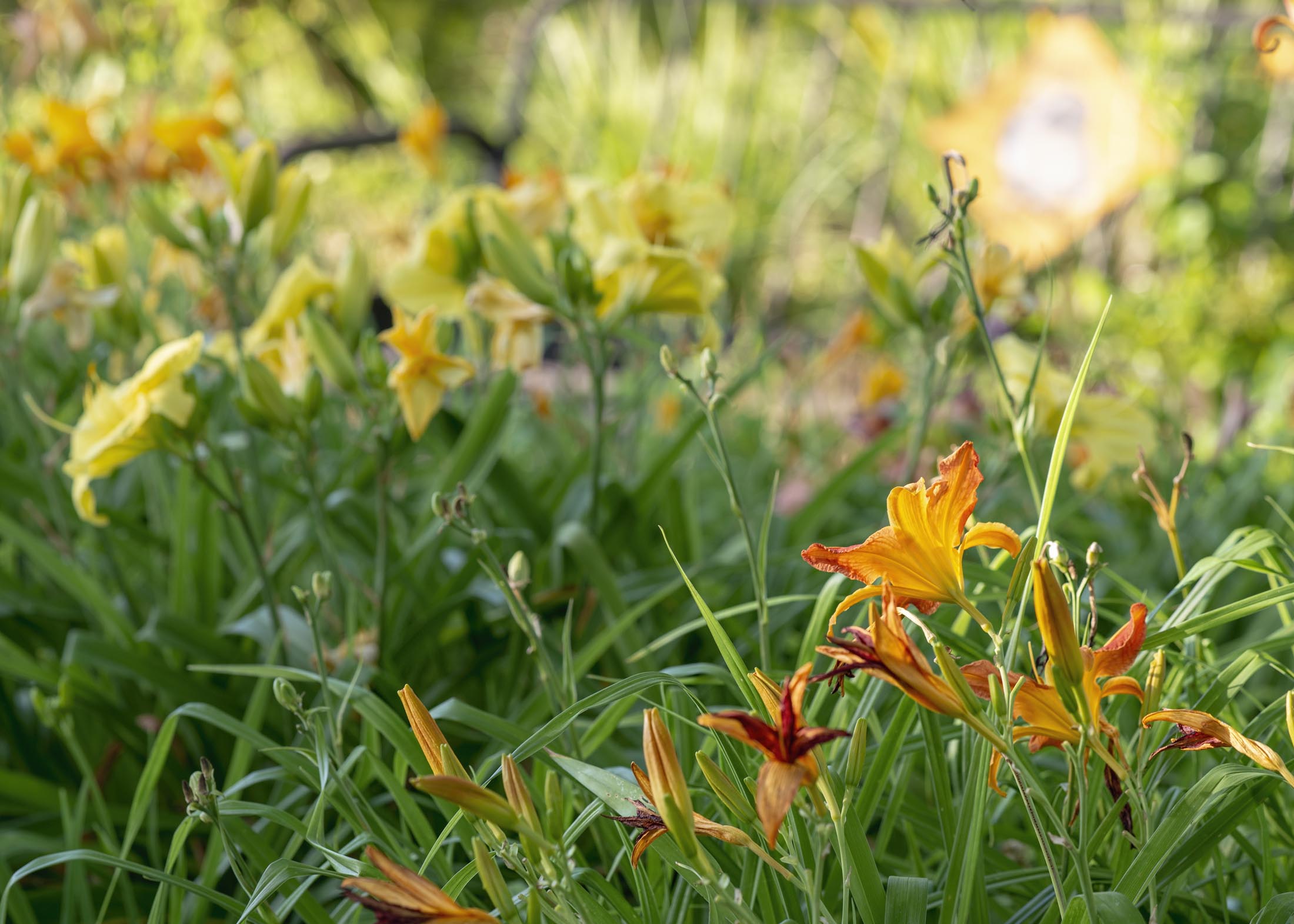
The daylilies spread their short-lived happiness – from sunrise to sundown.

Gaillardia blankets the garden from June until September,

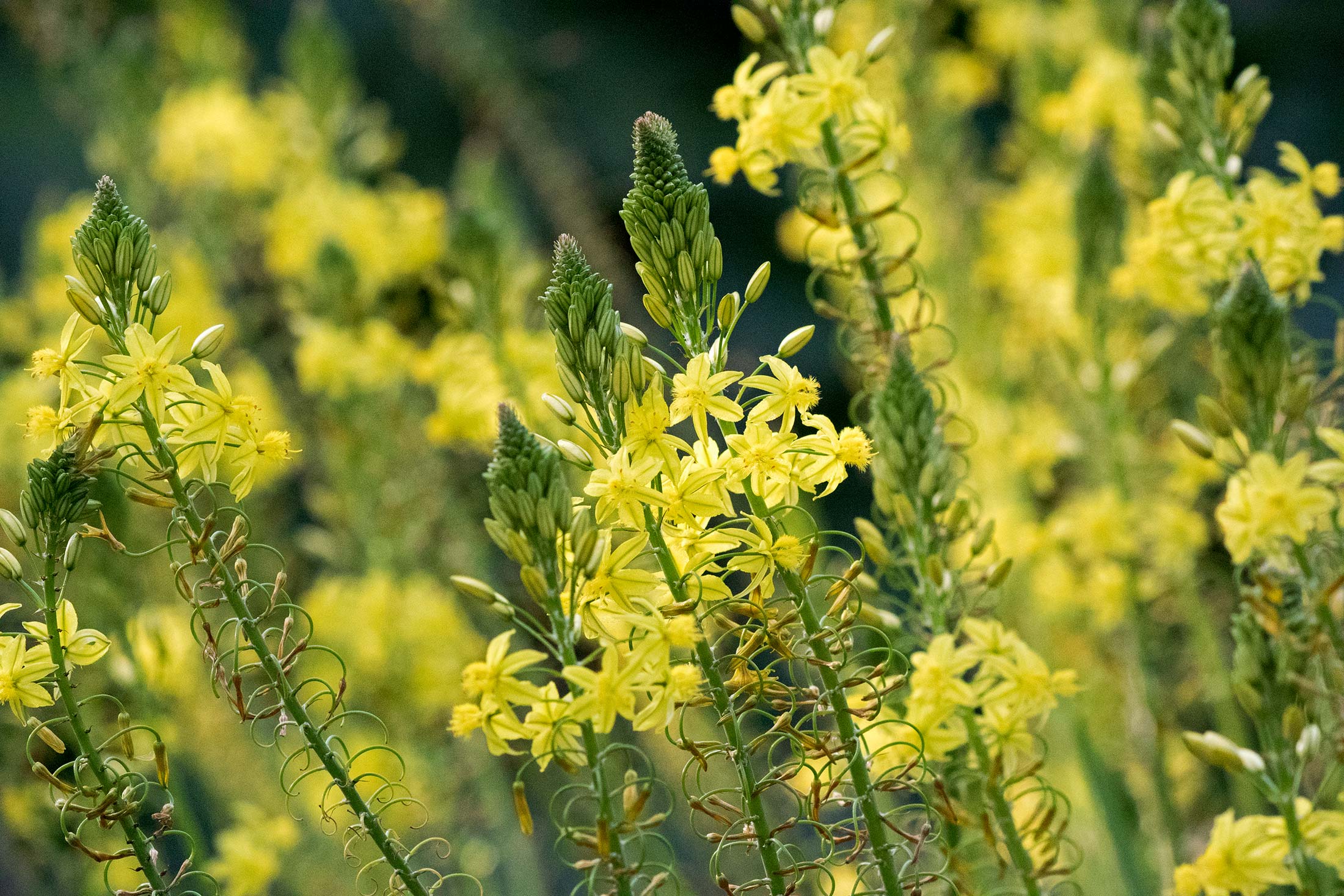
while beautiful bulbine puts in repeat performances in spring and late summer.

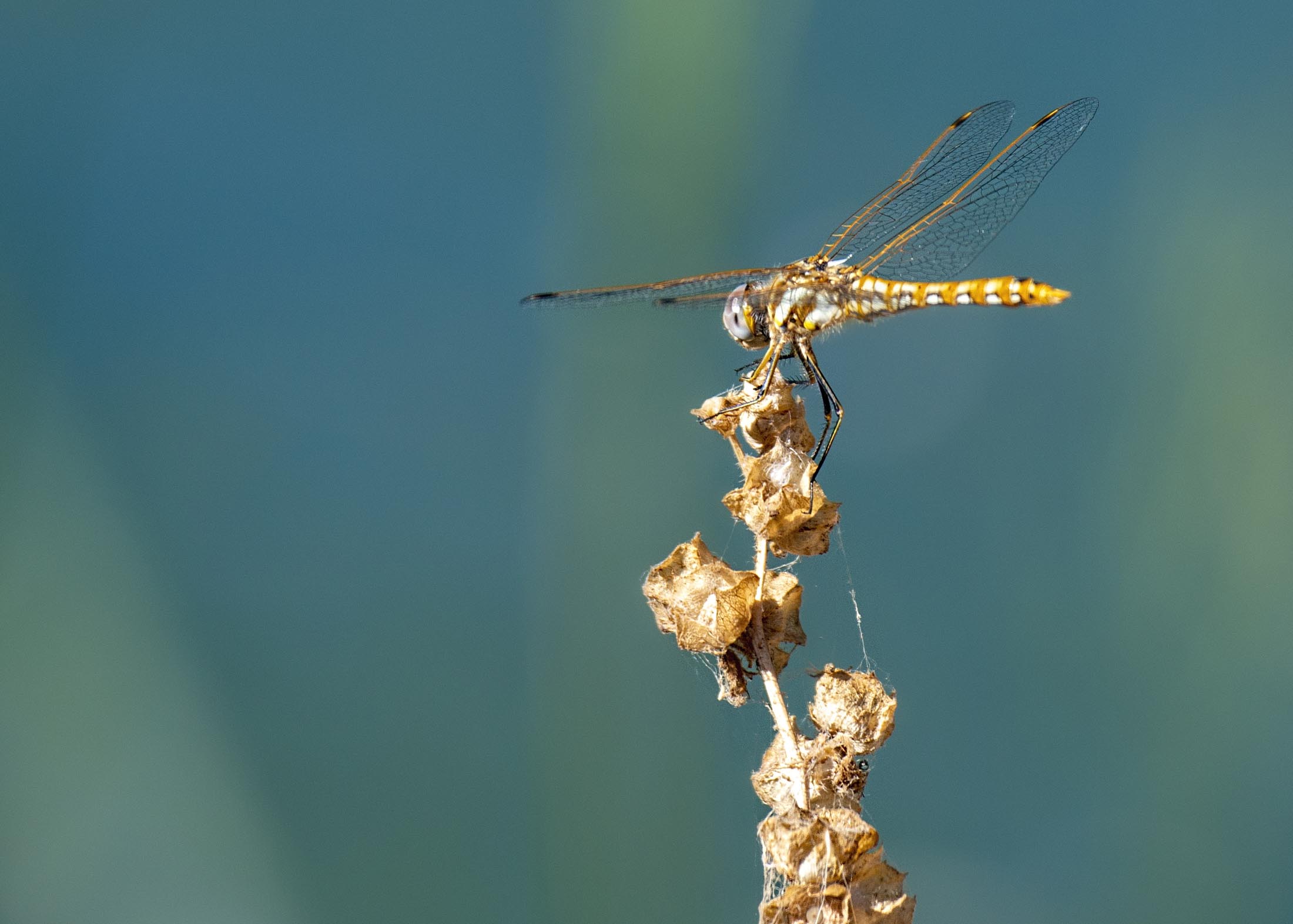
Yellow flies and flutters through the garden. On dragonflies –

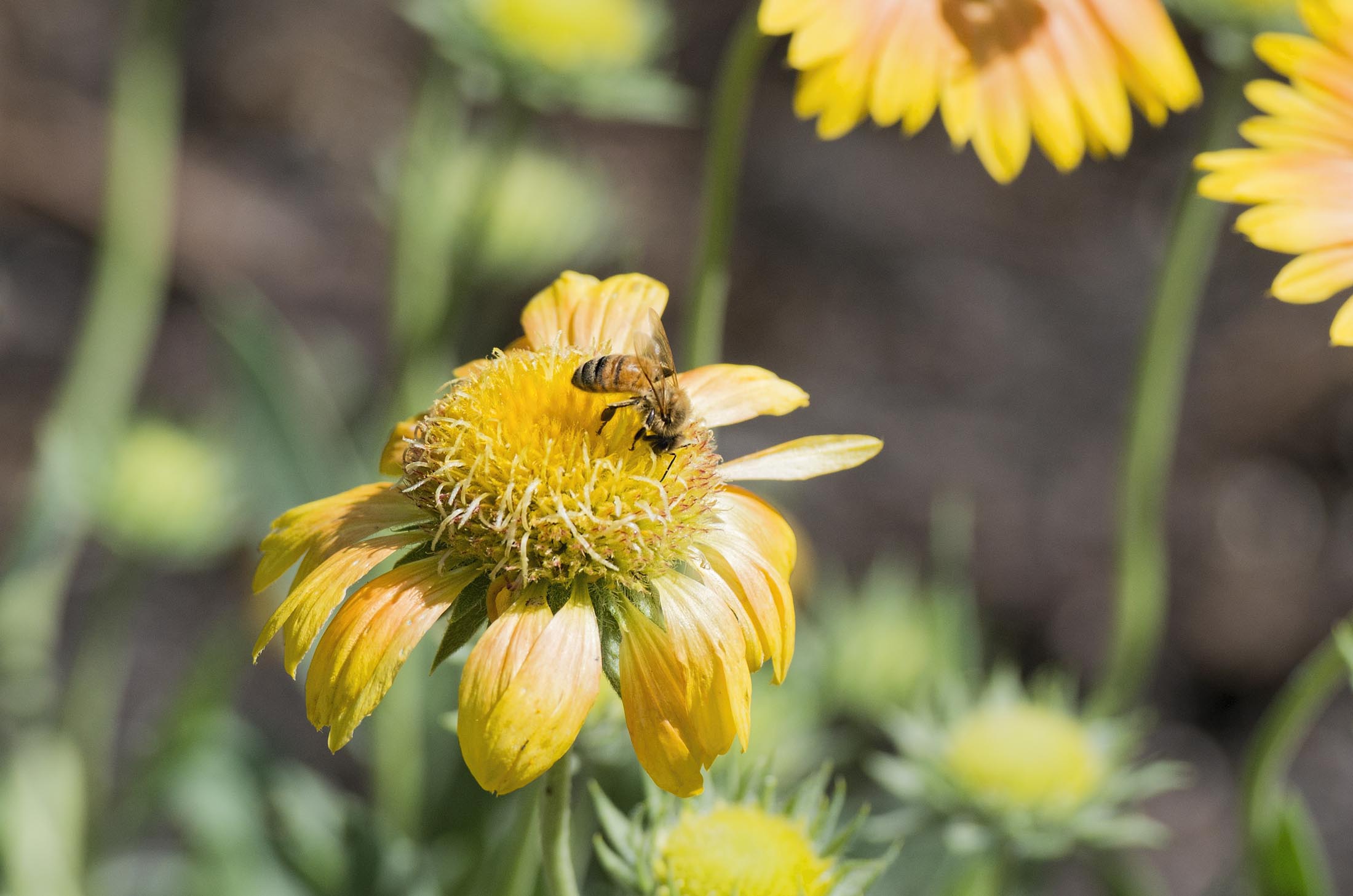
bees –

butterflies –

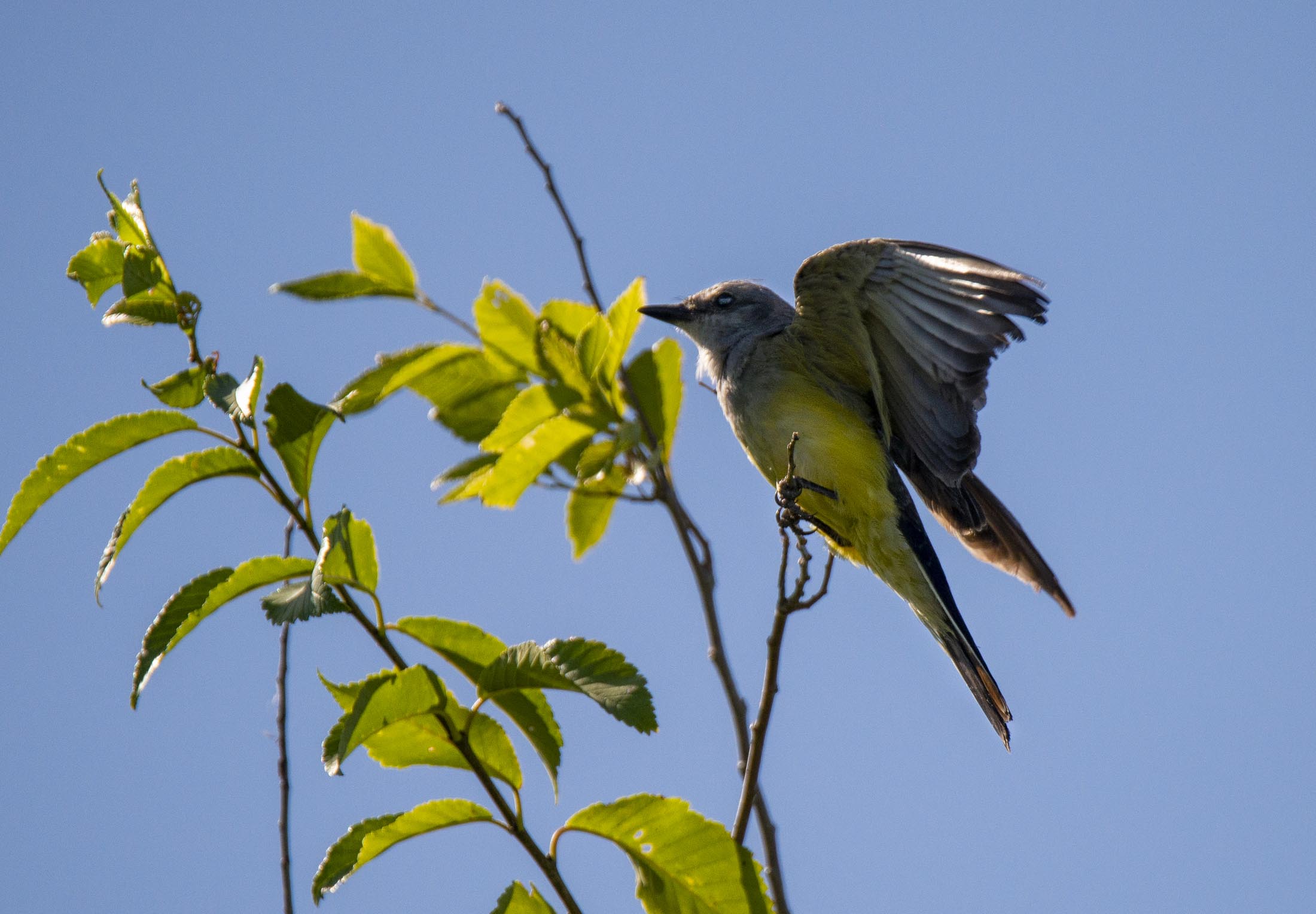
even this yellow bird has taken up residence in the garden.

I have not seen it before…a Western Kingbird, I believe.

“How wonderful yellow is. It stands for the sun.” ~ Vincent Van Gogh.

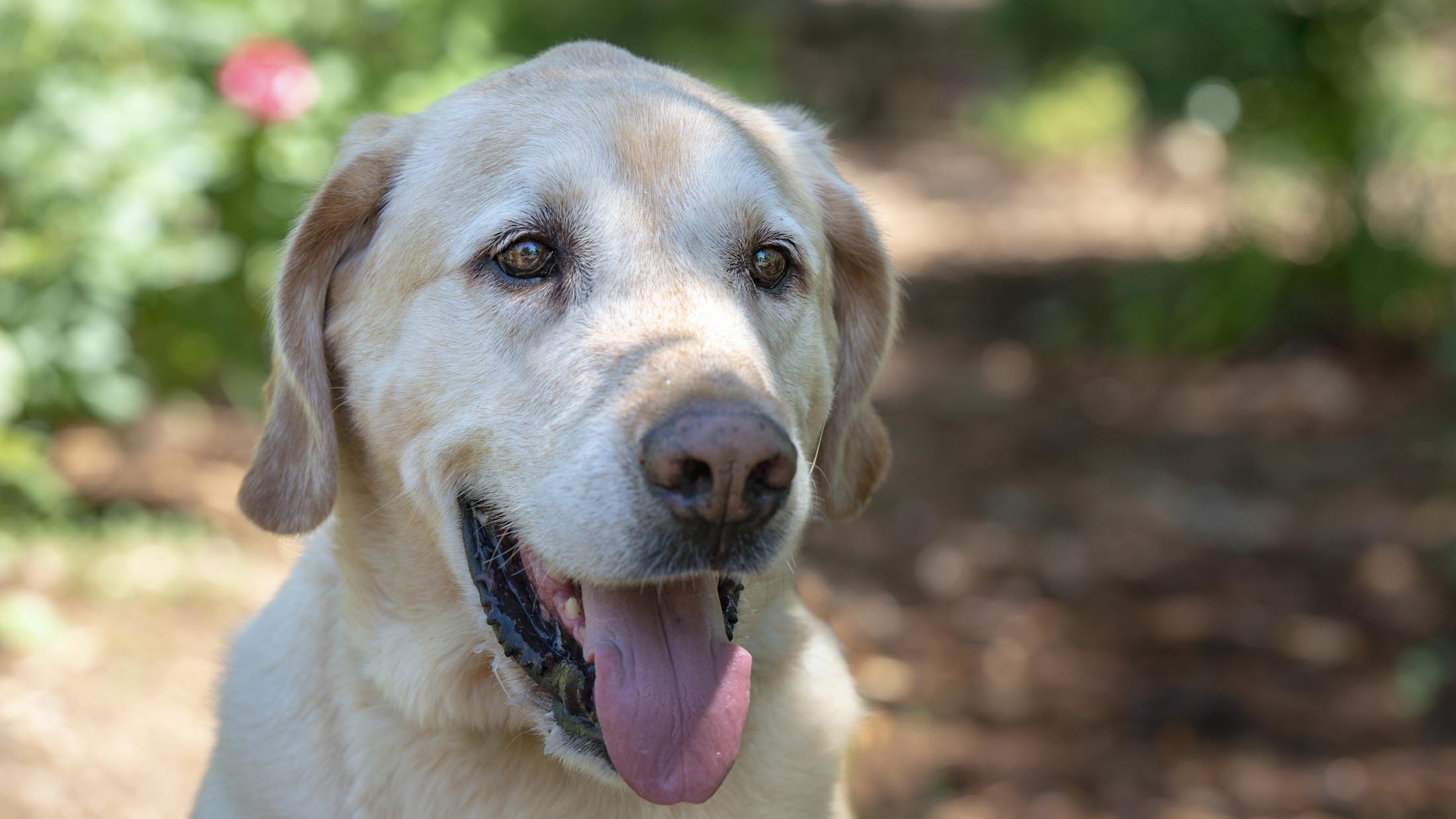
And Yellow Labs, too. 🙂 Meet Carter. He’s looking for home.

When You Just Say “Try”

Every single person that contributes to our mission of rescue is essential and valued. Still, there are some donors whose extraordinary gifts over the years have created an essential foundation for our work. Many had not been to the rescue in a decade or more; so much has changed. Since or founding, our facilities and our programs for the dogs have morphed from buckets and tubs and potty breaks to a fully functioning, more modern operation with enrichment programs to support the dogs. To showcase all – and to show this unique group of donors all that they have contributed to – we hosted them last weekend for a Big Dog Brunch.

The morning began with Mimosas in the garden – made beautiful by the return of my wayward gardeners. It looked magnificent.

Despite an unwelcome heat wave, the roses’ second bloom appeared on cue

along with the Agapanthus,

Bee Balm,

Day Lilies,

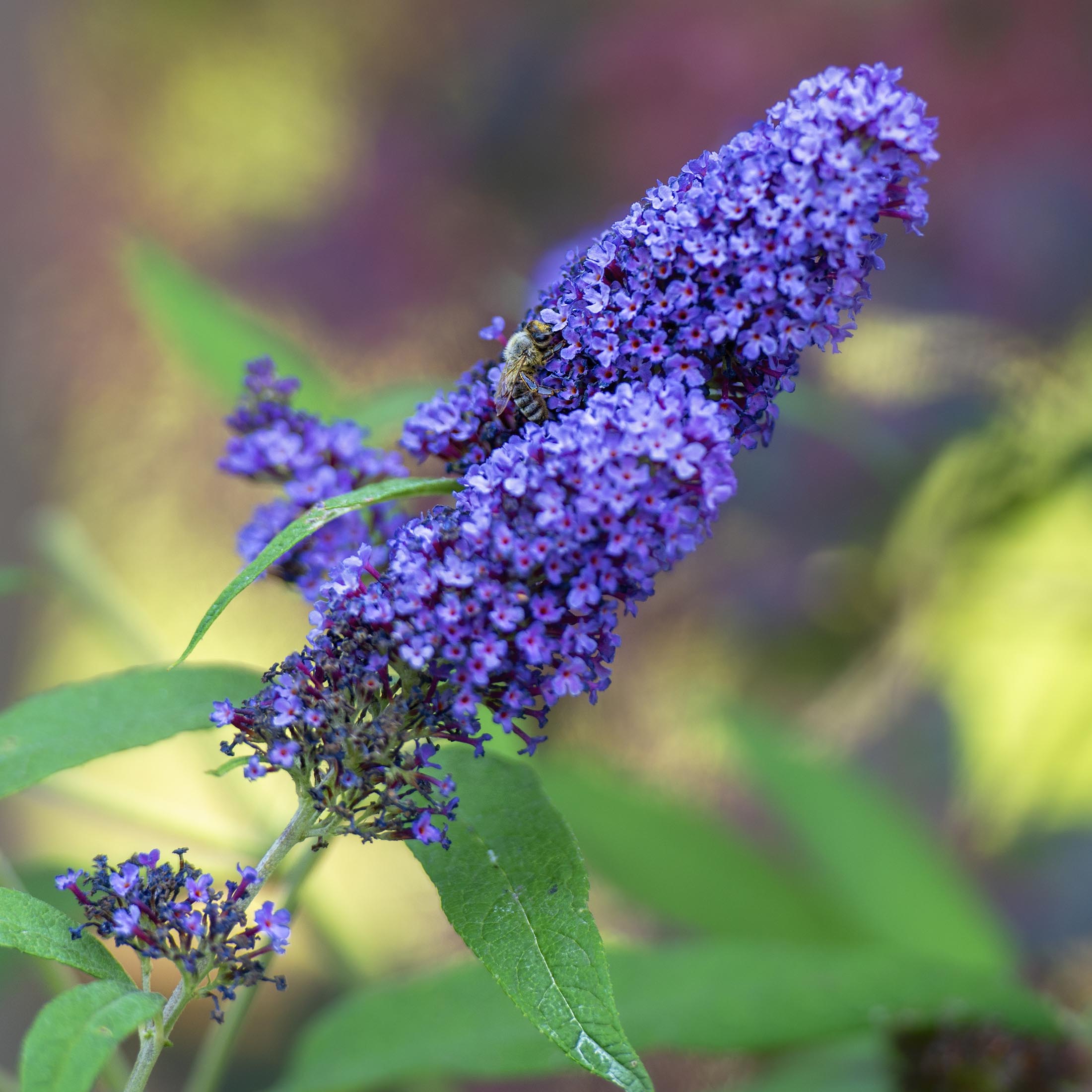
Butterfly Bush,

Blanket Flower, Yarrow and Verbena.

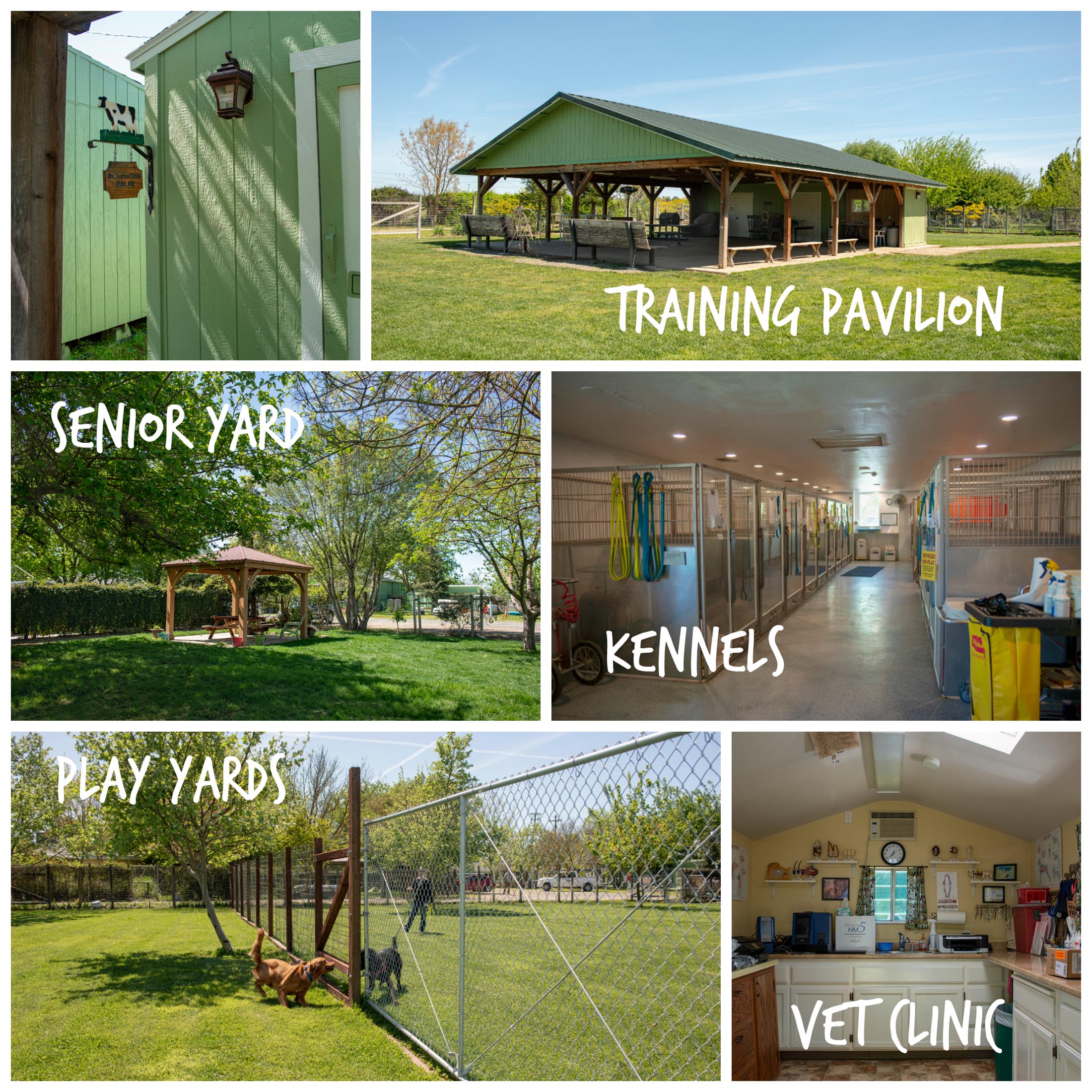
From there, we took folks in small groups on tours of the facilities including the in-ground, heated swimming pool, senior yard and sanctuary, vet clinic, kennels, puppy palace, yards and training pavilion.

The volunteers were able to share how each resource benefits the dogs and invited them to demonstrations of swim therapy and playgroups.
At the brunch that followed, each received a small book capturing all of the special projects – a take-home reminder of the impact they have made.

Saying ‘thank you’ is one thing; giving people an opportunity to touch, see, feel – and be touched by – all that they support (hopefully) makes a lasting impact and demonstrates our genuine appreciation.

The garden – like everything they saw that day – was a labor of love. A volunteer effort. Created from dirt and weeds, it – and all that surrounds it – are a reminder of what can be accomplished when you just say “try.”